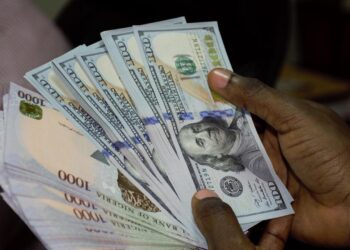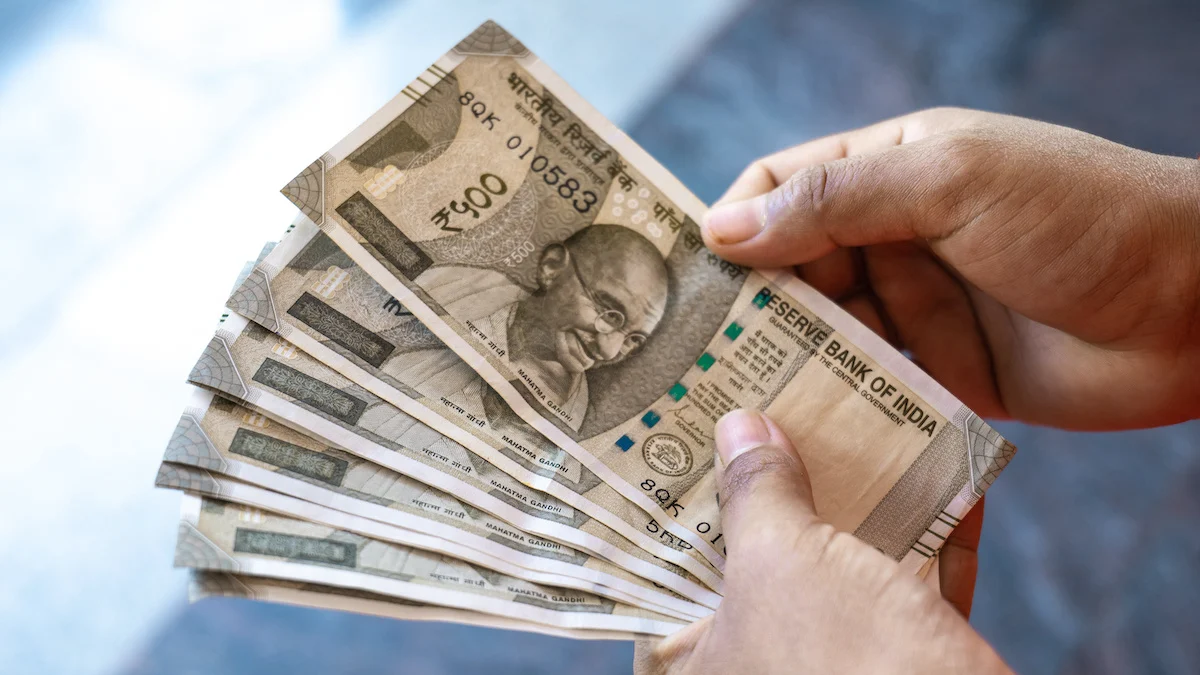
The Indian rupee is bracing for another challenging session on Friday, with market indicators pointing to a weaker opening as the currency grapples with a perfect storm of regional weakness, persistent foreign investor outflows, and mounting uncertainty over crucial U.S.-India trade negotiations.
Forward market pricing suggests the rupee will begin trading around 86.48-86.50 against the dollar, representing a further slide from Thursday’s close of 86.4050. This weakness mirrors broader regional sentiment, with Asian currencies uniformly under pressure, declining between 0.1% and 0.3% as investors position defensively ahead of what promises to be a pivotal week for global markets.
The dollar’s renewed strength, with the dollar index climbing to 97.5, underscores the challenging environment facing emerging market currencies. Market participants are bracing for a confluence of high-impact events next week, including President Donald Trump’s widely anticipated tariff decisions, a Federal Reserve policy announcement, and the release of key U.S. economic indicators.
Technical Outlook Turns Bearish
Currency traders are increasingly pessimistic about the rupee’s near-term prospects. A senior trader at a state-run bank, speaking on condition of anonymity, warned that the currency could test critical support levels between 86.70 and 86.80 in the coming sessions. This would represent the rupee’s weakest levels in recent memory, highlighting the mounting pressure on India’s currency reserves and monetary policy framework.
Despite the bearish sentiment, some institutional players are beginning to explore contrarian positions. “There’s nascent interbank interest in taking long bets on the rupee,” the trader noted, “but this is largely predicated on expectations of positive developments in U.S.-India trade talks.”
Trade Deal Hopes Fade as Deadline Looms
The rupee’s fate appears increasingly tied to the outcome of ongoing trade negotiations with Washington, though prospects for a breakthrough ahead of the August 1 deadline have dimmed considerably in recent weeks. While President Trump has successfully concluded agreements with Japan and renewed optimism about potential deals with China and the European Union, India appears to have fallen behind in the queue for trade concessions.
This diplomatic reality was underscored Thursday when Britain and India announced a bilateral free trade agreement, with India’s trade minister expressing continued confidence about reaching an accord with the United States while notably downplaying the significance of Trump’s self-imposed deadline.
The evolving trade landscape reflects broader structural shifts in global commerce. As MUFG strategists observed in a recent note, “Beyond tariffs and the rush to close the art of the deal, one continuing theme that we see in Asia and many countries outside the U.S. is the acceleration in moves to diversify away from or at least hedge with the U.S.”
Foreign Outflows Compound Currency Woes
Adding to the rupee’s woes, foreign portfolio investors continue their systematic retreat from Indian markets. Data from the National Securities Depository Limited reveals that overseas investors have withdrawn approximately $500 million from local stocks during July alone, with net sales of $382 million recorded on Wednesday.
The bond market has also felt the sting of foreign selling, with international investors offloading $41.7 million worth of Indian government securities on Wednesday. This sustained outflow pattern reflects broader concerns about emerging market valuations and the relative attractiveness of U.S. assets in a higher interest rate environment.
Market Indicators Signal Continued Volatility
Current market positioning suggests continued volatility ahead. The one-month non-deliverable forward is trading at 86.60, while the onshore forward premium has widened to 12.50 paisa, indicating heightened hedging demand from corporate treasurers and institutional investors.
Global risk sentiment remains fragile, with Brent crude futures gaining 0.5% to $69.5 per barrel and the benchmark 10-year U.S. Treasury yield holding steady at 4.4%. These levels reflect a market caught between conflicting signals about global growth prospects and monetary policy trajectories.
As Asian markets prepare for what could be a defining week for trade relations and monetary policy, the Indian rupee finds itself at the epicenter of multiple crosscurrents that will likely determine not just its near-term trajectory but also its role in the broader recalibration of global economic relationships.
WHAT YOU SHOULD KNOW
The Indian rupee is under significant pressure and expected to weaken further, driven by three critical factors: mounting uncertainty over U.S.-India trade deal prospects ahead of the August 1 deadline, sustained foreign investor outflows totaling $500 million from Indian stocks this month, and broad regional currency weakness as markets brace for President Trump’s tariff decisions and Federal Reserve policy announcements next week.
The currency could test support levels near 86.70-86.80, its weakest position in recent memory, making this a pivotal moment for India’s economic stability and trade relationships.