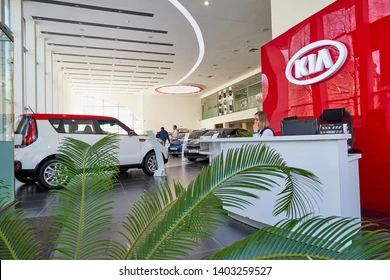
Kia Corporation is betting on an aggressive counter-strategy to turn mounting U.S. trade pressures into a competitive advantage, announcing on Friday plans to significantly expand its American market presence even as tariff costs hammer its bottom line.
The South Korean automaker, part of the world’s third-largest automotive group alongside affiliate Hyundai Motor, revealed ambitious targets to grow U.S. sales by 7-8% in the second half of 2025, aiming to capture more than 6% market share compared to 5.1% in the first six months. This growth trajectory would come against a backdrop of an overall U.S. auto market expected to contract by 10%.
The bold expansion comes at a steep cost. Kia reported a 25% plunge in second-quarter operating profit, absorbing a crushing $570 million hit from U.S. tariffs. Company executives warned that an even larger financial impact looms in the coming months as trade tensions escalate.
Strategic Pivot Amid Market Turbulence
Rather than retreating, Kia is doubling down on its U.S. operations through a carefully orchestrated product strategy centered on hybrid vehicles and strategic pricing discipline. The company credited strong sales of its new Carnival hybrid SUV for helping drive a 5% increase in April-June U.S. sales, as American consumers rushed to purchase vehicles ahead of anticipated price increases.
“We believe that we will be able to use the difficult environment as a good opportunity to level up our market share and sales, and that’s Kia’s strength,” Chief Financial Officer Kim Seung-jun told analysts during Friday’s earnings call.
This opportunistic approach positions Kia to capitalize on competitors’ struggles, particularly as some Japanese automakers have already begun raising prices to offset tariff impacts. The Korean manufacturer expects its upcoming K4 compact car and continued Carnival hybrid sales to drive growth while rivals pull back.
Vulnerability and Adaptation
Kia’s strategy carries inherent risks. The company imports approximately two-thirds of vehicles sold in the U.S. market, making it more exposed to tariff fluctuations than domestic manufacturers or competitors with larger American production footprints. Samsung Securities analyst Esther Yim noted that Kia’s emphasis on hybrid imports from South Korea could further pressure profitability, though mitigation efforts may provide some relief.
The automaker is implementing several tactical adjustments to weather the storm. Kia plans to redirect some South Korean production away from the U.S. market toward alternative destinations like Canada, spreading risk across multiple markets. Additionally, the company’s Georgia manufacturing facility will pivot from electric vehicle production to popular SUV models, including the Sportage, Sorento, and Telluride, anticipating the end of U.S. EV subsidies in September.
Market Reaction and Industry Implications
Investors showed cautious skepticism toward Kia’s aggressive stance, with shares declining 0.9% following the announcement. The mixed reception reflects broader uncertainty about whether Kia’s market share ambitions can offset the substantial financial headwinds created by escalating trade tensions.
The company’s approach represents a high-stakes gamble that could reshape competitive dynamics in the American automotive landscape. If successful, Kia’s willingness to absorb short-term losses for long-term market position gains could establish a new template for foreign automakers navigating U.S. trade policy volatility.
As the automotive industry grapples with shifting trade relationships, electrification transitions, and changing consumer preferences, Kia’s bold strategy will serve as a crucial test case for how global manufacturers can transform regulatory challenges into competitive opportunities.
WHAT YOU SHOULD KNOW
While U.S. tariffs cost Kia $570 million and slashed quarterly profits by 25%, the South Korean automaker is aggressively pursuing market share gains rather than retreating. Kia plans to grow U.S. sales 7-8% in the second half of 2025—capturing over 6% market share as the overall auto market shrinks 10%—by refusing to raise prices while competitors do exactly that.
The strategy is high-risk but potentially high-reward: Kia imports two-thirds of its U.S. vehicles, making it more vulnerable to tariffs than rivals, yet it’s betting that maintaining competitive pricing and pushing hybrid sales will allow it to steal customers from price-hiking Japanese automakers. If successful, Kia could emerge stronger from the trade tensions that are weakening its competitors.