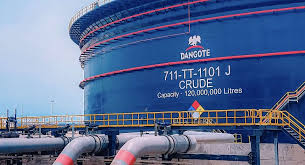
Nigeria’s largest petroleum refinery has been rocked by a sophisticated fuel diversion scheme that has forced the Dangote Petroleum Refinery and Petrochemicals to suspend its discount pricing program, potentially affecting fuel availability and pricing across the nation.
The scandal, which came to light through internal investigations, involves registered affiliate marketers exploiting their privileged access to subsidized fuel by illegally redirecting products to unregistered third-party operators for quick profits.
The Scheme Unraveled
The refinery’s discount program, launched with the noble intention of ensuring nationwide access to affordable petroleum products, has been systematically abused by marketers who were granted preferential pricing to maintain competitive margins against fuel importers. Instead of distributing products through their retail networks as intended, these marketers have been allowing unregistered operators to collect fuel using their Authority To Collect (ATC) loading tickets.
Industry expert Olatide Jeremiah explained the mechanics of the fraud: “If Dangote is giving its registered customers products at a discounted price of N815, below the publicly announced price of N825, the marketers are now selling at N819, bypassing other expenses and making a quick profit of N4 per liter.” This practice effectively undermines the program’s core objectives while distorting the downstream petroleum market.
Widespread Impact
The abuse has proven more extensive than initially anticipated. According to sources, the diverted products were frequently sold at market rates far exceeding the agreed subsidized prices, with some marketers brazenly reselling petroleum products directly from the refinery’s tarmac at rates below official gantry prices.
The malpractice has extended beyond simple diversions to include products provided on credit under volume-backed repayment agreements designed to boost national distribution. These credit arrangements, intended to ensure adequate supply circulation at retail stations, were similarly exploited as marketers immediately sold the products to unregistered operators rather than fulfilling their distribution obligations.
Immediate Consequences
In a letter dated July 13, 2025, signed by Group Executive Director-Commercial Operations Fatima Dangote and obtained by this correspondent, the refinery announced the immediate suspension of its strategic partner discount scheme. The decision came after the company described “unprecedented complaints” and “several engagements with erring partners” that had failed to curb the abuses.
The suspension affects a significant network of strategic partners, including major industry players such as MRS Oil, Heyden Petroleum, Ardova Plc, Hyde Energy, Optima Energy, TotalEnergies, and several others. However, the refinery has provided certain concessions to minimize disruption, allowing existing Product Release Notes issued at discounted rates to remain valid and honoring payments made before the suspension date.
Market Implications
The timing of this suspension could have far-reaching implications for Nigeria’s petroleum market. Recent market analysis using data from petroleumprice.NG reveals that non-affiliated marketers, relying solely on imported fuel, have been selling at price ranges similar to those of Dangote’s registered marketers, despite lacking access to subsidized products.
Last week, at least five privately owned depots aligned their ex-depot prices with Dangote’s latest adjustments, selling at an average of N820 per liter, down from N835 per liter at the week’s start. This price convergence suggests the market distortions created by the diversion scheme may have been more significant than initially apparent.
Looking Forward
Despite the suspension, Dangote refinery maintains that strategic partnerships remain relevant and will not be scrapped entirely. The company has indicated it is “judiciously exploring other incentive/reward schemes” for strategic partners, with details to be communicated in due course.
The scandal highlights the challenges facing Nigeria’s petroleum sector as it transitions from an import-dependent to a domestically refined capacity. While the Dangote refinery represents a significant step toward energy security, this incident underscores the need for robust oversight mechanisms to prevent the abuse of programs designed to benefit consumers.
When contacted for official comment, Anthony Chiejina, group head of corporate communications for Dangote Group, requested additional time to provide a comprehensive response, emphasizing that the refinery is not engaged in any dispute with marketers but is addressing systemic issues within the distribution network.
This development comes at a critical time for Nigeria’s petroleum sector, as the country seeks to reduce its dependence on imported refined products while ensuring a stable fuel supply and pricing for consumers nationwide.
WHAT YOU SHOULD KNOW
The Dangote Petroleum Refinery has suspended its discount fuel scheme after discovering that registered marketers were illegally diverting subsidized petroleum products to unregistered third parties for quick profits.
Instead of distributing discounted fuel through their retail networks as intended, these marketers exploited their privileged access by selling products directly from the refinery at inflated prices, undermining the program’s goal of ensuring affordable fuel nationwide.