Nigerian National Petroleum Company Limited (NNPCL) is contemplating a dramatic shift in strategy that could see the privatization of the country’s three major refineries, following decades of failed investments and operational challenges that have cost taxpayers billions of dollars.
Bayo Ojulari, Group Chief Executive Officer of the Nigerian National Petroleum Company Limited (NNPCL), revealed Thursday during the 9th OPEC International Seminar in Vienna that the company is conducting a comprehensive strategic review of its refinery operations, with all options—including outright sale—remaining on the table.
“We’re reviewing all our refinery strategies now. We hope before the end of the year, we’ll be able to conclude that review,” Ojulari told Bloomberg in an exclusive interview. When pressed about potential divestment, he was unequivocal: “Sale is not out of the question. All the options are on the table, to be frank.”
The potential sale would encompass Nigeria’s three state-owned refineries located in Port Harcourt, Warri, and Kaduna—facilities that have become symbols of the country’s struggle with infrastructure development and industrial policy execution.
The refineries’ troubled history reads like a cautionary tale of mismanaged public investment. Despite receiving an estimated $18 billion in government funding over the years, the facilities have consistently failed to operate at meaningful capacity, leaving Nigeria—Africa’s largest oil producer—heavily dependent on imported refined petroleum products.
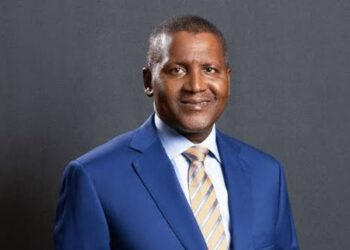
This stark reality was reinforced by comments from Aliko Dangote, Africa’s richest man and CEO of Dangote Group, who expressed deep skepticism about the state refineries’ prospects during a concurrent address to Global CEO Africa members at his private Lekki refinery. “I don’t think, and I doubt very much if they will work,” Dangote stated bluntly, drawing from his own frustrated experience with the facilities.
Dangote’s criticism carries particular weight given his personal history with the refineries. In 2007, his consortium briefly acquired the facilities under then-President Olusegun Obasanjo’s administration, only to have the sale reversed by incoming President Umaru Yar’Adua, who was reportedly convinced by refinery managers that the assets had been undervalued.
Ojulari attributed the persistent failures to a combination of outdated infrastructure and technological incompatibility. “Some of those technologies have not worked as we expected so far,” he acknowledged, describing the challenge of modernizing decades-old facilities as increasingly complex.
The analogy offered by Dangote was particularly striking: attempting to rehabilitate the aging refineries was “like trying to modernize a car that was built 40 years ago, when technology and everything have changed. Even if you change the engine, the body will not be able to take the shock of that new technology engine.”
This technical obsolescence has translated into operational disasters. The Port Harcourt refinery, which processes 60,000 barrels per day, was shut down just six months after being declared operational, while the Warri facility lasted only one month following its December reopening under former NNPC Group Managing Director Mele Kyari.
The financial toll has been staggering. Recent data indicates that N100 billion was allocated for refinery rehabilitation in 2021 alone, with monthly operational expenditures reaching N8.33 billion. Between 2013 and 2017, an additional $396.33 million was spent on turnaround maintenance projects—investments that have yielded virtually no return.
The Manufacturers Association of Nigeria has been particularly vocal in its criticism, describing the refineries as “a drain on the country’s economy” and calling for immediate privatization. This sentiment reflects growing frustration among stakeholders who view the facilities as emblematic of broader governance failures in Nigeria’s oil sector.
The contrast with private sector efficiency has become increasingly stark. Dangote’s 650,000-barrel-per-day refinery, built after the government blocked his initial acquisition, now dedicates over 50 percent of its output to Premium Motor Spirit (petrol) production—more than double the 22 percent allocation that characterized the state-owned facilities at their peak performance.
This operational efficiency gap underscores the potential benefits of private sector management, lending credence to arguments for privatization that have gained momentum following the recent operational failures.
The potential sale represents more than just asset divestment—it signals a fundamental shift in Nigeria’s approach to its oil sector. The Petroleum Industry Act (PIA), which Ojulari cited as providing “stabilization to the energy industry,” has created a framework that could facilitate such transitions while maintaining regulatory oversight.
NNPCL’s planned stock exchange listing by 2028 adds another layer of complexity to the privatization discussion, as the company seeks to balance public accountability with operational efficiency in an increasingly competitive market.
For a nation that has long struggled to convert its abundant crude oil resources into refined products for domestic consumption, the potential privatization of these refineries represents both an acknowledgment of past failures and a possible pathway to future energy independence.
The decision will ultimately rest on whether Nigeria’s leadership can overcome the political sensitivities surrounding state asset sales in favor of pragmatic solutions that serve the broader public interest—a challenge that will test the country’s reform credentials in the months ahead.
WHAT YOU SHOULD KNOW
Nigeria’s state oil company is considering selling its three major refineries (Port Harcourt, Warri, and Kaduna) after a catastrophic $18 billion investment failure spanning decades.
Despite massive government funding, the refineries remain largely non-functional due to outdated infrastructure and technical challenges, forcing Africa’s largest oil producer to rely heavily on imported refined petroleum products.
A final decision on the sale is expected before year-end, marking a critical test of Nigeria’s commitment to economic reform over political sensitivities.