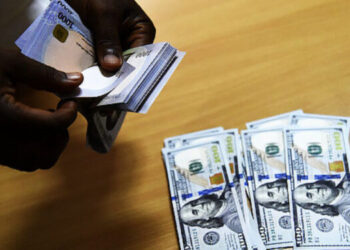
The Indian rupee is expected to edge higher when markets open on Thursday, buoyed by a regional rally in Asian currencies and diminishing market anxiety over President Donald Trump’s latest round of tariff threats, according to currency traders and market indicators.
Forward trading data suggests the rupee will commence trading between 85.60 and 85.62 against the dollar, representing a slight improvement from Wednesday’s closing level of 85.6725. This modest uptick reflects a broader pattern of stability that has characterized the currency in recent weeks, with traders describing movement as “choppy within a well-defined range.”
Currency dealers report a clear consensus among both corporate clients and interbank traders to accumulate dollars near the 85.20-85.40 level while taking profits closer to 85.90-86.10. This strategic positioning reflects the absence of significant catalysts that might drive the rupee decisively beyond its established trading corridor.
“The consensus trade right now—both among corporates and interbank—is to buy USD/INR near 85.20–85.40 and sell near 85.90–86.10,” explained a senior currency trader at a private bank. “It makes sense when you consider that there have been no major trigger points.”
Perhaps most notably, financial markets across Asia demonstrated remarkable resilience to Trump’s latest tariff announcements, suggesting investors are becoming increasingly desensitized to the administration’s trade rhetoric. The president’s declaration of a 50% tariff on copper imports, effective August 1, alongside threats of similar levies on Brazilian exports and tariff notices to seven smaller trading partners, failed to trigger the market volatility that characterized earlier trade disputes.
This muted response was reflected across Asian markets, with regional currencies gaining ground and equity indices posting advances. The dollar index retreated to 97.35, providing additional support for emerging market currencies, including the rupee.
Adding to the supportive environment, recently released minutes from the Federal Reserve’s June meeting revealed narrow support for potential rate cuts later this month. Most Fed participants indicated that rate reductions would likely be appropriate later this year, with policymakers expressing confidence that any inflationary pressures from tariffs would prove “temporary or modest.”
MUFG Bank analysts noted that market attention is likely to pivot toward the Fed’s policy trajectory, which will be crucial in determining the dollar’s direction in the coming months. This shift in focus away from trade tensions toward monetary policy could provide a more stable backdrop for emerging market currencies.
Current market conditions present a complex landscape for rupee traders. While the one-month non-deliverable forward contract trades at 85.70 with an onshore premium of 8.75 paise, broader market indicators show divergent trends. Brent crude futures have stabilized at $70.2 per barrel, while the ten-year U.S. Treasury yield holds at 4.33%.
Foreign investment flows continue to provide underlying support, with National Securities Depository Limited data showing overseas investors purchased a net $33.2 million worth of Indian shares on July 8, maintaining the steady inflow pattern that has characterized recent months.
The rupee’s expected modest gains on Thursday reflect a market that has found its equilibrium amid global uncertainty, with traders positioning for range-bound movement while monitoring developments in U.S. monetary policy and trade relations.
As Asian markets demonstrate growing immunity to Trump’s tariff threats, the focus shifts to fundamental economic indicators that will drive currency movements in the weeks ahead.
WHAT YOU SHOULD KNOW
The Indian rupee is expected to open slightly higher on Thursday, but the most significant development is that Asian markets—including India—are showing growing immunity to President Trump’s tariff announcements. Where previous trade threats triggered volatility, investors now largely ignored Trump’s latest 50% tariff on copper and threats against Brazil.