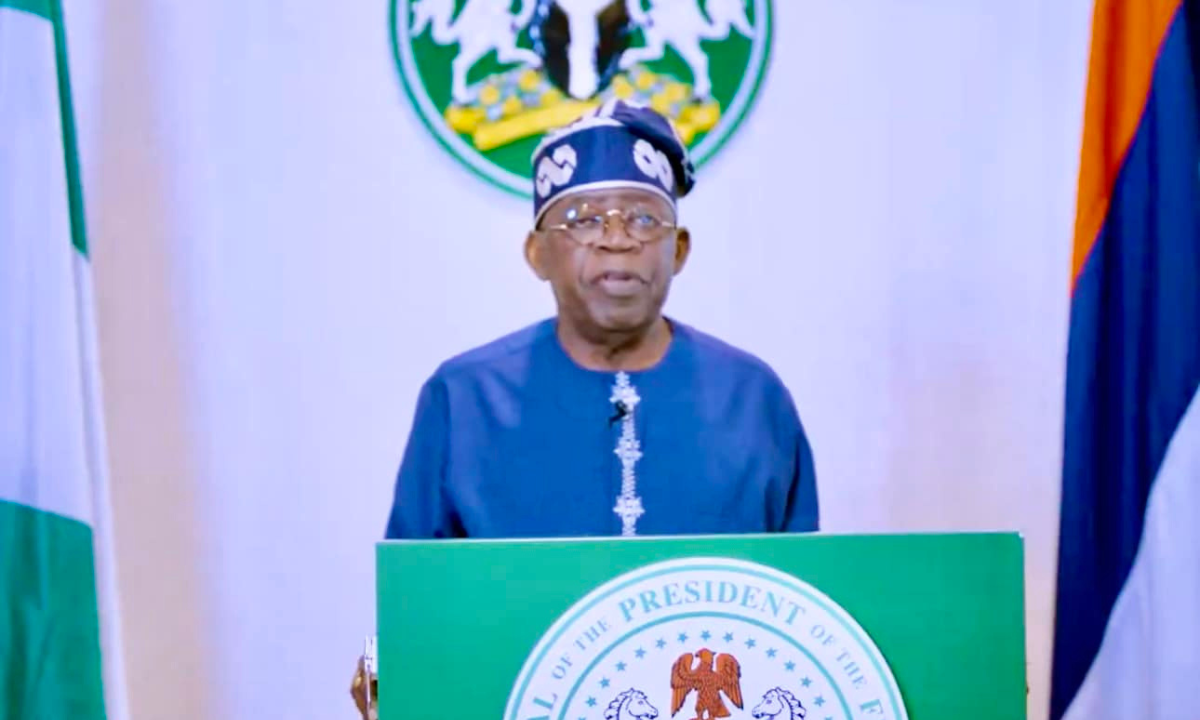
President Bola Ahmed Tinubu has pledged to eliminate all barriers obstructing the growth of Nigeria’s agricultural sector, with a renewed focus on livestock production, food sovereignty, and agricultural exports.
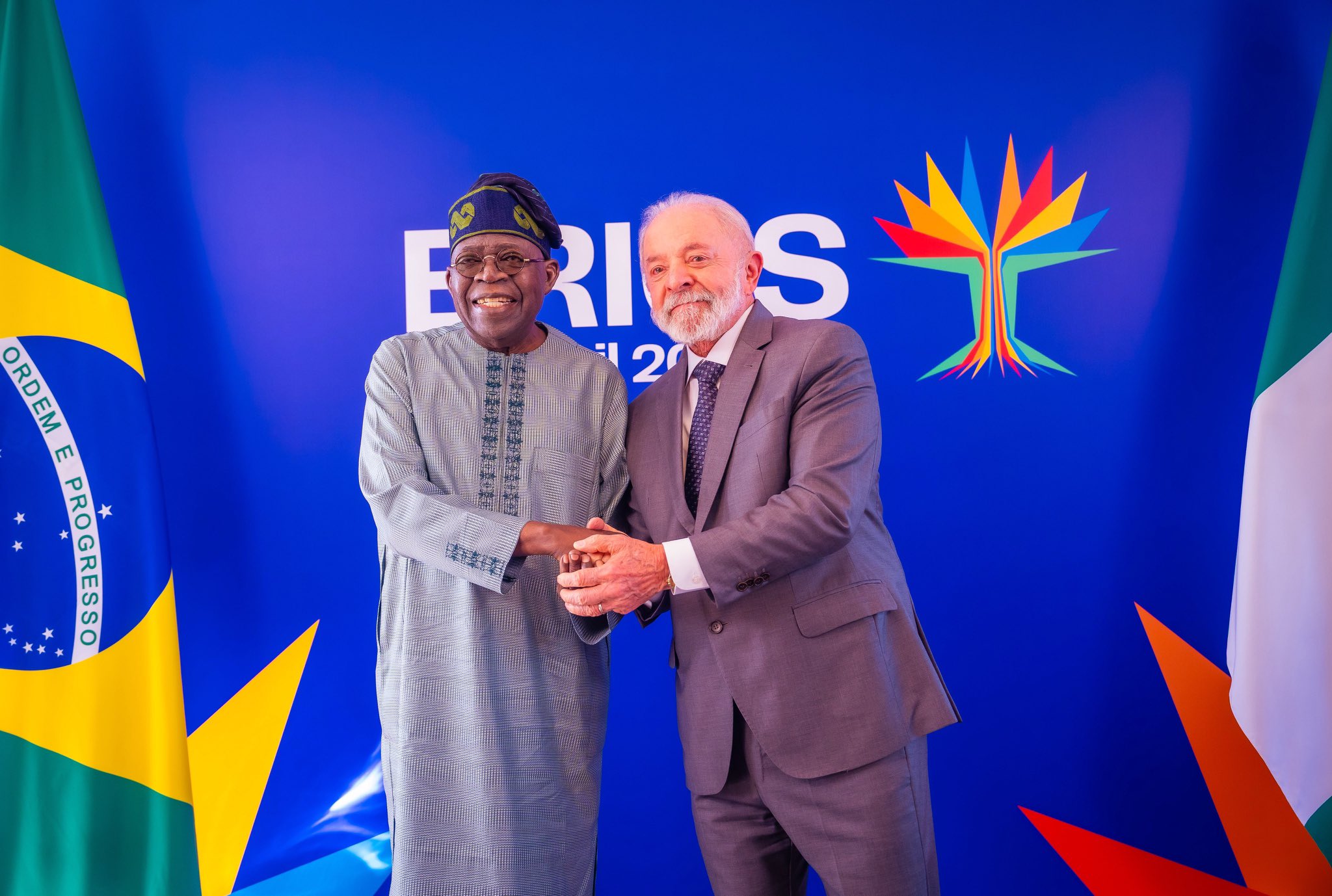
He gave this assurance during a high-level bilateral meeting with Brazilian President Luiz Inacio Lula da Silva at the Copacabana Forte, where both nations discussed strategic collaboration to revitalise agricultural development and other critical sectors.
According to a statement from Presidential Adviser Bayo Onanuga, Tinubu acknowledged that excessive bureaucracy has long hindered the realisation of the agricultural sector’s full potential.
He emphasised that Nigeria is implementing economic reforms to enhance its competitiveness on the global stage, particularly in agriculture—an area where the country already enjoys a comparative advantage.
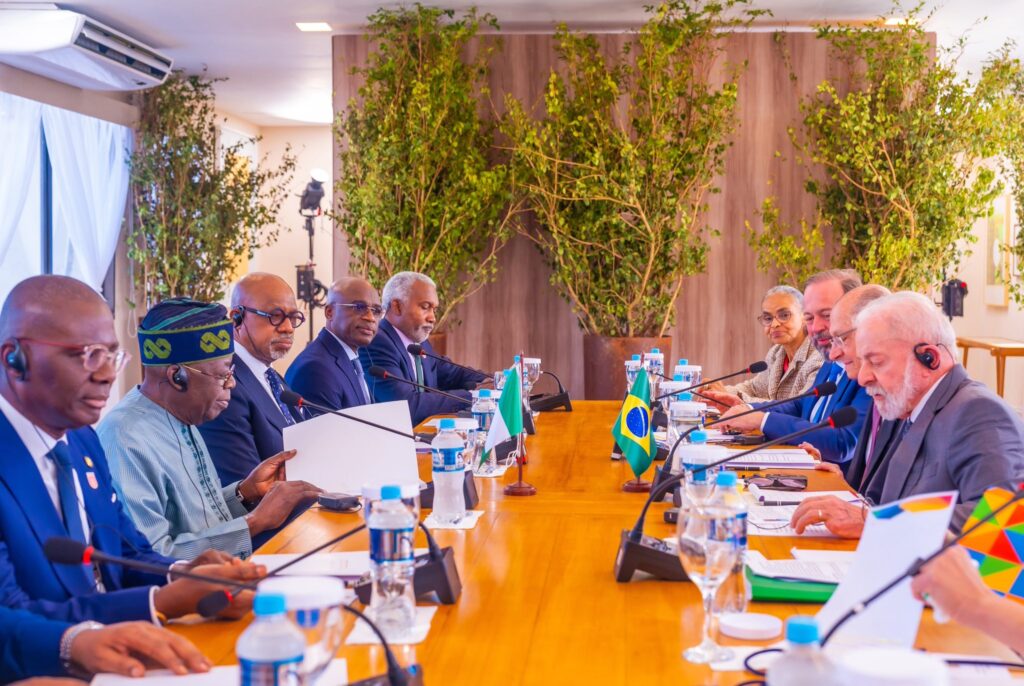
During the meeting, President Tinubu assured President Lula that all procedural complexities involved in bilateral agreements between both countries would be simplified and expedited. He identified key areas for cooperation, including trade, aviation, energy transition, agriculture and food production, mining, and natural resource development.
He commended Brazil’s achievements in agricultural research and development, describing the South American nation as a global benchmark in food and crop production. Tinubu noted that Nigeria could significantly benefit from Brazil’s experience and expertise, especially as it works to reposition agriculture as a core driver of employment and economic development.
Addressing the subject of livestock farming, Tinubu highlighted Nigeria’s interest in bolstering investment in poultry, cattle rearing, and fisheries. He added that Nigeria’s blue economy also offered opportunities for durable partnerships with Brazil.
He stressed the important role of subnational governments in promoting food and livestock production and encouraged them to align with federal efforts to elevate agriculture as a major employment and revenue source.
Responding to Tinubu’s remarks, President Lula da Silva pledged that all outstanding agreements between both nations would be streamlined and formalised. He said that Memoranda of Understanding (MOUs) would be updated and signed during Tinubu’s next official visit to Brazil.
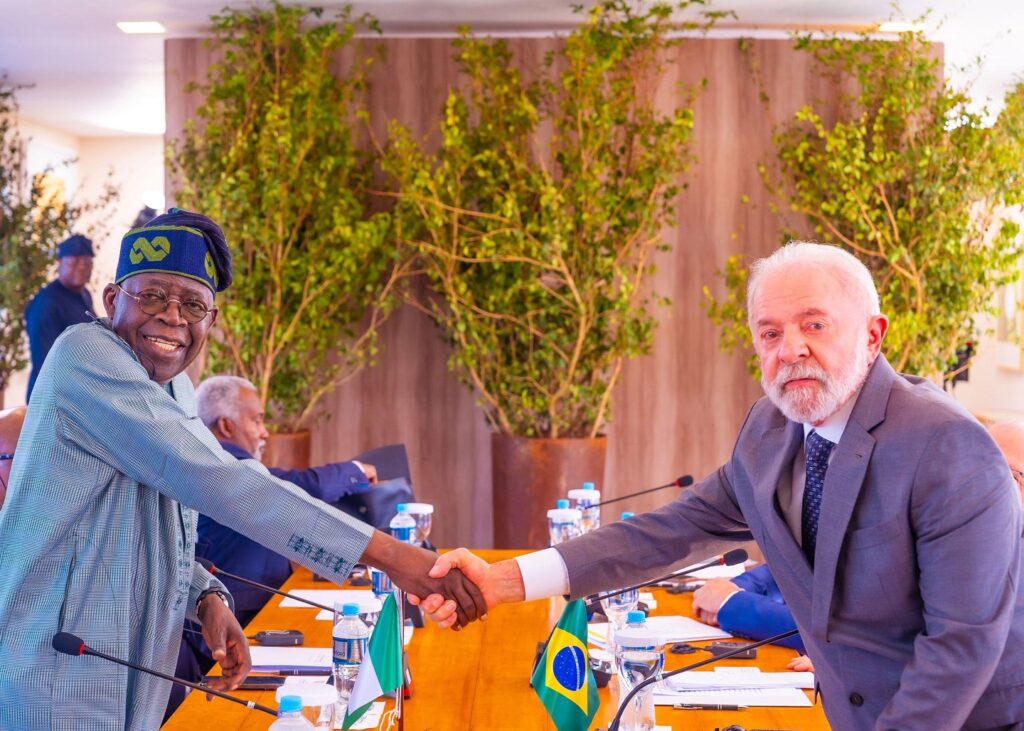
Lula also affirmed Brazil’s willingness to eliminate administrative bottlenecks that have slowed down bilateral progress, adding that Brazilian research institutions would collaborate with Nigerian counterparts to advance livestock farming.
During the session, Nigeria’s Minister of Agriculture, Senator Abubakar Kyari, affirmed that President Tinubu remains firmly committed to achieving food security, a goal that would be realised through both local initiatives and international partnerships. Kyari highlighted that Nigeria’s current edge in fertiliser production could be further amplified through strategic alliances.
Minister of Livestock Development, Idi Mukhtar Maiha, outlined three core areas for Brazil-Nigeria collaboration: disease control and health services for livestock, sanitary improvements, and joint research on genetic improvement and new animal breeds.
Several Nigerian state governors attended the bilateral meeting, including Hyacinth Alia (Benue), Dapo Abiodun (Ogun), Mohammed Umar Bago (Niger), Sheriff Oborevwori (Delta), and Babajide Sanwo-Olu (Lagos). Also present were the Minister of Foreign Affairs, Yusuf Tuggar, and the Director General of the National Intelligence Agency (NIA), Mohammed Mohammed.
Governor Dapo Abiodun stressed that Nigeria’s subnational governments would actively support federal plans to transform agriculture, noting that the decision by both presidents to hold a business forum alongside Tinubu’s state visit would bring in fresh perspectives and resources to reinvigorate Nigeria’s agricultural landscape.
What you should know
President Bola Tinubu, during a bilateral meeting with Brazilian President Lula da Silva, committed to removing bureaucratic roadblocks that hinder Nigeria’s agricultural growth.
The leaders agreed to fast-track agreements, especially in livestock, fertiliser, and food production, with Brazilian support in research and technical assistance. Subnational leaders also pledged to complement federal efforts in achieving food security.