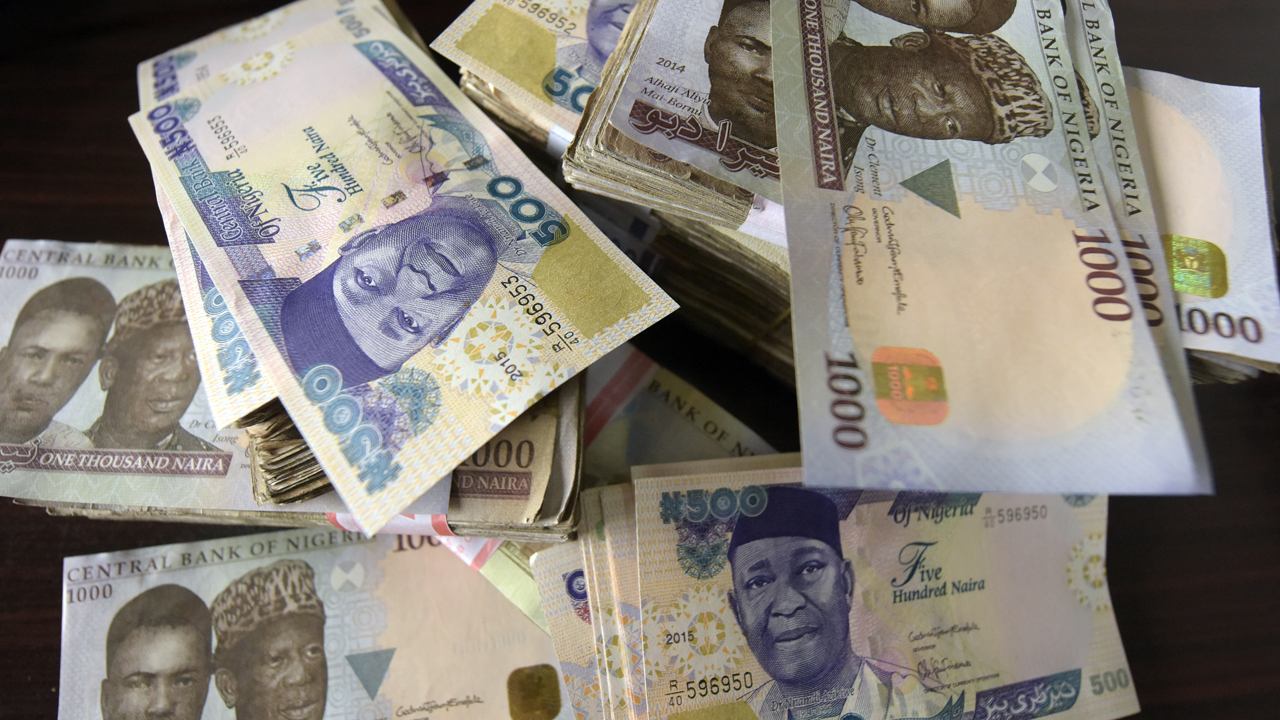
The Nigerian naira demonstrated signs of recovery this week, trading below the psychologically significant ₦1,600 mark against the US dollar in the parallel market for the first time in recent sessions, as the Central Bank of Nigeria’s (CBN) targeted foreign exchange interventions began showing measurable impact.
Market data revealed the currency settled at ₦1,590/$1 on Wednesday from ₦1,595-₦1,600/$ on Tuesday, representing a modest but symbolically important strengthening that currency traders and analysts are viewing as evidence that the apex bank’s intervention strategy may be gaining traction.
The improvement was even more pronounced in the official Nigerian Foreign Exchange Market (NFEM), where the naira appreciated to ₦1,549/$1, with CBN data showing the currency marginally strengthened from ₦1,550/$1 to ₦1,549/$1. This convergence between parallel and official rates signals a reduction in the premium that has historically plagued Nigeria’s forex market, suggesting improved liquidity conditions.
However, the gains proved modest and potentially fragile, with early Thursday trading seeing the currency retreat to around ₦1,560/$1 by 10:20 AM West Africa Time, highlighting the ongoing volatility that has characterized the naira’s performance throughout 2024 and into 2025.
The recent stabilization comes against the backdrop of the Central Bank maintaining its benchmark interest rate at 27.50%—the highest in recent history—following multiple aggressive hikes in 2024. This hawkish monetary policy stance, primarily aimed at controlling inflation and attracting foreign investment, appears to be complementing the CBN’s direct forex market interventions.
Currency analysts attribute the naira’s recent performance to a combination of factors, including the CBN’s renewed commitment to regular forex interventions, ongoing macroeconomic policy adjustments, and what appear to be gradually improving foreign capital inflow policies. These measures, experts suggest, could help maintain the exchange rate around current levels through the medium term, provided external economic conditions remain favorable.
The improvement in market sentiment has been particularly notable among foreign investors, who have been closely monitoring Nigeria’s economic reform programs. These reforms, which include efforts to unify exchange rate windows and improve market transparency, have been designed to restore confidence in Africa’s largest economy following years of currency volatility.
Despite the recent gains, the naira’s performance this year continues to reflect broader structural challenges facing the Nigerian economy. The currency has experienced significant pressure throughout 2024 and early 2025, with parallel market rates at times exceeding ₦1,600/$1 as demand for foreign currency outstripped supply.
The CBN’s intervention strategy represents a delicate balancing act between market forces and policy objectives. While direct interventions can provide short-term stability, analysts note that sustainable currency strength will ultimately depend on addressing underlying economic fundamentals, including improving foreign exchange earnings through increased exports and attracting sustained foreign investment.
Market participants will be closely watching whether the CBN can maintain its intervention capacity and whether the recent improvement in sentiment translates into sustained foreign capital inflows. The coming weeks will be crucial in determining whether this week’s gains represent a meaningful turning point or merely a temporary respite in the naira’s ongoing volatility.
For ordinary Nigerians, any sustained improvement in the exchange rate could provide relief from import-driven inflation that has significantly impacted the cost of living. However, economists caution that lasting currency stability will require continued policy consistency and structural economic reforms beyond monetary interventions alone.
WHAT YOU SHOULD KNOW
The Nigerian naira showed modest recovery this week, strengthening to ₦1,590/$1 in the parallel market from ₦1,600/$1, driven by Central Bank interventions and improved investor sentiment from economic reforms.
However, the gains remain fragile—the currency already retreated to ₦1,560/$1 by Thursday morning, highlighting ongoing volatility. While CBN’s forex interventions and high interest rates (27.50%) provide temporary relief, sustainable naira stability will ultimately depend on addressing Nigeria’s structural economic challenges and maintaining consistent policy reforms rather than relying solely on market interventions.