In a candid social media post that has sparked widespread conversation across Nigeria’s entertainment industry, popular rapper Zlatan Ibile has issued a stark warning to aspiring musicians about the psychological toll of fame, urging them to budget for therapy alongside traditional career expenses.
The “Zanku” hitmaker took to his X (formerly Twitter) account on Thursday with an unconventional piece of advice that cuts to the heart of a growing concern within Nigeria’s booming music scene. Writing in his characteristic pidgin English, Zlatan advised families and managers of rising artists to set aside funds for mental health support just as they would for marketing and promotional campaigns.
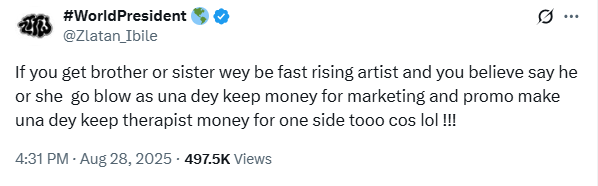
“If you get brother or sister wey be fast fast-rising artist and you believe say he or she go blow, as una dey keep money for marketing and promo make una dey keep therapist money for one side tooo cos lol!!!” the rapper wrote, punctuating his serious message with characteristic humor while underlining its gravity.
The timing of Zlatan’s advice reflects a broader reckoning within Nigeria’s entertainment industry, where the pressures of sudden fame, social media scrutiny, and the demands of maintaining public personas have taken a documented toll on artists’ mental well-being.
In recent years, several prominent Nigerian musicians have courageously shared their battles with depression, anxiety, and other mental health challenges, helping to destigmatize these conversations in a society where mental health issues have traditionally been taboo subjects.
The music industry’s unique pressures—from the constant public scrutiny and social media commentary to the financial instability that often accompanies artistic careers, even successful ones—create a perfect storm for mental health challenges. For rising artists, the transition from obscurity to fame can be particularly jarring, as they navigate newfound attention while often lacking the support systems and resources that established stars have developed over time.
Zlatan’s advice represents a pragmatic approach to what industry insiders increasingly recognize as an occupational hazard. By framing therapy costs as a business expense equivalent to marketing budgets, the rapper is effectively normalizing mental health care as an essential component of career management rather than an emergency response to crisis.
The post has resonated strongly within Nigeria’s creative community, where conversations about mental health have gained momentum following high-profile revelations from artists across various genres. This shift represents a significant cultural evolution in a country where discussions of mental health have historically been shrouded in stigma and misunderstanding.
Industry observers note that Zlatan’s message, delivered with his trademark blend of humor and wisdom, may reach audiences who might otherwise dismiss more formal mental health advocacy. His influence among young Nigerians, particularly through his pioneering role in the Zanku dance movement and street-hop music, gives his words significant weight in communities where mental health resources are often overlooked or inaccessible.
The rapper’s advice also highlights broader systemic issues within the entertainment industry, including the need for better support structures for artists and more comprehensive approaches to career development that prioritize long-term well-being alongside commercial success.
As Nigeria’s music industry continues its remarkable global ascent, with Afrobeats artists achieving unprecedented international recognition, Zlatan’s message serves as a timely reminder that sustainable success requires attention not just to artistic and commercial development but to the human cost of fame itself.
WHAT YOU SHOULD KNOW
Nigerian rapper Zlatan Ibile has issued a crucial wake-up call to the music industry: budget for therapy like you budget for promotion. His blunt advice reflects a growing mental health crisis among Nigerian artists who are increasingly speaking out about depression and the psychological toll of fame