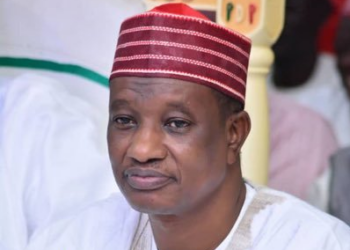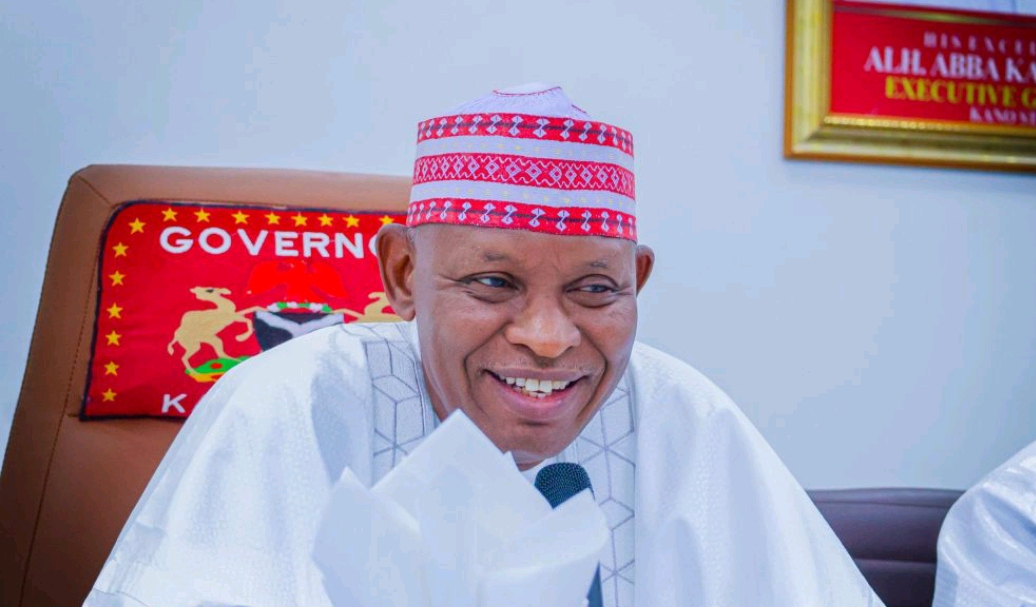
Governor Abba Kabir Yusuf’s decision to dump the New Nigeria Peoples Party and return to the All Progressives Congress has triggered one of the biggest political earthquakes in Kano since the 2023 elections.
This has also opened a new chapter of rivalry, realignment and uncertainty ahead of the 2027 general elections.
Kano is not just any state in Nigeria’s political map.
With one of the largest voting populations in the country, control of Kano often shapes presidential outcomes.
Yusuf’s defection therefore goes beyond a personal political move; it has the potential to alter both state and national calculations as parties position themselves for the next electoral cycle.
Why Yusuf Is Leaving the NNPP
In his official explanation, Governor Yusuf blamed his exit on deepening internal crises within the NNPP.
He cited leadership disputes, court cases and divisions in the party as factors that had weakened unity and made governance difficult.
According to him, remaining in a divided party would distract his administration and slow development in Kano.
He presented the defection as a decision taken in the public interest, aimed at ensuring political stability, peace and effective governance.
However, the NNPP strongly disputes this version.
Party leaders insist that the organisation remains stable, pointing to recent congresses and electoral victories as proof.
They described Yusuf’s claims as an afterthought designed to justify a political choice already made.
The Quiet Rift With Kwankwaso
Beyond the official reasons, another factor has emerged as central to Yusuf’s decision: growing tension with Rabiu Musa Kwankwaso, the political godfather who built the Kwankwasiyya Movement and powered Yusuf’s rise to office.
While Yusuf has publicly urged his supporters to respect Kwankwaso and denied any personal quarrel, behind the scenes there has been clear disagreement over political direction.
Reports indicate that Kwankwaso opposed Yusuf’s plan to join the APC and urged him to remain within the NNPP to protect the identity and strength of the movement.
This disagreement has created a visible crack within the Kwankwasiyya family.
Yusuf and his allies appear to believe that aligning with the ruling party offers better protection, access to federal power and a clearer path to political survival.
Kwankwaso, on the other hand, has chosen to remain outside the APC and rebuild his movement as an independent force ahead of 2027.
Though both men avoid open confrontation, the defection marks the sharpest political separation between them since Yusuf entered mainstream politics.
APC’s Strategic Gain in Kano
For the APC, Yusuf’s return is a major victory.
The ruling party lost Kano in 2023 after years of dominance, and reclaiming the sitting governor gives it renewed control over a critical political territory.
The defection is not happening in isolation.
Yusuf is moving with dozens of lawmakers, local government chairmen and party officials, instantly strengthening the APC’s grassroots machinery in the state.
It also fits into a broader national pattern of governors and senior politicians migrating into the ruling party, reinforcing APC’s influence as preparations for 2027 quietly begin.
Party leaders have described Yusuf’s return as a homecoming and evidence that the APC remains attractive to political heavyweights.
Opposition Pushback And Moral Questions
Opposition parties have reacted with fury.
The NNPP has described the move as betrayal, accusing Yusuf of abandoning the mandate given to him by Kano voters on the strength of the Kwankwasiyya Movement.
The PDP, ADC and Labour Party argued that defections driven by fear, ambition or personal protection do not translate into electoral advantage.
They insisted that governors cannot transfer votes the way they transfer party cards.
They also raised moral concerns, saying elected officials enter a social contract with voters based on the platform that brought them to office, and abandoning that platform midway weakens democratic accountability.
History Sends A Warning
Kano’s political history offers a cautionary tale.
In the early 1980s, a mass defection led by then governor Abubakar Rimi failed spectacularly when voters rejected the defectors at the polls.
This precedent is now being cited by the NNPP as evidence that Yusuf’s move could backfire if the electorate interprets it as opportunistic rather than principled.
The Bigger 2027 Picture
Yusuf’s defection deepens the debate over Nigeria’s political direction.
With many governors joining the APC, critics warn of a gradual drift toward one-party dominance, even as the ruling party denies such intentions.
At the same time, the growing number of defectors raises internal tensions within the APC, where returning heavyweights must compete with existing power blocs for influence and tickets ahead of 2027.
In Kano, the battle lines are already forming.
The future strength of the Kwankwasiyya Movement, the loyalty of Yusuf’s support base and the direction taken by Kwankwaso himself will determine whether this defection becomes a winning strategy or a costly gamble.
What You Should Know
Abba Yusuf won the 2023 governorship election on the NNPP platform, powered by the Kwankwasiyya Movement. He said he is defecting because of internal crises and leadership disputes within the NNPP. The NNPP rejected this claim and called the move a betrayal of Kano voters.
There is a growing political rift between Yusuf and Rabiu Kwankwaso over the decision to join the APC. Kwankwaso has refused to defect and is rebuilding the movement outside the ruling party.
Yusuf is defecting with lawmakers and council chairmen, giving the APC a major organisational boost in Kano.
Kano remains one of Nigeria’s most important voting states and could shape the 2027 presidential race. Past defections in Kano have not always succeeded, as voters sometimes punish politicians who switch parties mid-term.
With less than months before campaigns formally begin, Yusuf’s defection marks the opening of a fierce political contest in Kano. Whether the move strengthens the APC or fractures Yusuf’s traditional base will depend on how voters interpret his motives and how the Kwankwasiyya Movement responds.
One thing is certain: Kano has once again become a central battleground in Nigeria’s political drama, and the shockwaves from Yusuf’s return to the APC will echo far beyond the state as the road to 2027 unfolds.