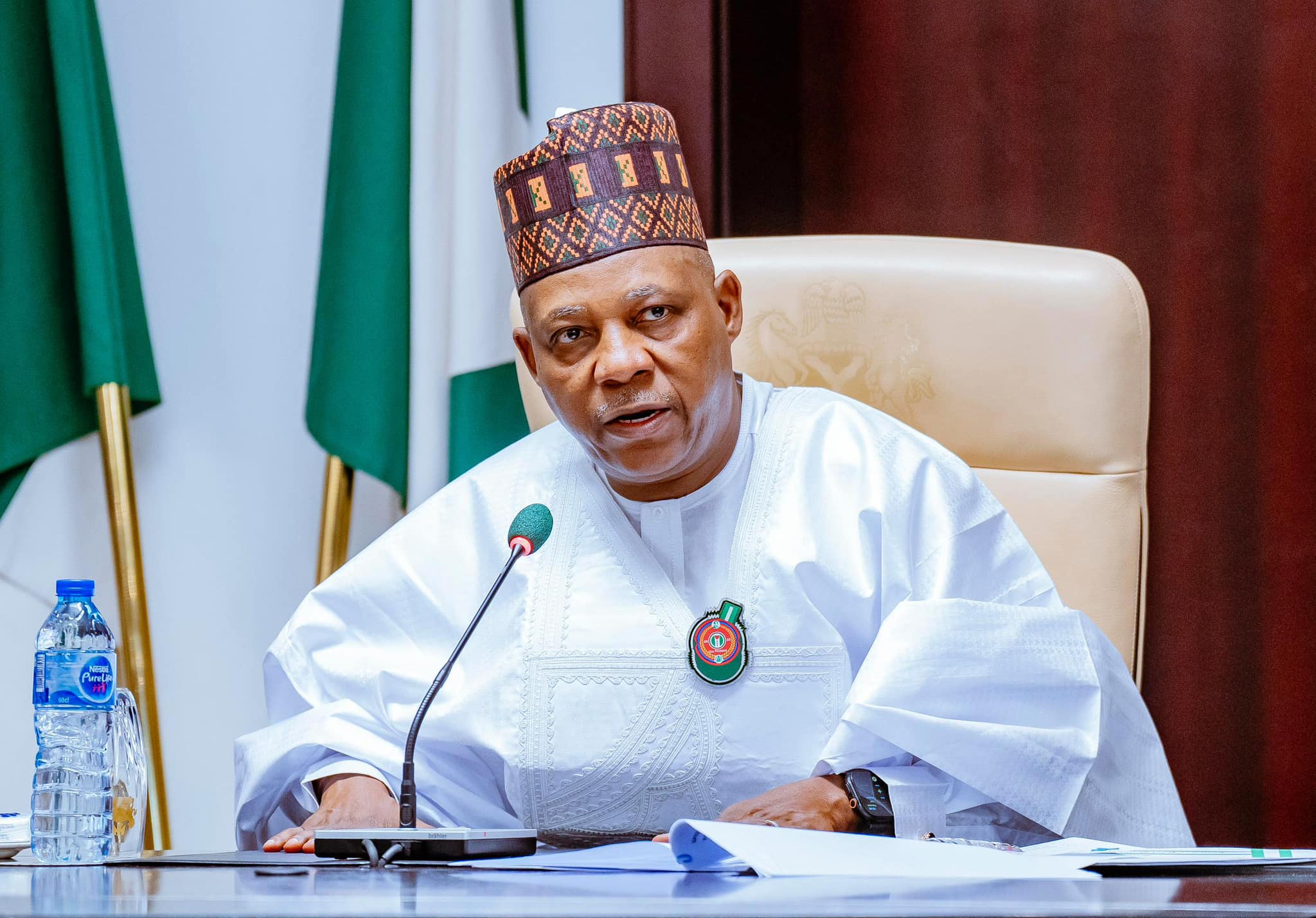
Vice President Kashim Shettima has emphasized the urgent need for Nigeria to close its growing skills gap, describing the issue as a national priority vital to the country’s economic transformation.
Speaking on Thursday at the 6th National Council on Skills (NCS) meeting held at the Presidential Villa in Abuja, the Vice President called for unified action across all sectors to develop a competent and adaptive workforce.
He stressed that the success of Nigeria’s economic agenda hinges on building a strategic workforce capable of meeting current and future demands. According to Shettima, the country’s unity must be reflected in how it addresses national development challenges, especially the pressing need to upskill its vast youth population.
“What binds us together supersedes whatever divides us. We have to make this country work. We need to fill in the skills gap,” Shettima declared.
He reiterated that the National Council on Skills was created to lead the development of a responsive workforce that aligns with Nigeria’s dynamic economic landscape. He called the meeting a critical platform for exchanging ideas and crafting bold decisions necessary to confront the country’s skills and employment challenges.
In line with this vision, the Federal Government has announced a plan to review all skills development centres currently spread across multiple Ministries, Departments, and Agencies (MDAs). The objective is to consolidate and align their operations with the government’s broader economic development goals.
One of the major resolutions from the NCS meeting was the proposal for a National Skills Infrastructure Audit. This initiative is designed to create a comprehensive and centralized database of all training centres nationwide, assess their effectiveness, and identify redundancies or inadequacies in infrastructure.
“The government’s policy trajectory is to strengthen human capital development for national growth and industry through skills development. However, unless the skills infrastructure across MDAs is optimised, this vision will remain unattainable,” the council stated.
The planned audit will go beyond data collection, incorporating physical inspections of facilities and thorough documentation of operational centres. These efforts are expected to ensure that training institutions comply with national occupational standards and reflect the evolving needs of the Nigerian labour market.
Minister of Housing and Urban Development, Ahmed Musa Dangiwa, also addressed the council and presented an overview of the National Artisan Skills Acquisition Programme (NASAP). The initiative, he explained, targets the training of 10,000 artisans annually in key construction trades that are currently in high demand.
NASAP, according to the Minister, is aimed at formalising Nigeria’s largely informal artisan sector. This will be achieved by offering certification and onboarding artisans onto a new Digital Artisan Marketplace that will connect them to job opportunities and clients.
“The overall goal of NASAP is to establish a reliable and competent artisan workforce to drive the Ministry’s housing and infrastructure agenda while empowering Nigeria’s youth with employable skills,” Dangiwa said.
He noted that the programme would tackle youth unemployment while simultaneously addressing the chronic shortage of skilled labour in Nigeria’s construction sector. The dual impact of job creation and improved infrastructure development, he added, positions NASAP as a key instrument for both economic growth and social stability.
The meeting closed with a shared commitment among stakeholders to intensify collaboration, implement strategic reforms, and ensure that all policy directions are guided by the practical needs of the workforce and industry.
What you should know
Vice President Kashim Shettima has made bridging Nigeria’s skills gap a national priority, calling for unity among stakeholders. A major government plan is underway to audit and optimize training centres across all MDAs.
Meanwhile, the Housing Ministry has introduced NASAP to formalize the artisan sector and tackle youth unemployment through certified, market-ready skills.