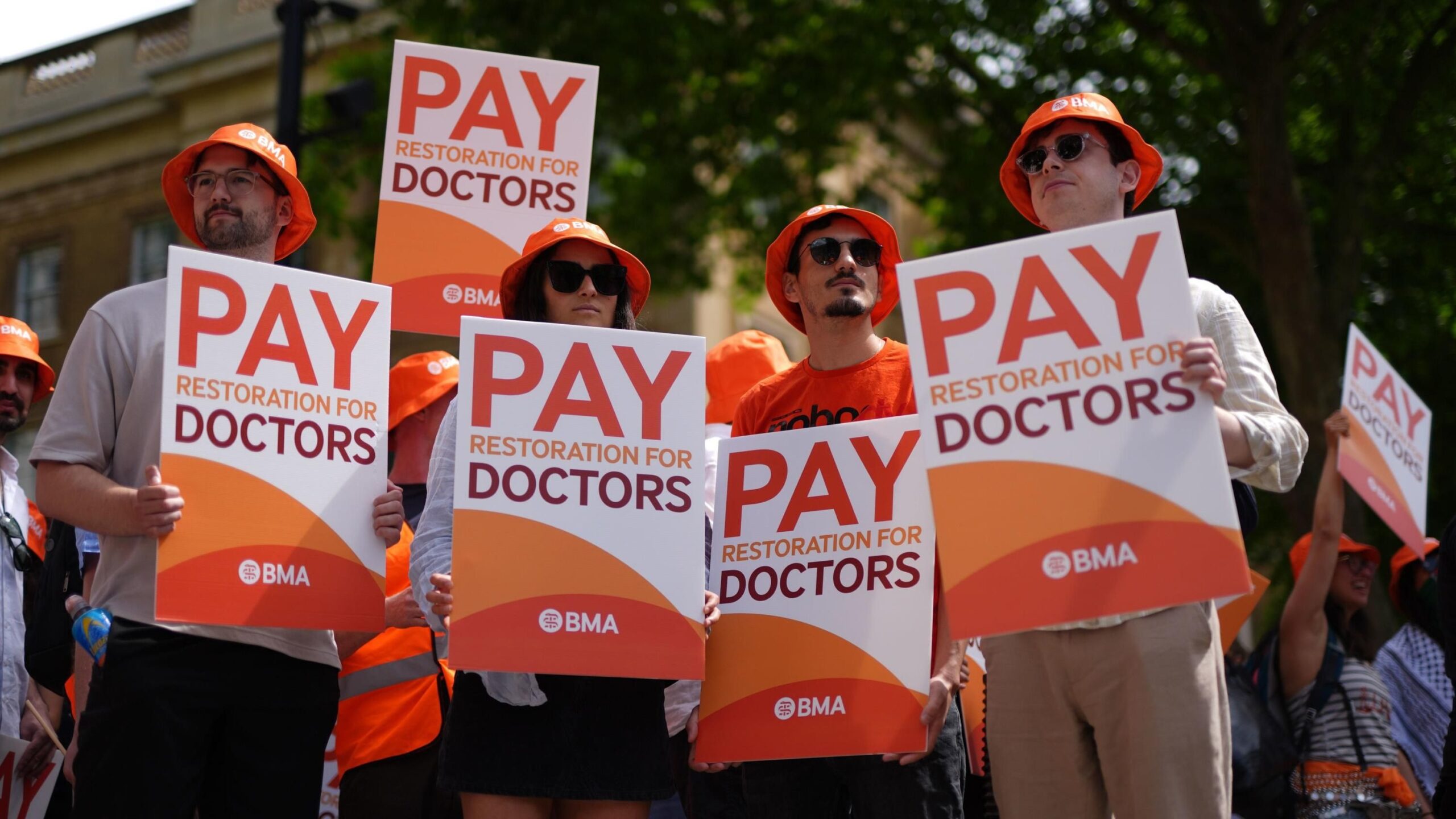
Thousands of junior doctors across the United Kingdom began a five-day strike on Friday, following the collapse of last-minute negotiations with Prime Minister Keir Starmer’s Labour government over pay increases.
Doctors took to picket lines outside hospitals nationwide as discussions, which extended late into Thursday night, ended without a breakthrough.
The latest industrial action comes despite junior doctors previously accepting a combined 22.3 percent pay rise over a two-year period in September, shortly after Labour came to power.
However, the doctors—who are at resident level and below consultant rank—argue that their wages have suffered from a significant decline in real value over the years. They said the strike became necessary in order to combat what they described as a persistent “erosion” of their earnings since 2008.
“We had no other option but to take this action,” said Melissa Ryan and Ross Nieuwoudt, co-chairs of the British Medical Association’s (BMA) junior doctors committee. “Our pay has declined by more than 21 percent in real terms, but our workload hasn’t. We’re not working 21 percent less hard, so why should our pay shrink?”
Prime Minister Keir Starmer responded with a direct appeal to the doctors, cautioning that the strike could endanger patients and further strain the already overburdened National Health Service (NHS).
Writing in The Times, Starmer said the walkout “will mean everyone loses,” and urged the junior doctors not to follow their union “down this damaging road.” He emphasized, “Our NHS and your patients need you. Lives will be blighted by this decision.”
The NHS, already struggling with staff shortages and backlogs, faced further disruptions last year when a series of strikes by healthcare workers led to widespread delays in treatment and the cancellation of tens of thousands of appointments.
Health Secretary Wes Streeting also pleaded with junior doctors to reconsider their decision. In a letter published in The Telegraph, he acknowledged their concerns but insisted that the government “cannot afford to go further on pay this year.”
Last year, the former Conservative government rejected the BMA’s demand for a 35 percent “pay restoration” that would have accounted for inflation-related losses over the past decade. After taking office, the Labour Party aimed to resolve widespread disputes by offering settlements to various public sector groups, including teachers and train drivers.
While Labour succeeded in brokering a 15 percent pay increase over three years for train operators, the deal received criticism from the Conservative opposition for its perceived generosity.
Despite previous agreements, the junior doctors maintain that the government’s current offer still falls short of restoring their pay to its former value, prompting them to take to the streets once again.
What You Should Know
The UK’s junior doctors are striking for the second time under the Labour government, claiming that over two decades of wage erosion has left their salaries over 21 percent lower in real terms.
Though a recent 22.3 percent pay increase was accepted, doctors argue it fails to fully restore their earnings. The five-day strike places additional pressure on the NHS, already grappling with systemic challenges.