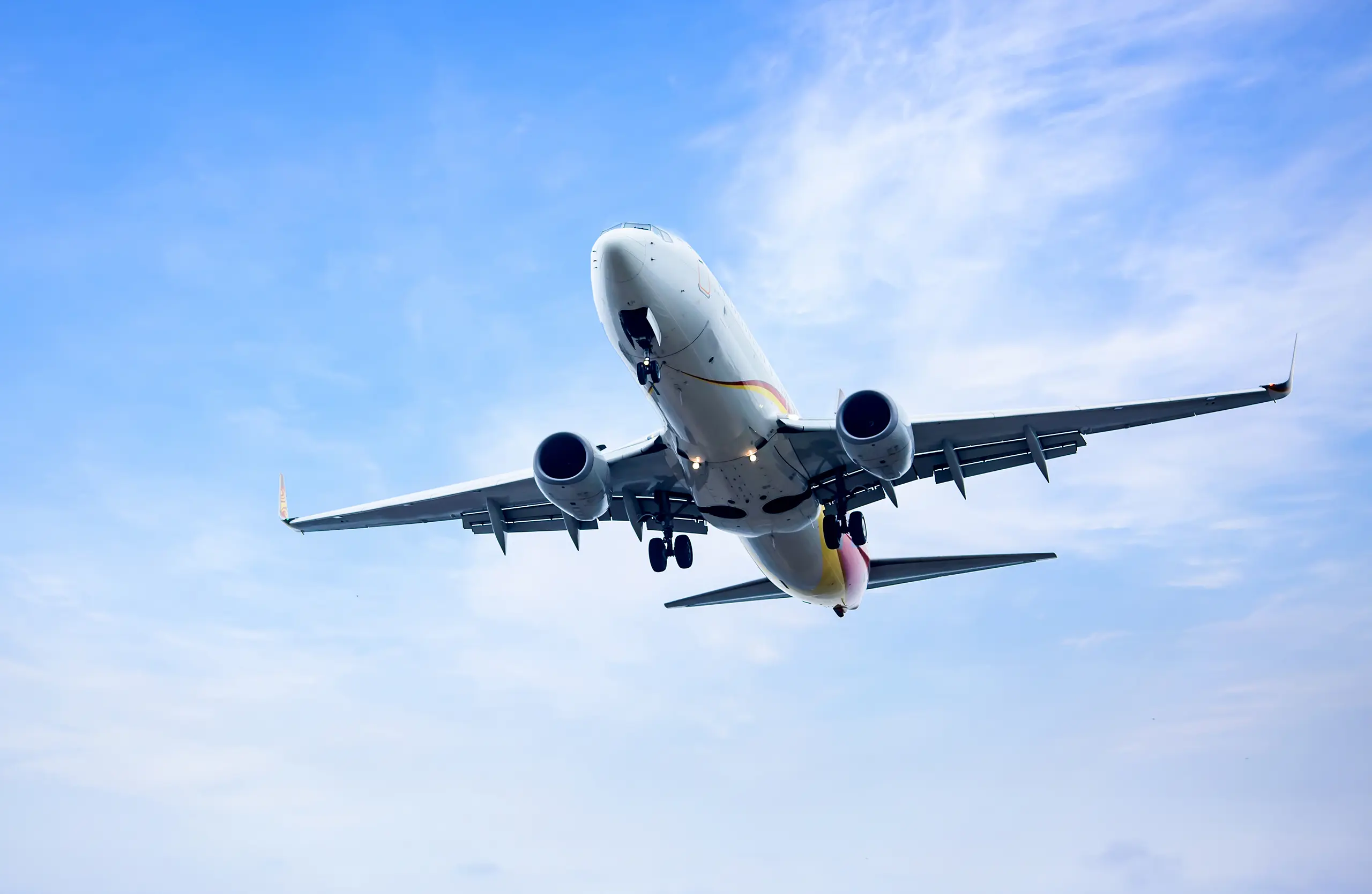
Transportation Secretary Sean Duffy ordered a 10% flight reduction at 40 major U.S. airports Wednesday, citing safety concerns as 13,000 unpaid air traffic controllers work through the nation’s longest-ever government shutdown—now in its 36th day.
The order, set to take effect within 36 hours, thrust the aviation industry into chaos as airlines rushed to slash schedules and millions of travelers faced the prospect of canceled plans. Customer service lines were immediately overwhelmed as passengers sought clarity about their disrupted itineraries.
A Record Shutdown’s Toll
Now in its 36th day, the federal government closure has left 13,000 air traffic controllers and 50,000 Transportation Security Administration agents working without paychecks — a situation that FAA Administrator Bryan Bedford warned has created “pressures building” that authorities “just can’t ignore.”
The flight reductions represent a phased approach, according to industry sources briefed by the Federal Aviation Administration. Capacity cuts would begin at 4%, escalating to 5% Saturday, 6% Sunday, and reaching the full 10% reduction by next week. International flights would be exempt from the restrictions.
“We had a gut check of what is our job,” Duffy told reporters, citing a confidential safety assessment that raised red flags about controller performance. “Our job is to make sure we make the hard decisions to continue to keep the airspace safe.”
Massive Disruption Expected
While federal officials stopped short of naming the affected airports pending a formal FAA order Thursday, the cuts are expected to hit the nation’s 30 busiest hubs — including those serving New York City, Washington, Los.C., Chicago, Atlanta, Los Angeles, and Dallas. Aviation analytics firm Cirium estimates the reductions could eliminate as many as 1,800 flights and more than 268,000 airline seats.
The impact has already been substantial. Since the shutdown began October 1, tens of thousands of flights have faced delays, affecting at least 3.2 million travelers, according to airline industry figures. On Wednesday alone, more than 2,100 flights experienced delays.
The FAA’s staffing crisis predates the shutdown. The agency operates approximately 3,500 controllers below targeted levels, forcing many to work mandatory overtime and six-day weeks even under normal circumstances. On Tuesday, Bedford revealed that absenteeism had soared, with 20% to 40% of controllers at the 30 largest airports failing to report for work.
Airlines Respond, Markets React
Major carriers moved quickly to outline contingency plans. United Airlines CEO Scott Kirby assured stakeholders that long-haul international routes and hub-to-hub operations would remain intact, with cuts targeting regional flights and non-hub domestic routes instead. The carrier announced a flexible refund policy, allowing any customer traveling during this period to obtain refunds regardless of whether their specific flight was affected.
American Airlines indicated most customers would see minimal disruption, while Southwest Airlines — the nation’s largest domestic carrier — said it was evaluating the impact and urged lawmakers to “immediately resolve the impasse.”
Wall Street reacted negatively to the news, with shares of United and American falling approximately 1% in extended trading.
Political Standoff Intensifies
The aviation crisis has become the latest battleground in the bitter political standoff between Republicans and Democrats over government funding. Democrats have insisted on extending health insurance subsidies in any funding bill, while Republicans have refused, creating an impasse that has now stretched more than five weeks.
Secretary Duffy explicitly linked the flight reductions to the political stalemate, stating the cuts “could be reversed if Democrats agreed to reopen the government.” The Trump administration has openly acknowledged its strategy of intensifying pressure on Democrats by amplifying disruptions felt by ordinary Americans.
Democrats counter that Republicans bear responsibility for refusing to negotiate. “The false narrative that this shutdown is a choice of either paying federal workers or protecting affordable healthcare is outrageous when both crises were manufactured by the exact people who can fix it,” said Sara Nelson, president of the Association of Flight Attendants-CWA, which represents 55,000 flight attendants at 20 airlines.
Broader Consequences
The shutdown, which began October 1, has had far-reaching consequences beyond aviation. Approximately 750,000 federal employees have been furloughed, many low-income Americans have lost food assistance, and numerous government services have shuttered.
On Tuesday, Duffy had warned that another week of shutdown could trigger “mass chaos” and potentially force the closure of portions of national airspace. The department also announced it would limit space launches to specific times and impose restrictions on general aviation flights.
The FAA cautioned that additional flight restrictions could be implemented after Friday if air traffic issues continue to deteriorate, suggesting the current measures may only be the beginning of more severe disruptions to come.
As the nation’s aviation system faces its most serious operational crisis in recent memory, all eyes turn to Washington, where lawmakers remain deadlocked with no resolution in sight.
WHAT YOU SHOULD KNOW
The U.S. government’s record 36-day shutdown has triggered an unprecedented aviation crisis: Transportation Secretary Sean Duffy ordered a 10% flight reduction at 40 major airports due to safety concerns about 13,000 unpaid air traffic controllers.
With up to 1,800 flights potentially canceled and 3.2 million travelers already affected, this drastic measure exposes how the political standoff between Republicans and Democrats over healthcare subsidies is now directly threatening public safety and crippling the nation’s air travel system.
The cuts begin in 36 hours and could worsen if the impasse continues—turning a budget dispute into a tangible crisis affecting millions of Americans’ ability to travel safely.