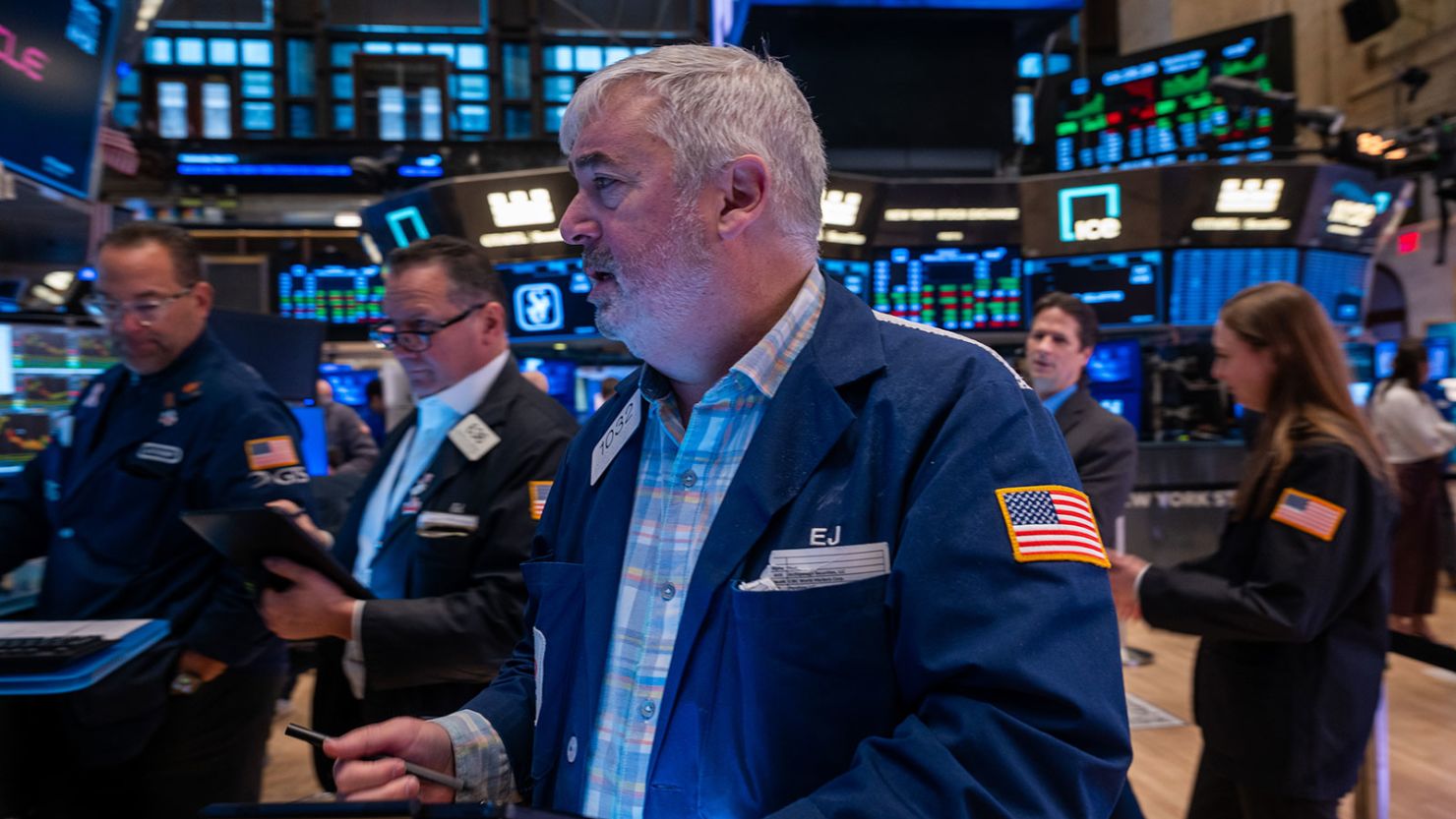
U.S. stock index futures opened with minimal movement early on Friday, reflecting a cautious trading environment after Thursday’s milestone session that saw both the S&P 500 and Nasdaq Composite close at all-time highs.
By 6:57 a.m. ET, S&P 500 E-minis were trading marginally higher by 2 points, representing a modest 0.03% gain, while Nasdaq 100 E-minis advanced 12.5 points, or 0.05%.
The subdued pre-market activity comes after Wall Street’s remarkable performance on Thursday, driven by encouraging economic data that reinforced confidence in the underlying strength of the U.S. economy.
Key indicators, including robust retail sales figures and declining jobless claims, provided fresh evidence that consumer spending remains resilient despite persistent inflation concerns and uncertainty surrounding the Federal Reserve’s monetary policy trajectory.
Corporate Earnings Paint Complex Picture
The second-quarter earnings season has delivered a mixed bag of results that exemplify the current market’s complexity. While streaming giant Netflix capitalized on the global phenomenon of “Squid Game” to exceed earnings expectations and raise its full-year revenue outlook, the company’s shares paradoxically declined 1.6% in premarket trading, illustrating how even strong performance can fail to sustain momentum in today’s volatile environment.
Industrial conglomerate 3M provided a brighter spot, with shares jumping 3.2% after the company raised its full-year profit forecast, crediting successful cost-cutting initiatives and a strategic focus on higher-margin products. The contrasting reactions to these earnings reports underscore the market’s increasingly discriminating approach to corporate performance.
Fed Policy Remains Central Focus
The Federal Reserve’s policy stance continues to dominate investor psychology, with traders currently assigning a 56.3% probability to a rate cut in September while virtually ruling out any action in July. This cautious outlook reflects the central bank’s stated intention to maintain current interest rates until clearer evidence emerges regarding how President Trump’s tariff policies are affecting inflation dynamics.
Kenneth Broux, head of corporate research and rates at Societe Generale, characterized the current environment succinctly: “This week’s data supports the wait-and-see camp on the Fed. Tariffs are percolating to consumer prices, but are not withholding households from opening their wallets.”
Energy Sector Sees Major Development
In a significant development for the energy sector, Chevron received approval to proceed with its $53 billion acquisition of Hess, marking the conclusion of a high-stakes legal battle with ExxonMobil. This landmark deal provides Chevron access to what industry experts consider the largest oil discovery in decades, with both companies’ shares responding positively to the news.
Cryptocurrency Sector Gains Momentum
The cryptocurrency sector received a boost from regulatory developments, with the House of Representatives advancing legislation to establish a comprehensive regulatory framework for digital assets. This political progress lifted shares of crypto-related companies, with Robinhood Markets and Coinbase Global posting gains of 2.5% and 2.7%, respectively.
Market Outlook
As trading commences, investors will be closely monitoring the preliminary July consumer sentiment data, which could provide additional insights into household confidence amid ongoing economic uncertainty. The broader market remains caught between competing forces: robust consumer spending, persistent inflation concerns, and the Federal Reserve’s measured approach to monetary policy.
With over 80% of the 36 S&P 500 companies that have reported second-quarter results exceeding Wall Street expectations, the earnings environment appears supportive. However, the market’s muted response to these generally positive results suggests investors remain cautious about the sustainability of current valuations amid an increasingly complex economic landscape.
The trading session ahead will likely be characterized by continued focus on how corporate America is navigating the evolving policy environment, particularly regarding tariffs and their potential impact on both inflation and consumer behavior.
WHAT YOU SHOULD KNOW
U.S. markets are taking a breather after hitting record highs, with investors caught between two key forces: strong corporate earnings (over 80% of companies beating expectations) and Federal Reserve uncertainty over Trump’s tariff policies.