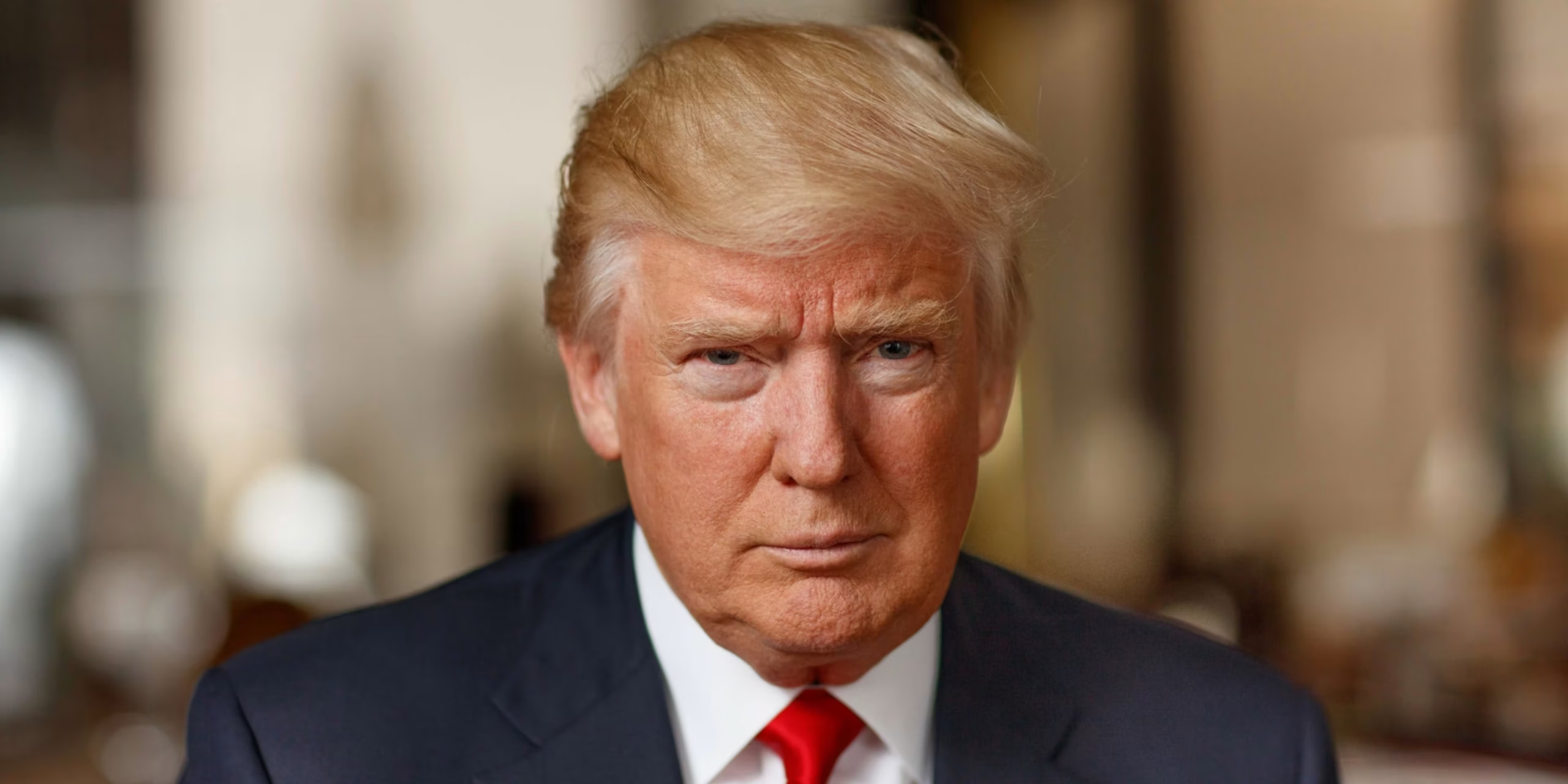
President Trump’s latest ultimatum to China over critical magnet supplies marks a dramatic escalation in what has become one of the most consequential trade battles of his second term—one that strikes at the heart of America’s military and technological vulnerabilities.
The president’s blunt Monday declaration that China must supply magnets to the United States or face punitive 200% tariffs represents a return to the high-stakes brinkmanship that has defined this administration’s approach to Beijing. But this dispute goes far beyond typical trade friction; it centers on America’s Achilles heel in the global supply chain: rare earth minerals.
The backdrop to Trump’s ultimatum is a tit-for-tat trade war that has intensified since his return to office. China suspended exports of six heavy rare earth metals and magnets in April, targeting components essential to automakers, aerospace manufacturers, semiconductor companies, and military contractors. This move came in direct retaliation for increased U.S. tariffs, creating what defense experts describe as a national security crisis.
The strategic importance of this dispute cannot be overstated. China controls roughly 80% of global rare earth processing capacity, giving Beijing extraordinary leverage over materials that are indispensable for everything from fighter jet engines to smartphone screens. The permanent magnets at the center of Trump’s ultimatum are particularly critical—they’re used in wind turbines, electric vehicle motors, and advanced weaponry systems.
What makes this confrontation particularly precarious is America’s near-total dependence on Chinese supply chains for these materials. The United States is entirely dependent on China for the supply of these restricted rare earth elements and magnets, leaving Washington with few immediate alternatives if Beijing decides to tighten the screws further.
The irony of the current standoff is that it follows months of apparent diplomatic progress. Just two months ago, Trump announced what he called a “done deal” with China, promising that magnets and “any necessary rare earths” would be supplied by Beijing. That agreement now appears to be unraveling, forcing the president back to his preferred negotiating tool: the threat of massive tariffs.
Trump’s 200% tariff threat, while characteristically dramatic, would likely prove to be a double-edged sword. Such duties would devastate Chinese exporters, but they would also inflict severe pain on American manufacturers who have no ready alternatives to Chinese supplies. The auto industry, already grappling with supply chain disruptions, would be particularly vulnerable.
For Beijing, the rare earths weapon represents one of its most potent tools of economic statecraft. By controlling access to these materials, China can potentially slow American military modernization programs and disrupt the clean energy transition that relies heavily on rare earth-dependent technologies like wind turbines and electric vehicles.
The broader implications of this dispute extend well beyond bilateral trade. It underscores America’s strategic vulnerability in critical supply chains and highlights the urgent need for domestic rare earth processing capabilities—a goal that remains years away despite bipartisan support for reshoring these industries.
As Trump’s deadline looms, both sides face difficult calculations. For China, capitulating to American demands would signal weakness and invite further pressure. For the United States, following through on the tariff threat could accelerate efforts to weaponize trade relationships in ways that ultimately harm American competitiveness.
The resolution of this standoff will likely set the tone for U.S.-China relations for years to come, with implications extending far beyond rare earths to the broader question of economic interdependence between the world’s two largest economies.
WHAT YOU SHOULD KNOW
President Trump’s threat of 200% tariffs over Chinese magnet supplies exposes America’s dangerous vulnerability—the U.S. is entirely dependent on China for rare earth minerals critical to everything from military weapons to electric vehicles.
This trade dispute isn’t just about economics; it’s about national security, as China controls 80% of global rare earth processing and can essentially hold American defense and technology industries hostage.
The irony is stark: any tariff retaliation would hurt American manufacturers just as much, since there are no immediate alternatives to Chinese supplies.