Donald Trump said on Sunday that the United States was engaged in discussions with Iran as the ongoing conflict entered its third week, although he suggested Tehran was not yet prepared to reach a deal to end the war.
Speaking to reporters aboard Air Force One, Trump confirmed that diplomatic contacts were taking place when asked whether any efforts were underway to resolve the conflict that has spread across the Middle East and unsettled global markets.

“Yes, we’re talking to them,” Trump said, though he did not provide details about the nature of the communication channels.
“But I don’t think they’re ready. But they are getting pretty close,” he added.
Earlier, Iran’s top diplomat had rejected claims that negotiations were underway with Washington.
Trump also expressed uncertainty about whether he wanted to pursue a deal to end the fighting, noting that several key Iranian leaders had been killed.
“I’m not sure I want to make a deal, because first of all, nobody even knows who you’re dealing with, because most of their leadership has been killed,” he said.
Among those reported killed on the first day of the US-Israeli strikes on February 28 were Ali Khamenei and several senior Iranian officials.

Despite the uncertainty, Trump maintained that Tehran was eager to reach an agreement.
“They want to make a deal badly,” the US president insisted.
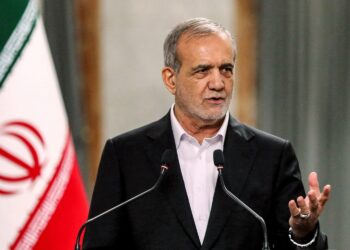
However, Iran’s Foreign Minister, Abbas Araghchi, rejected the idea of ongoing talks and criticised Washington’s position.
“We are stable and strong enough. We are only defending our people,” Araghchi said during an interview on Face the Nation.
He argued that Iran had no reason to return to negotiations with the United States following the recent military actions.
“We don’t see any reason why we should talk with Americans, because we were talking with them when they decided to attack us,” he said. “There is no good experience talking with Americans.”
What you should know
The conflict between the United States, Israel and Iran escalated sharply after coordinated strikes were launched against Iranian targets on February 28, triggering widespread instability across the Middle East.
The crisis has disrupted regional security and affected global financial markets.
While Washington has suggested that diplomatic channels remain open, Iranian officials have publicly rejected the idea of negotiations, insisting their focus remains on defending the country and responding to the attacks.