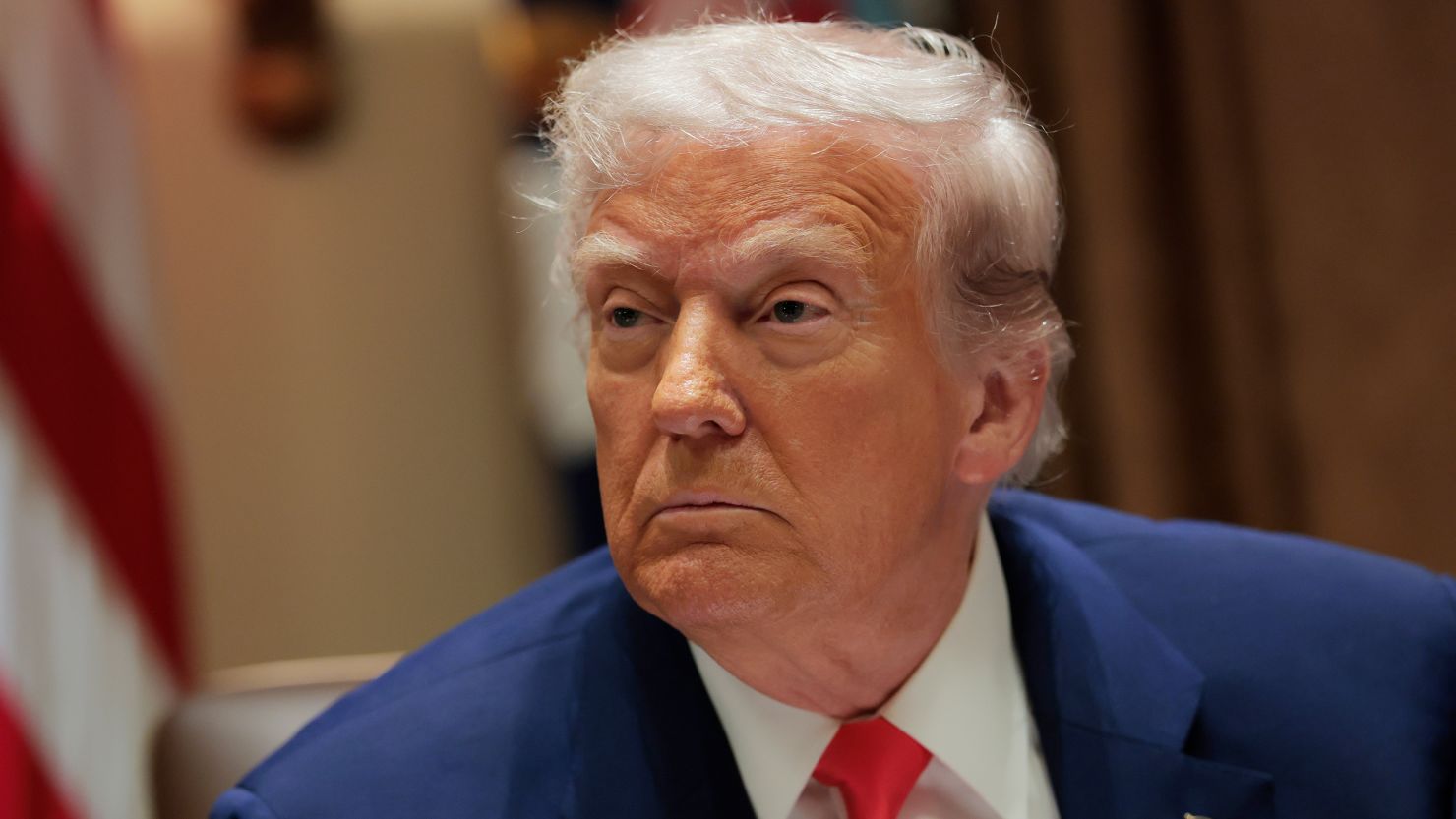
President Donald Trump conceded on Friday that his sweeping 100% tariffs on Chinese imports are economically unsustainable, even as he defended the punitive measures as a necessary response to Beijing’s tightening grip on rare earth exports—a move that has raised fears of a protracted economic conflict between the world’s two largest economies.
“It’s not sustainable, but that’s what the number is,” Trump told Fox Business Network in an interview broadcast Friday morning, placing blame squarely on Chinese authorities. “They forced me to do that.”
The president’s remarks represent a rare acknowledgment of the economic risks posed by his aggressive tariff policy, which he announced just one week ago alongside stringent export controls requiring restrictions on “any critical software” by November 1—a deadline that comes just nine days before existing tariff relief measures were scheduled to expire.
The Rare Earth Catalyst
The escalation stems from China’s dramatic expansion of export controls on rare earth elements, materials essential to advanced technology manufacturing. China commands a dominant market share in these critical minerals, giving Beijing significant leverage in the ongoing trade dispute. Trump characterized the Chinese move as provocative, justifying his administration’s retaliatory measures as proportionate to what he described as economic aggression.
Yet even as tensions flared, Trump struck a notably conciliatory tone regarding upcoming diplomatic engagement. He confirmed plans to meet with Chinese President Xi Jinping in South Korea in two weeks—a summit he had cast doubt upon just days earlier—and expressed personal regard for his Chinese counterpart.
“I think we’re going to be fine with China, but we have to have a fair deal. It’s got to be fair,” Trump told FBN’s “Mornings with Maria” in an interview taped Thursday. Later, while preparing for a White House lunch with Ukrainian President Volodymyr Zelenskiy, focused on ending the Russia-Ukraine conflict, Trump added, “China wants to talk, and we like talking to China.”
Market Relief, Cautious Optimism
The shift in tone provided measurable relief to nervous investors. Wall Street, which had been roiled throughout the week by the abrupt reimposition of steep tariffs and concurrent anxieties over regional banking stability, reversed early losses Friday. Major U.S. stock indexes climbed in afternoon trading as traders interpreted Trump’s comments as signaling potential de-escalation.
Treasury Secretary Scott Bessent reinforced the more optimistic outlook, announcing he would speak with Chinese Vice Premier He Lifeng later Friday to advance trade negotiations.
“I think that things have de-escalated,” Bessent said at the White House event. “We hope that China will show the respect that we have shown them, and I am confident that President Trump, because of his relationship with President Xi, will be able to get things back on a good course.”
Global Warnings, Persistent Friction
The cautious optimism in Washington contrasts sharply with growing international alarm over the economic consequences of continued U.S.-China confrontation. World Trade Organization Director-General Ngozi Okonjo-Iweala issued a stark warning Friday, telling Reuters that a decoupling between the two economic superpowers could reduce global economic output by 7% over the longer term.
“The global trade body is extremely concerned about the latest spike in U.S.-China trade tensions,” Okonjo-Iweala said, noting that the WTO has engaged officials from both nations to encourage dialogue.
Yet beneath the diplomatic niceties, fundamental tensions persist. In a statement to the IMF’s steering committee on Friday, Bessent sharply criticized China’s state-driven economic model, calling on the IMF and World Bank to adopt a tougher stance on Beijing’s industrial policies. U.S. officials contend these policies have enabled China to build massive excess manufacturing capacity, flooding global markets with artificially cheap goods.
China’s Commerce Ministry fired back Friday, accusing the Trump administration of undermining the rules-based multilateral trading system since taking office in 2025. The ministry vowed to intensify dispute settlement actions at the WTO and demanded Washington roll back measures it characterized as violations of non-discrimination principles, urging alignment of U.S. industrial and security policies with WTO obligations.
Personal Tensions
The diplomatic friction has occasionally turned personal. Earlier this week, Bessent labeled one of Vice Premier He’s top aides as “unhinged” in recent interactions with U.S. trade negotiators—a characterization Beijing rejected Thursday as seriously distorting the facts.
As Trump and Xi prepare to meet in South Korea, the stakes could hardly be higher. While the president’s acknowledgment that 100% tariffs are unsustainable may signal flexibility in negotiations, both sides appear dug in on fundamental issues of trade fairness, technological competition, and economic sovereignty. The coming weeks will test whether personal rapport between the two leaders can bridge increasingly entrenched policy differences—or whether the world’s two largest economies are headed toward a more permanent economic separation.
WHAT YOU SHOULD KNOW
President Trump has admitted his 100% tariffs on Chinese goods are economically unsustainable, even as he blames China for forcing his hand through rare earth export restrictions. Despite the harsh rhetoric and retaliatory measures, Trump confirmed he’ll meet with President Xi in two weeks and softened his tone—signaling potential de-escalation that briefly calmed jittery markets.
However, deep structural disagreements remain between Washington and Beijing over trade practices, and the WTO warns that a full economic decoupling could slash global output by 7%. The bottom line: Trump is using unsustainable tariffs as leverage for negotiations, banking on his relationship with Xi to secure a deal before economic damage becomes irreversible.