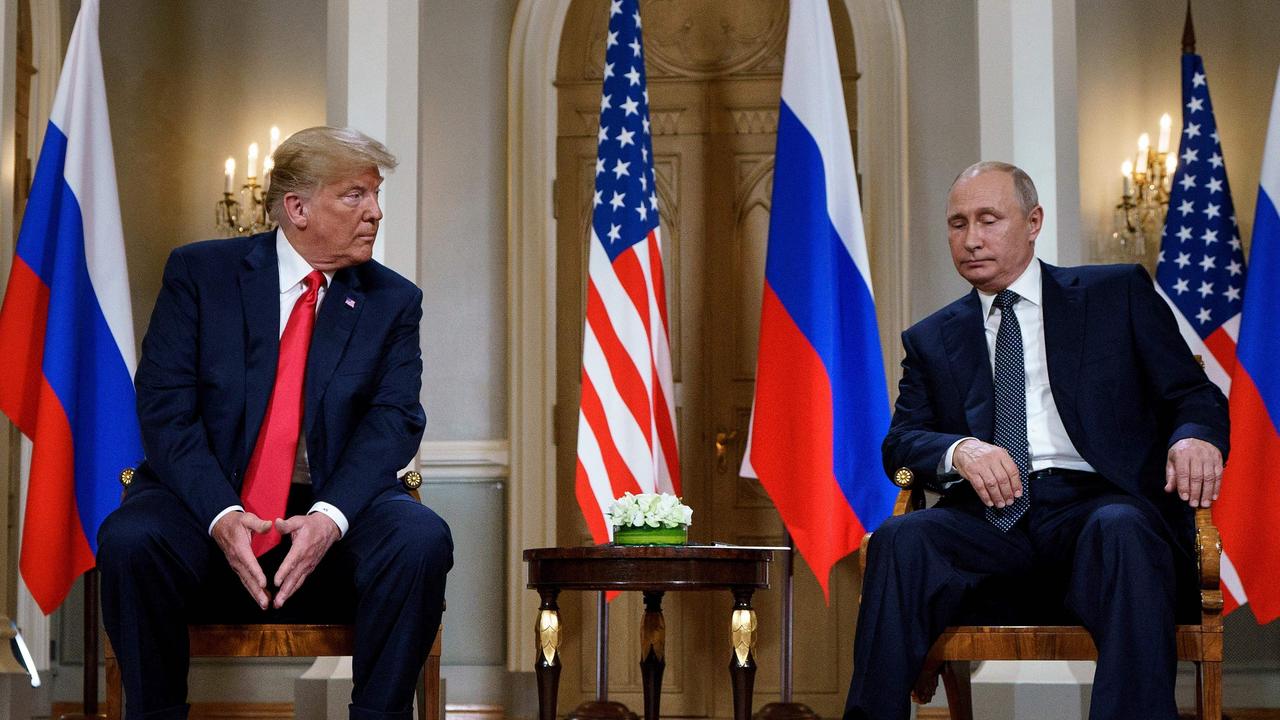
Donald Trump and Vladimir Putin concluded a highly anticipated summit on Friday without achieving any breakthrough on Ukraine.
While both leaders highlighted areas of agreement and revived their personal rapport, they offered no concrete updates on a ceasefire.
After three hours of discussions alongside aides, the meeting ended abruptly. Both leaders then appeared together briefly, offering cordial remarks but refusing to take questions from reporters, a rare move for the media-savvy US president.
“We’re not there yet, but we’ve made progress. There’s no deal until there’s a deal,” Trump said, describing the talks as “extremely productive” with “many points” agreed upon, though he declined to share details. He hinted that only a handful of issues remained unresolved, with one described as “probably the most significant.”
Putin also kept his remarks general, saying he hoped their understanding would “pave the way for peace in Ukraine.” At one point, as Trump suggested the possibility of a follow-up meeting, Putin smiled and replied in English, “Next time in Moscow.”
During the exchange, Putin sought to flatter Trump, echoing the former president’s own view by saying the Ukraine conflict would not have erupted had Trump been in office instead of Joe Biden. Trump, meanwhile, repeated his familiar complaint that allegations of Russian interference in the 2016 election were a “hoax,” despite findings by US intelligence agencies.
Ahead of the summit, Trump had warned Moscow of “severe consequences” if it failed to accept a ceasefire. Yet after the meeting, in an interview with Fox News host Sean Hannity, he softened his stance: “Because of what happened today, I think I don’t have to think about that now.”
The atmosphere contrasted with Trump’s past exchanges with Ukrainian President Volodymyr Zelensky, whom he had sharply criticized earlier in February during a White House meeting. While Trump suggested he wanted a three-way dialogue with Putin and Zelensky, he made no announcement about such a meeting on Friday.
Instead, Trump said he would consult Zelensky and NATO leaders going forward, noting, “Now it’s really up to President Zelensky to get it done.”
Putin, however, warned Ukraine and European nations not to “create any obstacles” or attempt to undermine what he called “emerging progress through provocation or behind-the-scenes intrigues.”
The summit was arranged just a week prior and carried Trump’s signature flair for drama. Both leaders arrived on separate presidential jets before meeting at a US air base. Trump even applauded as Putin stepped off his plane. A B-2 stealth bomber flew overhead in a show of American power, while a reporter shouted at Putin, “Will you stop killing civilians?” The Russian leader grinned and accompanied Trump into “The Beast,” the secure US presidential limousine, before beginning talks in a room emblazoned with the words “Pursuing ”Peace”—written only in English.
For Putin, the meeting was a significant occasion. Facing an arrest warrant from the International Criminal Court over the Ukraine war, he nevertheless appeared upbeat, joking with Russian journalists.
On the battlefield, Russia has recently made gains that could bolster Putin’s position in any potential ceasefire negotiations, though Ukraine countered with claims that it had reclaimed several villages just as Putin traveled to the summit.
Trump, keen to project strength after facing criticism for his demeanor at the 2018 Helsinki summit, avoided meeting Putin alone this time. Instead, Secretary of State Marco Rubio and envoy Steve Witkoff joined the talks. Notably, Zelensky was excluded and has resisted Trump’s pressure to give up territory occupied by Russia.
In a statement on social media, Zelensky insisted, “It is time to end the war, and the necessary steps must be taken by Russia. We are counting on America.”
What you should know
The Trump-Putin summit underscored their renewed personal connection but produced no clear progress on ending the war in Ukraine. While Trump described the meeting as “extremely productive,” both leaders avoided details.
Putin’s remarks suggested a desire for further talks, but battlefield dynamics and unresolved issues remain key obstacles to peace. Ukrainian President Volodymyr Zelensky continues to demand that Russia take concrete steps toward ending the conflict.