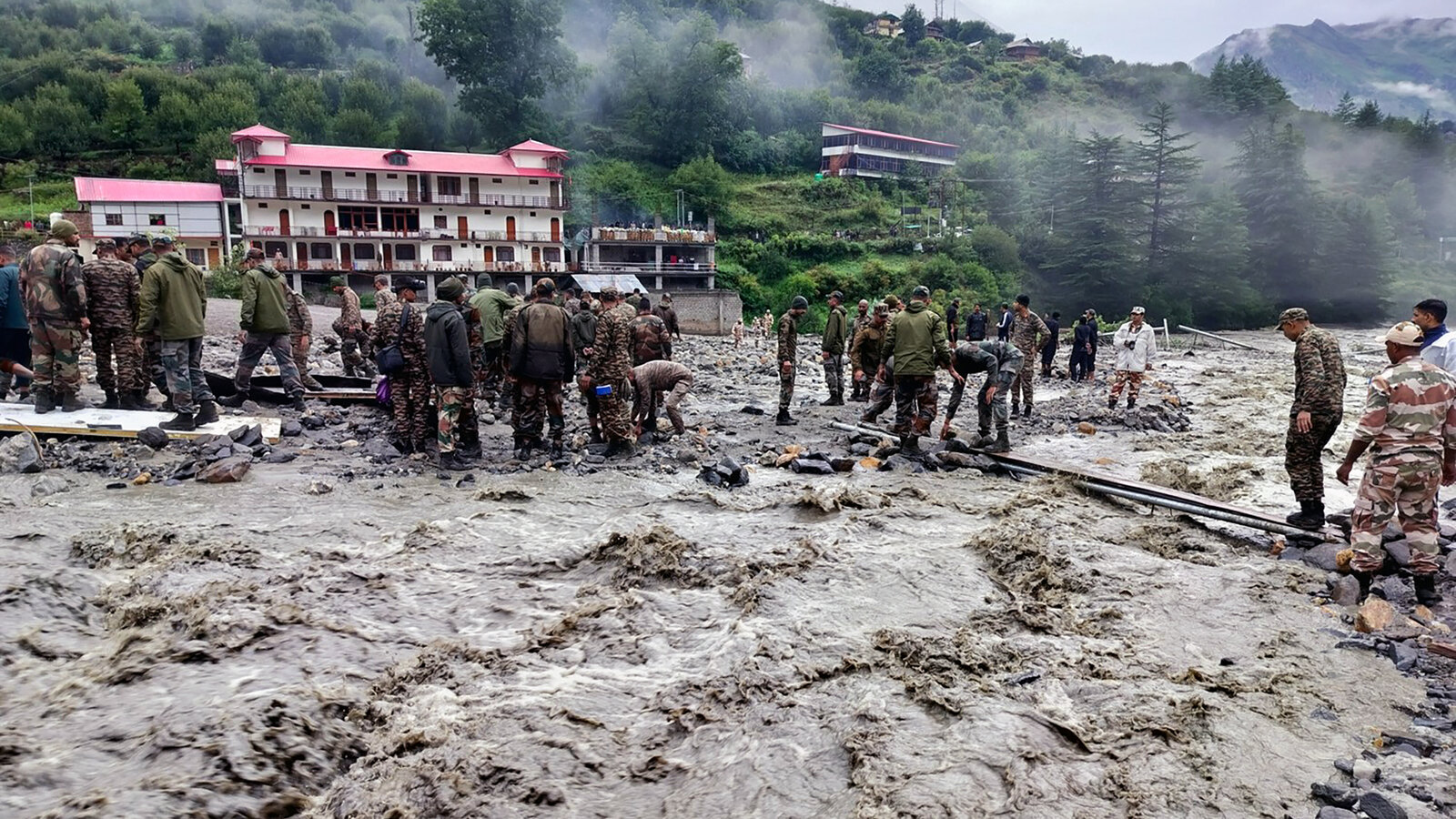
Powerful torrents fueled by relentless rainfall tore through a Himalayan mountain village in Indian-administered Kashmir on Thursday, claiming the lives of at least 37 people, according to a senior disaster management official speaking to AFP.
This marks the second major flood-related tragedy in India this month.
“The news is grim,” Kashmir Chief Minister Omar Abdullah said in a statement, describing a “cloudburst” of intense rain that struck the Kishtwar district.
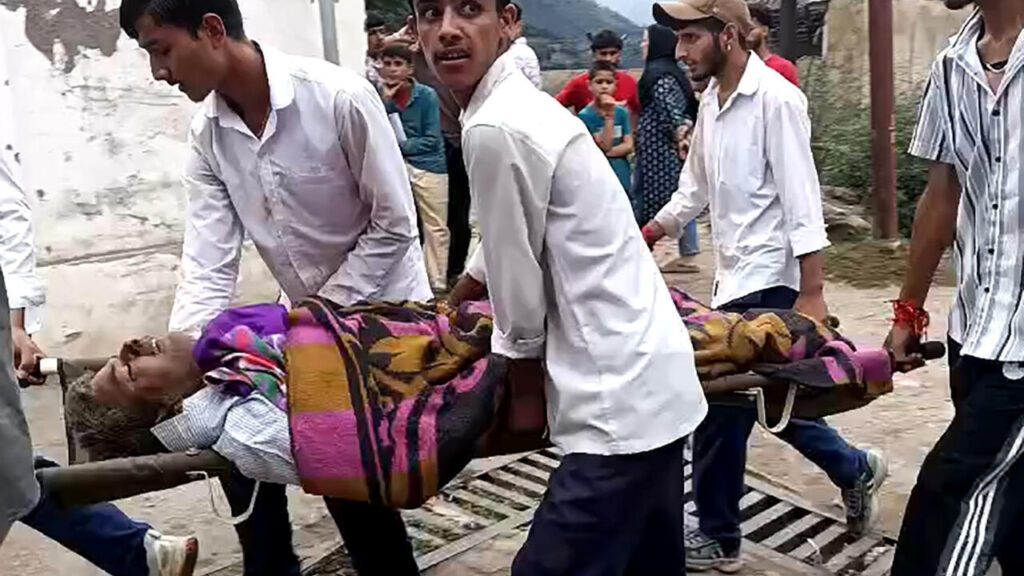
Crowds gathered at a hospital in Kishtwar as some of the injured were carried in on stretchers.
“Dead bodies of 37 people have been recovered,” confirmed Mohammad Irshad, a top disaster management official, noting that there was no available count of those who might still be missing. He added that 150 wounded individuals had been rescued from the disaster site, “50 of whom are severely injured,” with all rushed to nearby hospitals.
Sushil Kumar, a resident of Atholi village, told AFP, “I saw at least 15 dead bodies brought to the local hospital.”
The district commissioner of Kishtwar, Pankaj Kumar Sharma, said earlier that “there are chances of more dead bodies being found.”
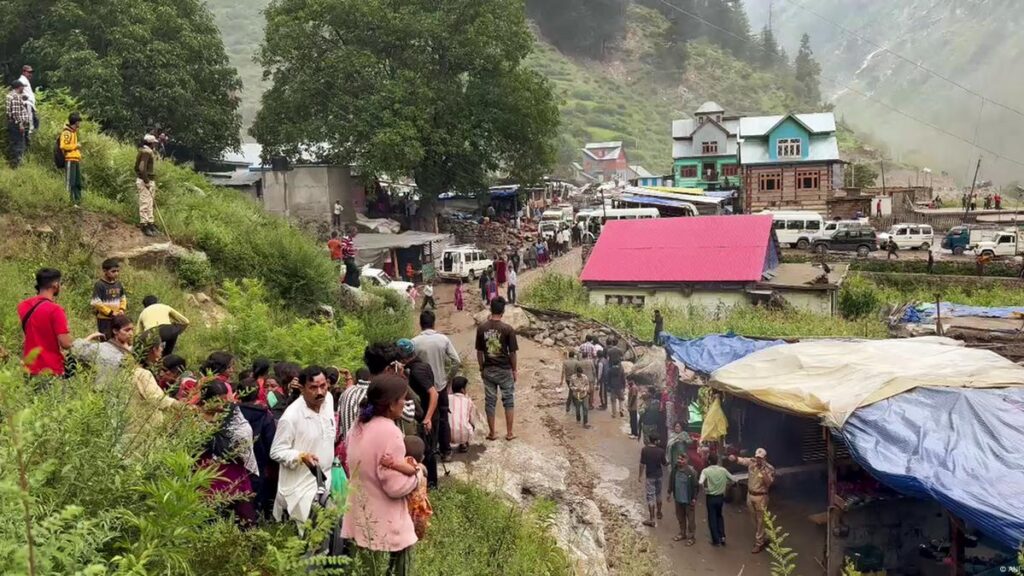
The disaster struck Chisoti village, which lies on a Hindu pilgrimage route to the Machail Mata shrine. Officials reported that a large makeshift kitchen, where more than 100 pilgrims—who were not officially registered with local authorities—had gathered, was completely swept away.
Rescue teams, aided by soldiers, struggled to access the area due to storm-damaged roads. The location is over 200 kilometres (125 miles) from Srinagar, the region’s main city.
Prime Minister Narendra Modi pledged, “Every possible assistance will be provided to those in need.”
Earlier this month, on August 5, floods obliterated the Himalayan town of Dharali in Uttarakhand, burying it under mud. The likely death toll there exceeds 70, though confirmation is still pending.
Floods and landslides are a recurring hazard during the monsoon season from June to September, but experts warn that climate change, combined with haphazard development, is amplifying their frequency and devastation. The UN’s World Meteorological Organization has previously described such increasingly intense floods and droughts as a “distress signal” of a more unpredictable water cycle in a warming world.
What You Should Know
Chisoti village, the site of this devastating flood, is located along a significant Hindu pilgrimage route in Kashmir.
The tragedy, which claimed at least 37 lives and injured over 150, reflects a growing pattern of severe weather disasters in India, driven by climate change and unplanned development. Rescue efforts remain hindered by damaged roads and challenging terrain.