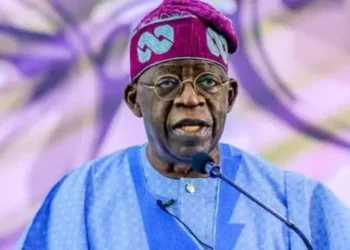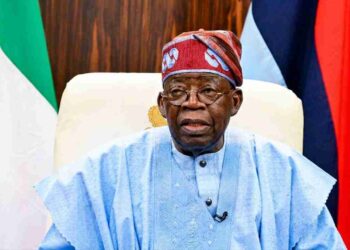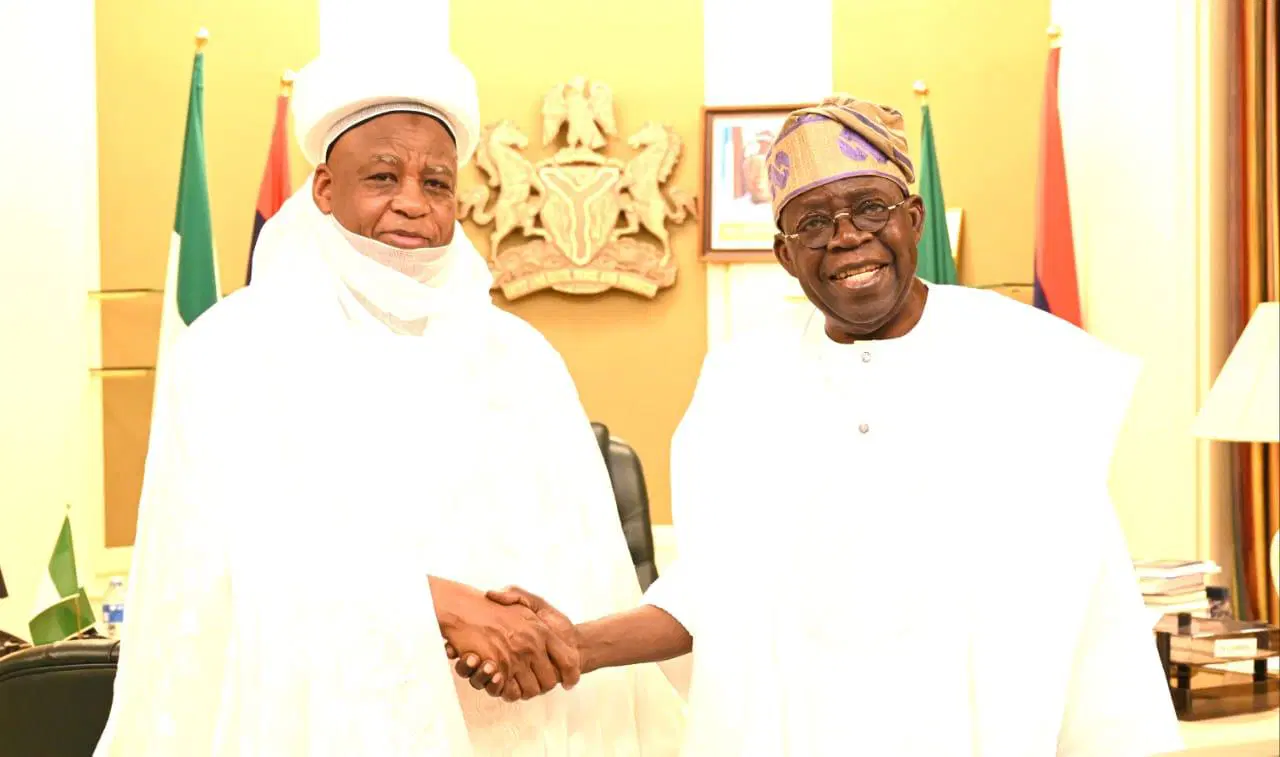
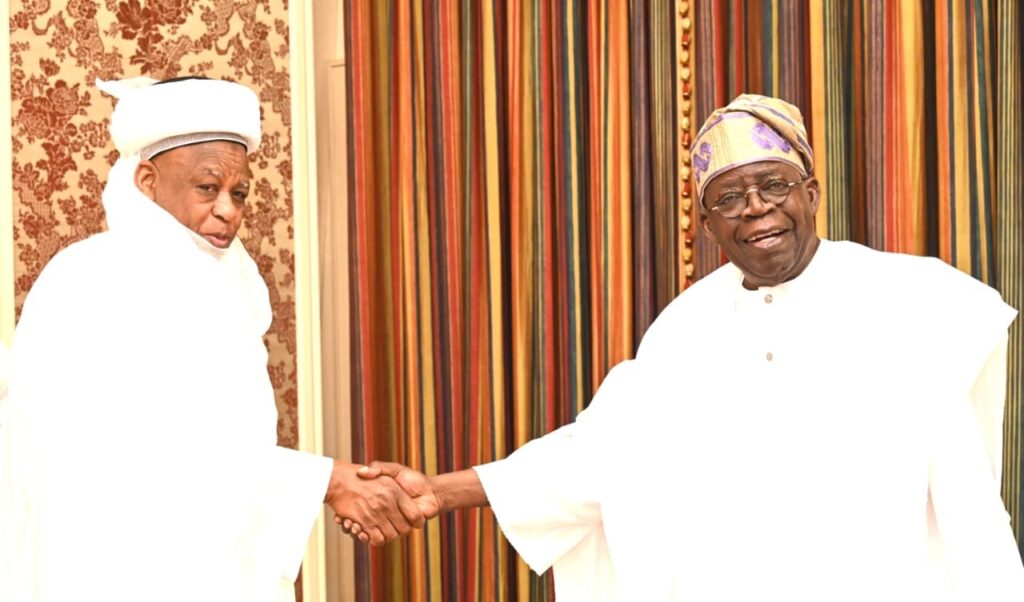
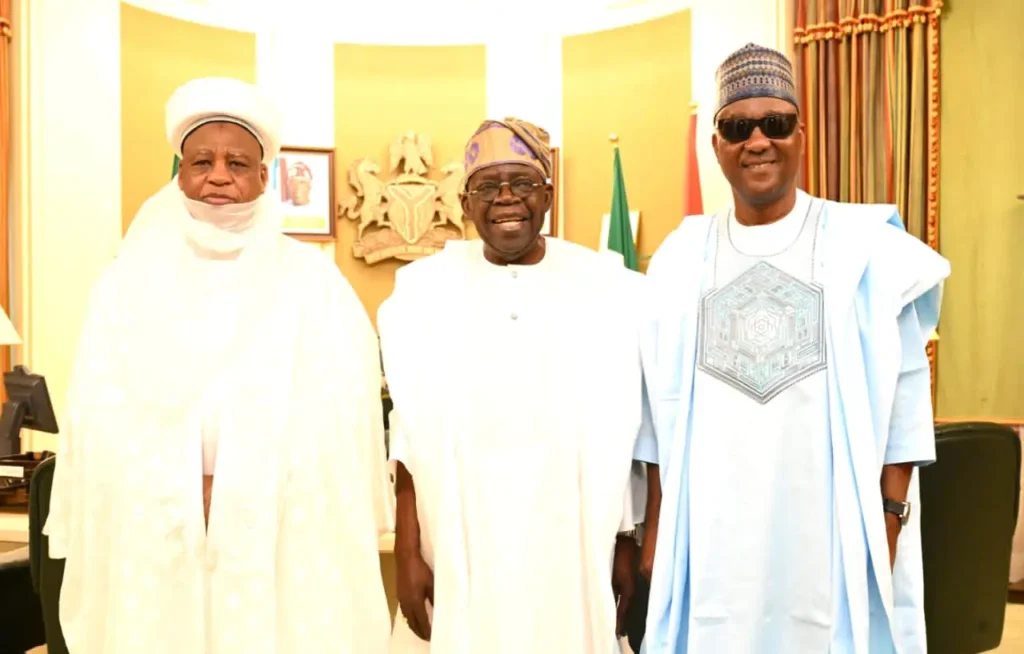
As the controversy over alleged genocide against Christians in Nigeria continues, President Bola Ahmed Tinubu on Friday met with the Sultan of Sokoto, Sa’ad Abubakar, at the Presidential Villa in Abuja.
The Sultan, who is also the head of the Supreme Council for Islamic Affairs in Nigeria, serves as the spiritual leader of the Muslim community in the country. The meeting, held in the President’s office, was also attended by House of Representatives Speaker Abbas Tajudeen and National Security Adviser Nuhu Ribadu. However, the specific details of their discussions were not disclosed.
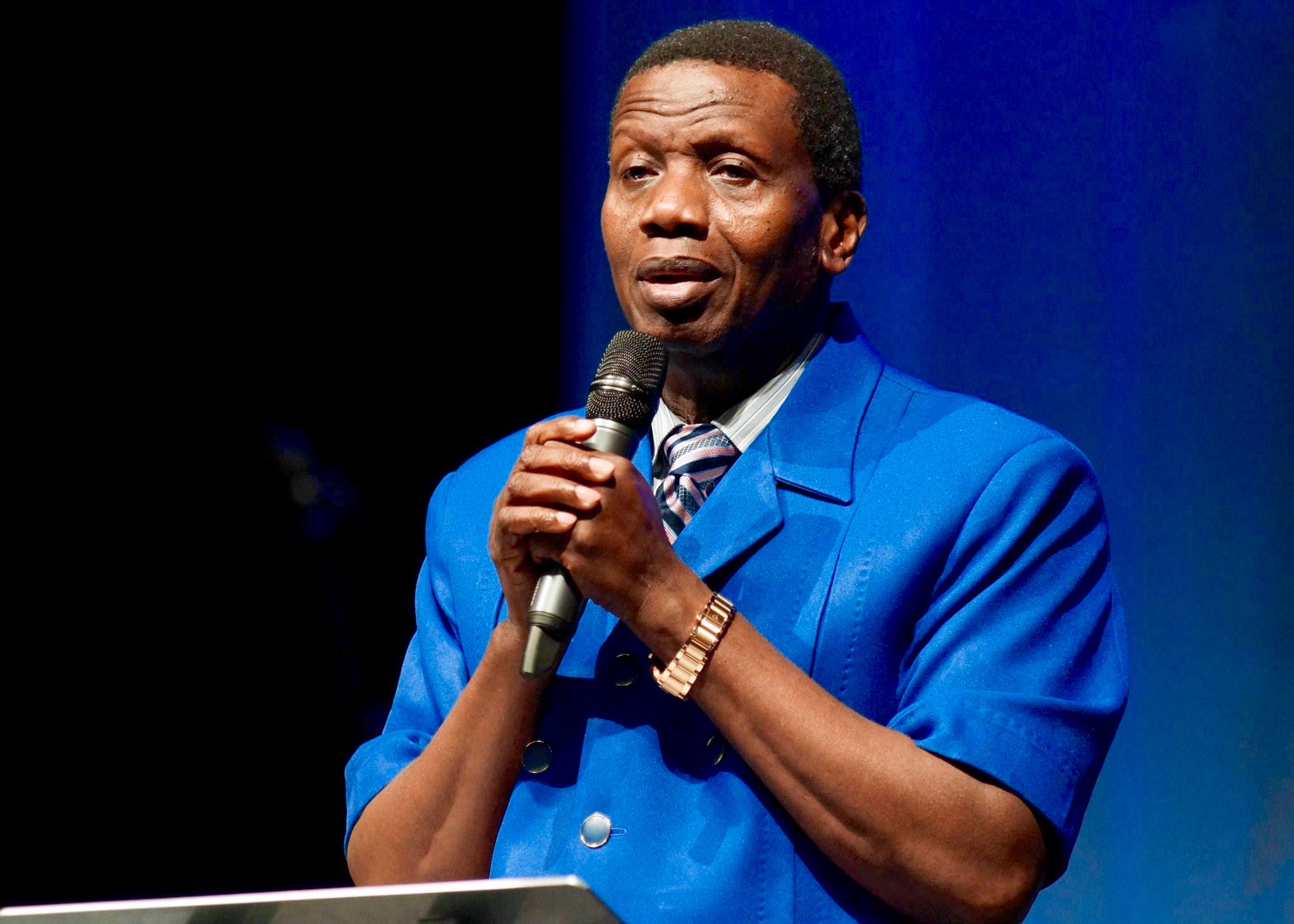
This meeting followed the President’s earlier engagement with the Catholic Archbishop of Abuja, Most Rev. Ignatius Kaigama, on Tuesday—a move seen as part of the government’s efforts to foster religious harmony across Nigeria.
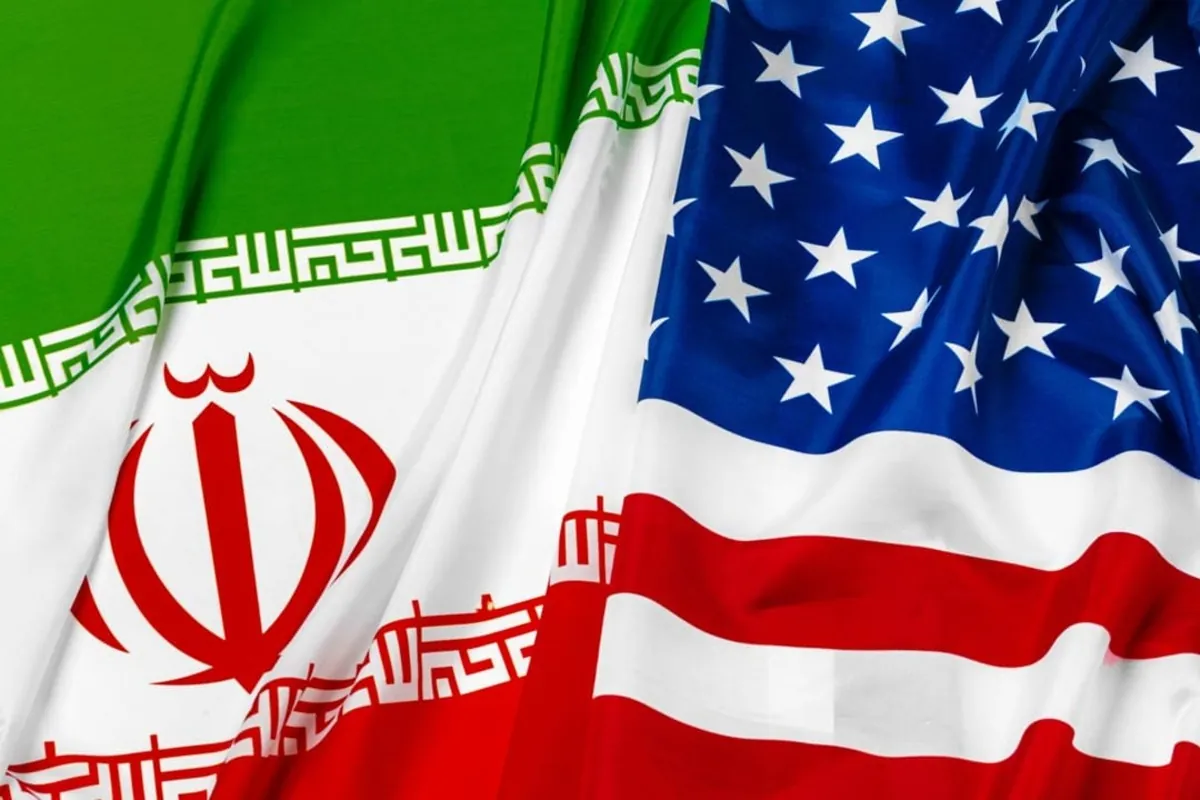
The discussions come amid renewed international scrutiny after U.S. President Donald Trump accused the Nigerian government of complicity in alleged genocidal attacks against Christians. Trump also threatened to launch military espionage operations targeting terrorist groups such as Boko Haram, ISWAP, and armed bandits operating across the North-West and North-Central regions.
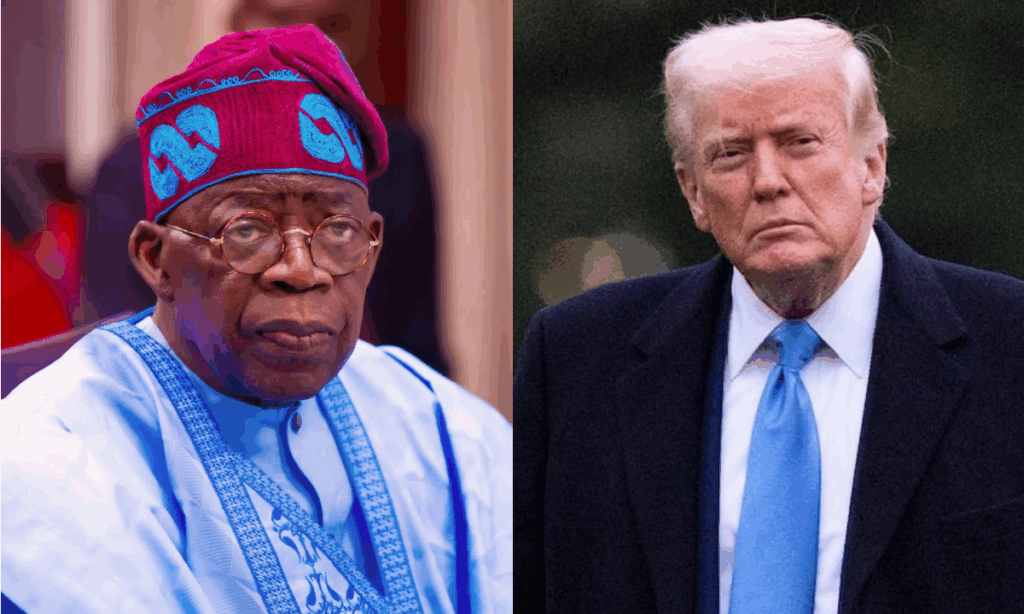
In response, Nigeria’s Minister of Information and National Orientation, Mohammed Idris, dismissed the U.S. designation of Nigeria as a country intolerant of religious freedom, describing it as “false and untrue.” He reiterated that the Tinubu administration upholds the constitutional right of every citizen to practice their faith freely.
At Thursday’s Federal Executive Council meeting, Tinubu reaffirmed his commitment to strengthening international cooperation against terrorism and reiterated that despite the nation’s challenges, Nigeria remains firmly on the path toward economic recovery and stability.
What you should know
President Bola Tinubu has recently held high-level meetings with both Christian and Muslim leaders amid rising concerns over religious violence in Nigeria.
His engagement with the Sultan of Sokoto and Archbishop Kaigama underscores the government’s ongoing efforts to promote peace, counter extremism, and reinforce Nigeria’s image as a multi-faith nation committed to unity and coexistence.