After nearly a week of escalating violence along a contested stretch of their jungle border, the governments of Thailand and Cambodia have reached an agreement to halt hostilities without any conditions.
The recent surge in fighting, which spanned five days, has resulted in the deaths of at least 36 individuals and the displacement of over 200,000 people from both sides of the border.
The flare-up, which reignited tensions over a historically disputed territory, marks the deadliest confrontation since the series of skirmishes that occurred between 2008 and 2011. The heart of the conflict lies in a border area whose ownership remains ambiguous, dating back to an imprecise 1907 boundary delineation created under French colonial rule in Cambodia.
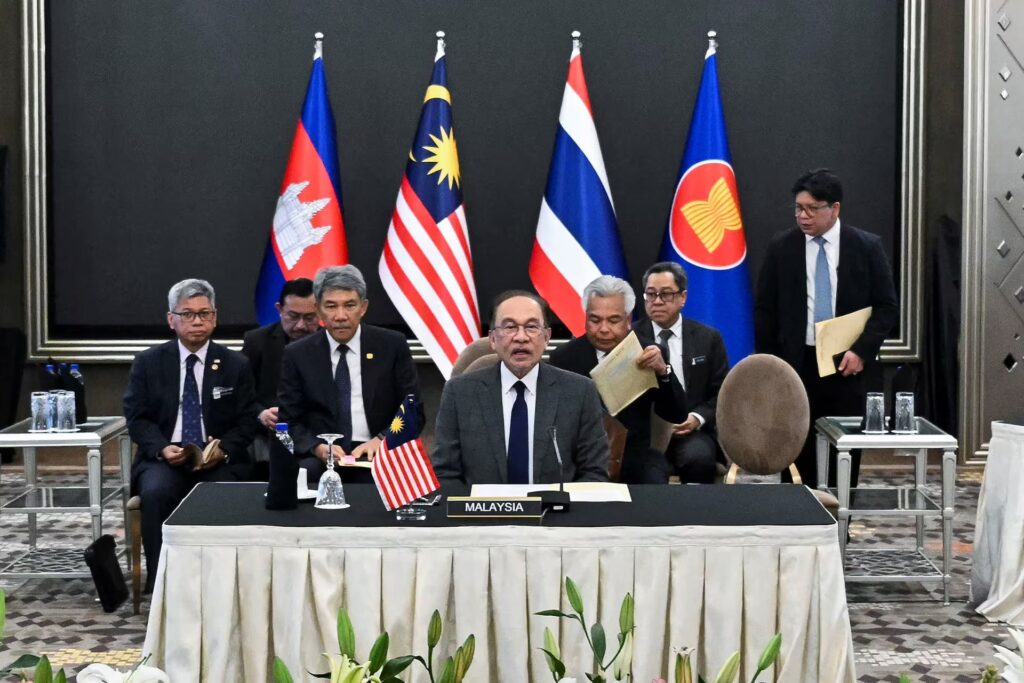
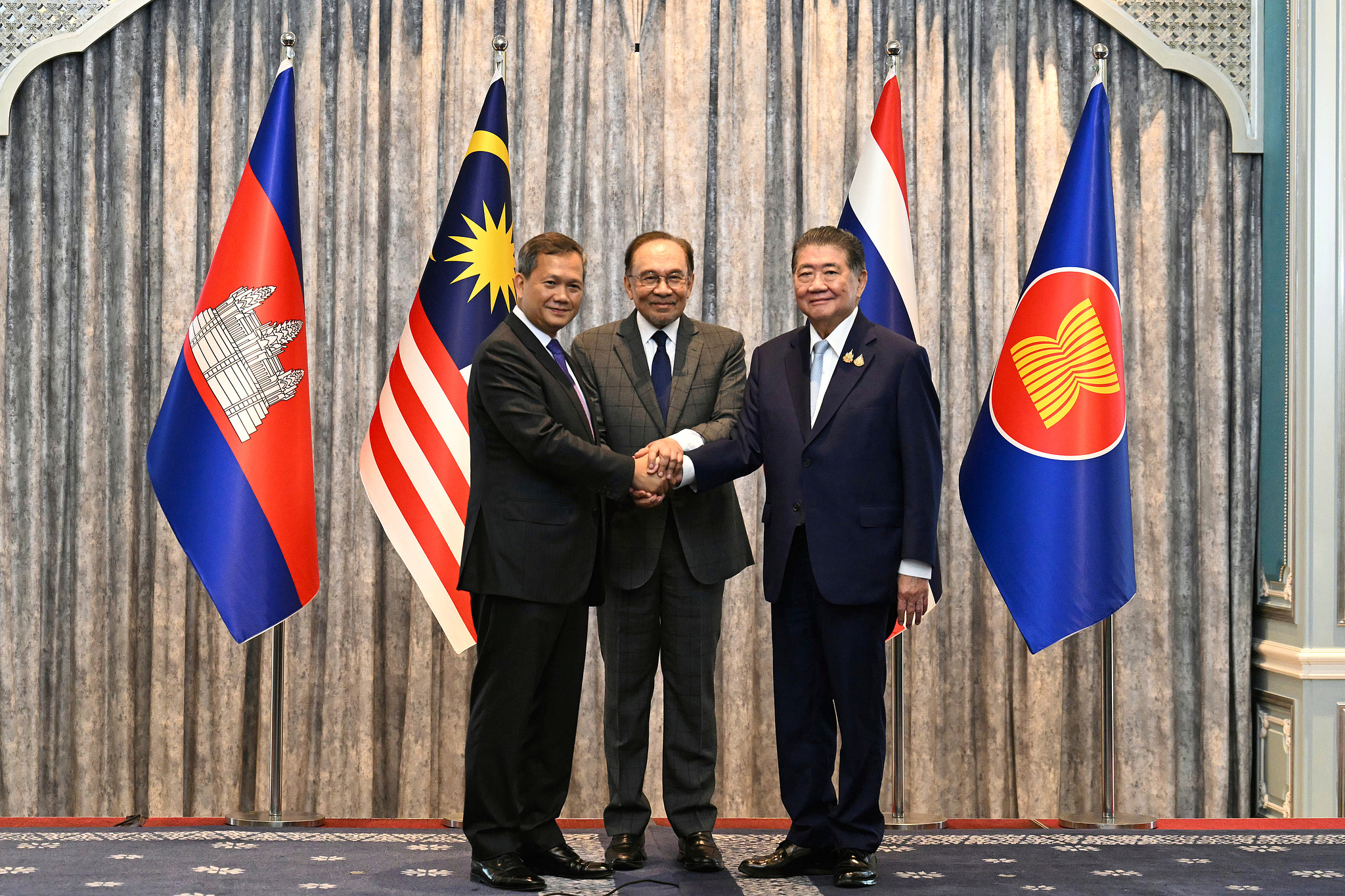
In a bid to quell the violence, both nations agreed to implement “an immediate and unconditional ceasefire with effect from 24 hours local time, midnight on 28th July 2025, tonight,” according to Malaysia’s Prime Minister, Anwar Ibrahim. The announcement came following a mediation session hosted at Anwar’s official residence in Malaysia, which currently presides over the Association of Southeast Asian Nations (ASEAN).
The meeting brought together Thailand’s acting Prime Minister Phumtham Wechayachai and Cambodia’s Prime Minister Hun Manet. Their dialogue with Anwar commenced shortly after 0700 GMT and concluded with a mutual commitment to de-escalate tensions.
“This is a vital first step,” Anwar stated at a press briefing after the meeting. He emphasized that both leaders had “expressed their positions and willingness to… an immediate ceasefire, a return to de-escalation and the restoration of peace and security.”
Gratitude was extended to US President Donald Trump by both Phumtham and Hun for his diplomatic backing of the peace effort. Cambodia’s Prime Minister Hun Manet remarked that the framework for the ceasefire presented by Anwar “will set a condition for moving forward for our bilateral discussion to return to normalcy of the relationship.”
The military confrontation has drawn global attention, particularly due to the region’s popularity among international tourists. The disputed zone, home to ancient temples and cultural landmarks, has long been a flashpoint between the neighboring Southeast Asian nations.
What You Should Know
Prime Minister Hun Manet commended Malaysia’s leadership and credited the ceasefire agreement as a crucial step toward restoring peaceful diplomatic ties.
“The solutions that Prime Minister Anwar just announced will set a condition for moving forward for our bilateral discussion to return to normalcy of the relationship,” he stated, signaling openness to deeper dialogue and reconciliation.