Asian markets wavered on Friday as geopolitical tensions in the Middle East escalated sharply, casting a shadow over investor sentiment.
The region’s bourses struggled to find clear direction amid fears of a potential U.S. military intervention in the ongoing conflict between Israel and Iran, now entering its second week.
Overnight, the crisis deepened dramatically as Israeli forces reportedly struck nuclear-related sites in Iran, prompting a retaliatory barrage of missiles and drones from Tehran aimed at Israeli territories. The tit-for-tat escalation has intensified global concerns, with no sign of a diplomatic off-ramp in sight.
In Washington, the White House confirmed that President Donald Trump would decide “within two weeks” whether the United States would formally enter the conflict. However, political tensions are rising on the domestic front, as elements within Trump’s MAGA base voice strong opposition to any military action against Iran.
Market analysts have expressed caution over Trump’s self-imposed decision timeline, noting a pattern of rhetorical brinkmanship followed by inaction. “The ‘two-week deadline’ is a hallmark of Trump’s decision-making style, often used as a pressure tactic without leading to immediate action,” said Tony Sycamore, market analyst at IG. “This mirrors earlier approaches involving Russia, Ukraine, and trade tariffs.”
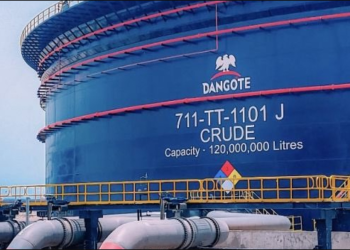
Despite some pullback, oil prices continued to show resilience. Brent crude fell 2% to $77.22 per barrel on Friday, yet remains on track for a weekly gain of 4%, building on a hefty 12% surge last week. The possibility of supply disruptions in the oil-rich Middle East continues to underpin prices.
Equity markets in Asia offered a mixed picture. The MSCI’s broad index of Asia-Pacific shares outside Japan edged up 0.1%, though still heading for a 1% weekly decline. Japan’s benchmark Nikkei index slipped 0.2%, mirroring investor nervousness.
In contrast, China’s CSI 300 gained 0.3%, and Hong Kong’s Hang Seng rose 0.5%, buoyed by the central bank’s decision to hold key lending rates steady, in line with expectations.
Meanwhile, U.S. markets remained shut for the Juneteenth holiday, leaving Asian traders with limited guidance. Futures pointed to a muted Wall Street open, with Nasdaq and S&P 500 contracts down 0.3% in early Asian trading.
In currency markets, the dollar softened 0.2% to 145.17 yen after data showed Japan’s core inflation rose to a two-year high in May. While the inflation uptick raises pressure on the Bank of Japan to resume interest rate hikes, markets are only modestly pricing in the likelihood of any action before December.
Bond trading resumed quietly in Asia after the U.S. Treasury market holiday. The 10-year yield held steady at 4.389%, while the two-year yield dipped slightly to 3.925%.
Central banks across Europe delivered divergent signals. The Swiss National Bank surprised markets by cutting its policy rate to zero and even left the door open for negative rates.
The Bank of England held rates steady but signaled openness to further easing. Meanwhile, Norway’s central bank unexpectedly slashed rates for the first time since 2020, signaling a shift in monetary strategy amid global uncertainty.
Gold, often a safe haven during periods of geopolitical turmoil, edged 0.2% lower to $3,363 an ounce and is on pace for a 2% weekly decline—an unusual move given the rising global tensions, potentially reflecting investor preference for liquidity amid the uncertainty.
As the world watches for President Trump’s decision, markets remain trapped in a fog of geopolitical risk, with investors bracing for more volatility in the days ahead.
WHAT YOU SHOULD KNOW
Rising tensions between Israel and Iran have shaken Asian markets, with fears of a potential U.S. military strike adding to uncertainty.
Oil prices remain elevated while investors await President Trump’s decision on U.S. involvement.
Markets are cautious, central banks are reacting divergently, and geopolitical risk is now the key driver of global sentiment.