The US Supreme Court is set to hear arguments Wednesday on the legality of Donald Trump’s sweeping use of executive power to impose global tariffs, a move that strikes at the core of his economic strategy and could redefine presidential authority over trade policy.
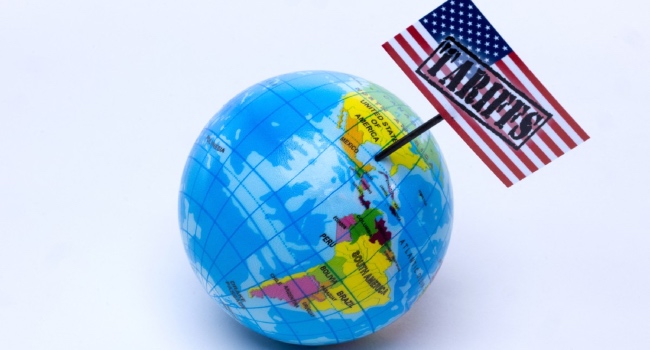
Since his return to the White House, Trump has invoked emergency economic powers to implement “reciprocal” tariffs in response to trade practices Washington considered unfair. These measures also included separate duties targeting some of America’s biggest trading partners, including Mexico, Canada, and China.
Trump’s tariffs, a key component of his “America First” economic policy, were designed to shield and stimulate US industries. However, they quickly sparked a wave of legal challenges from affected businesses and trade groups.
In May, a lower court ruled that Trump had exceeded his authority by imposing the duties, though his administration’s appeal allowed the tariffs to temporarily remain in effect. Then, in August, the US Court of Appeals for the Federal Circuit reaffirmed that decision in a 7–4 ruling, declaring the levies illegal. Trump subsequently escalated the fight to the Supreme Court, setting the stage for a high-stakes legal showdown.
The outcome of the case could take months to emerge, but the implications are significant. The conservative-leaning Supreme Court could determine that Trump’s tariffs were unlawful, effectively blocking duties on imports from numerous countries. Alternatively, the justices might uphold his actions, potentially granting the president broader leeway to impose similar measures in the future.
Beyond trade authority, the ruling carries major economic consequences. Billions of dollars in customs revenue have already been collected under these tariffs, and the verdict could also shape Trump’s ability to use trade restrictions as leverage in future negotiations or political pursuits.
Notably, the Court’s decision will not affect Trump’s sector-specific tariffs on steel, aluminum, and automobiles. But even without triggering widespread inflation, these tariffs have placed heavy financial pressure on American businesses, particularly smaller ones that lack the resources to absorb the added costs.
“These tariffs threaten the very existence of small businesses like mine, making it difficult to survive, let alone grow,” said Victor Schwartz, the lead plaintiff in the case and founder of VOS Selections, a family-run wine company in New York.
Schwartz expressed frustration that larger corporations did not challenge the measures earlier, adding that small business owners were “gambling with our livelihoods, trying to predict the unpredictable” as they tried to price goods and manage inventory amid Trump’s fluctuating tariff policies.
Mike Gracie, another New York-based importer who deals in hand-painted wallpaper from China, said the steep tariffs added “hundreds of thousands of dollars” in new expenses. During the height of the US-China trade clash in April, tariffs soared to 145 percent, costs that Gracie’s business had to shoulder.
“We didn’t want to risk our business by raising prices,” he said. “But we can’t continue indefinitely to absorb them.”
Kent Smetters, an economist at the University of Pennsylvania, pointed out that nearly 40 percent of US imports are intermediate goods used by domestic industries, not retail products. Sustaining the tariffs, he warned, could make American businesses “less competitive” globally.
According to former US trade official Ryan Majerus, the Supreme Court might issue a nuanced decision, one that either supports or restricts Trump’s global tariffs. The justices could distinguish between “reciprocal” tariffs designed to close trade imbalances and those imposed for reasons such as curbing fentanyl inflows into the United States.
Even if the Court deems Trump’s tariffs illegal, Majerus noted that the administration could still rely on other trade laws to implement temporary duties of up to 15 percent for 150 days while pursuing new investigations under Section 301 of the Trade Act. This provision allows Washington to take action against unfair trade practices, potentially paving the way for more durable tariffs.
Majerus also suggested that countries which have negotiated specific tariff deals with Trump may choose to maintain their agreements rather than reopen talks, especially given the uncertain legal environment.
Beyond trade itself, Smetters emphasized the broader constitutional implications of the case. “If the court really allows this to happen, then the question is, what else can the administration do without congressional approval?” he said. “That might spook capital markets a bit more.”
What you should know
The Supreme Court’s upcoming ruling on Trump’s global tariffs could redefine presidential authority over trade policy.
It will determine whether Trump exceeded his powers, with consequences for billions in revenue, US competitiveness, and future executive control over economic measures.