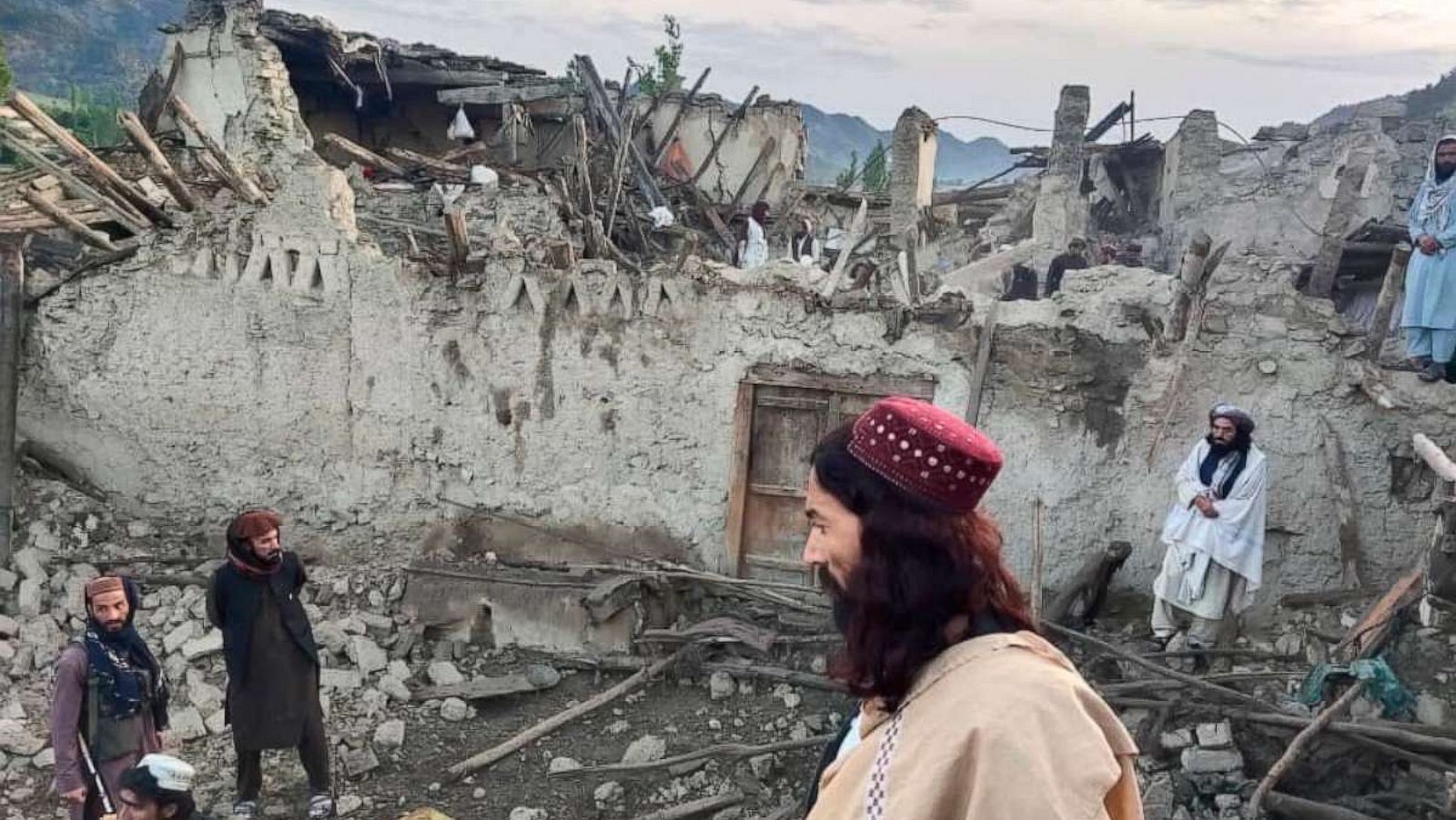
A large-scale rescue operation was launched in Afghanistan on Monday after a powerful earthquake and successive aftershocks destroyed homes and claimed the lives of more than 600 people, according to the country’s interior ministry.
The tremor occurred shortly before midnight, sending strong vibrations through Kabul and reaching as far as Islamabad, the capital of neighboring Pakistan.
Near the epicenter in eastern Afghanistan, “610 people were killed and 1,300 were injured in Kunar province, with numerous houses destroyed,” said spokesman Abdul Mateen Qani in a statement to AFP. He further revealed that in Nangarhar province, which also felt the impact of the quake, 12 people lost their lives while 255 others sustained injuries.

Taliban officials, working in collaboration with the United Nations, moved quickly to deliver aid to the most affected communities. “The UN in Afghanistan is deeply saddened by the devastating earthquake that struck the eastern region & claimed hundreds of lives,” the organization announced on X, confirming that its teams were already in the field “delivering emergency assistance & lifesaving support.”
The United States Geological Survey reported that the epicenter of the earthquake was located 27 kilometers from Jalalabad in Nangarhar province, at a shallow depth of eight kilometers. Seismologists note that shallow earthquakes often cause greater destruction compared to those occurring at deeper levels.
The main tremor was followed by several aftershocks throughout the night. One of the strongest, a shallow 5.2-magnitude quake, struck shortly after 4:00 am (2330 GMT Sunday), adding to the devastation.
Afghanistan is particularly prone to seismic activity, especially in the Hindu Kush mountain range, which lies at the meeting point of the Eurasian and Indian tectonic plates. This vulnerability has made earthquakes a recurring disaster in the country.
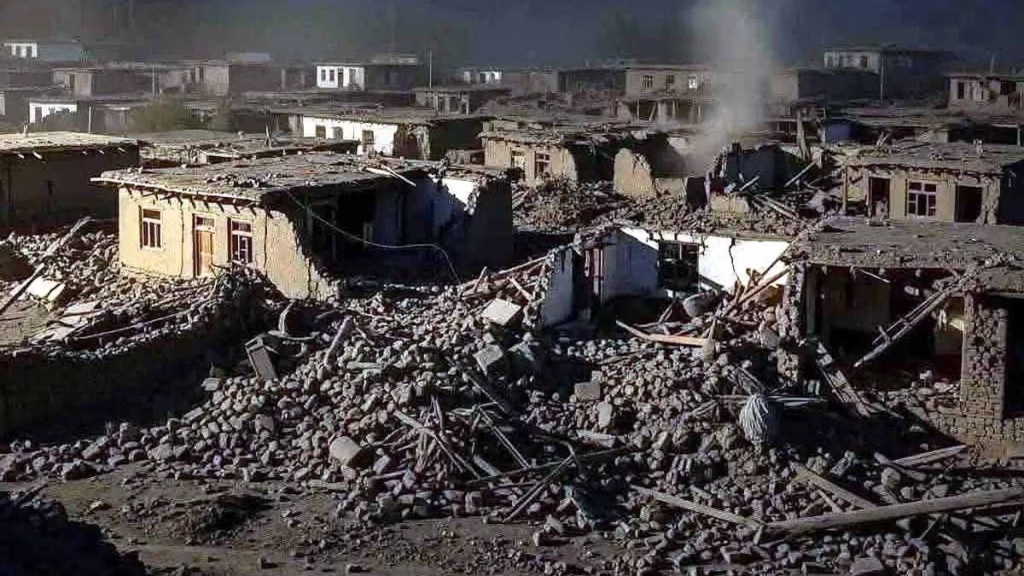
The crisis was further compounded by heavy flooding that struck Nangarhar province just days earlier, between Friday and Saturday, which claimed five lives and destroyed farmland and properties, according to local officials.
Earthquakes in Afghanistan have historically caused heavy casualties. In June 2022, a 5.9-magnitude quake ravaged Paktika province, killing more than 1,000 people and displacing tens of thousands. The country’s ability to respond to such tragedies has been severely undermined by decades of war and economic hardship.
The situation worsened following the Taliban’s return to power, as foreign aid to Afghanistan has drastically declined, limiting the government’s capacity to provide relief during emergencies.
The region has also witnessed past catastrophes, such as the October 2015 earthquake that measured 7.5 in magnitude and struck both Pakistan and Afghanistan. That disaster left over 380 people dead, with most fatalities recorded in Pakistan. In Afghanistan, 12 young schoolgirls tragically lost their lives in a stampede as they attempted to escape a collapsing building during the quake.
What you should know
Afghanistan has long been vulnerable to devastating earthquakes due to its geographical location, and its weakened infrastructure makes recovery even more difficult.
The latest quake, centered in the east, has killed over 600 people and injured more than 1,500, compounding the country’s humanitarian crisis at a time when international aid has significantly dwindled.