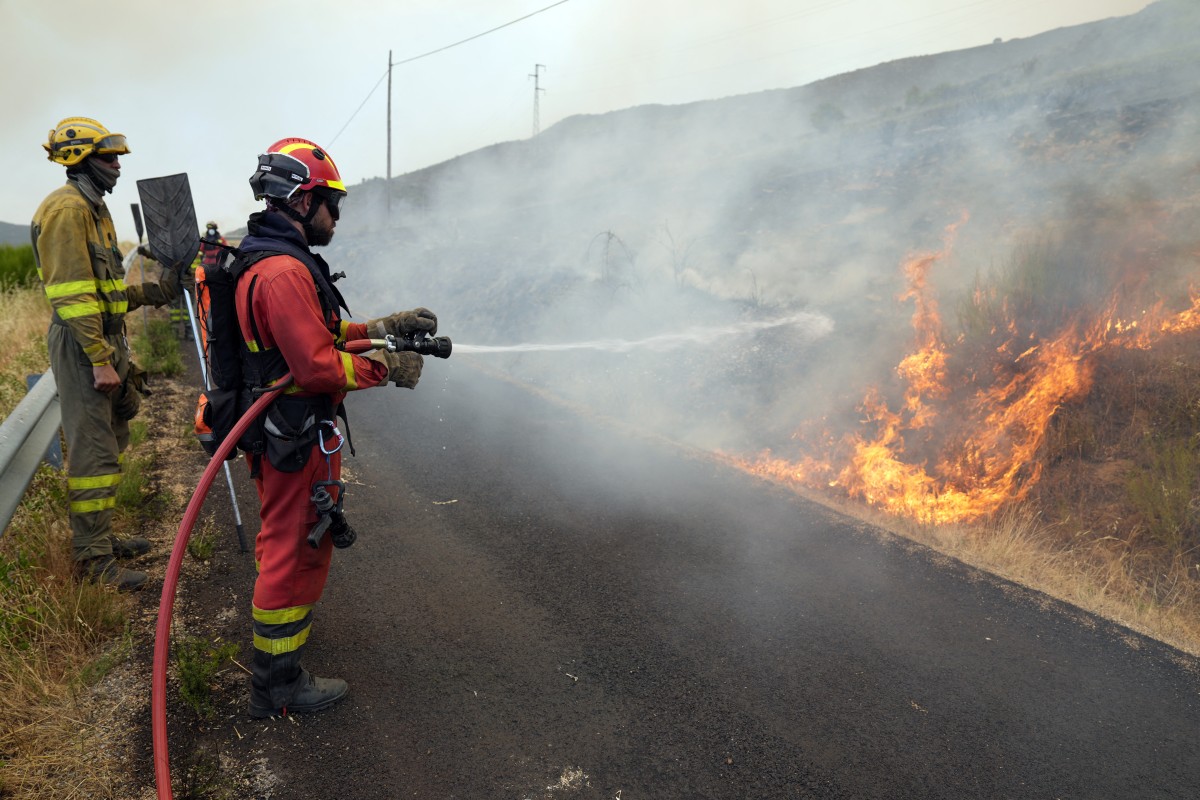
Firefighters across Spain, supported by military personnel and aircraft, continue to battle more than 20 large wildfires raging in the western part of the country.
Authorities confirm that Spain has already experienced its worst fire season on record, with vast areas of land reduced to ash.
Both Spain and neighboring Portugal have been hit hard by forest fires in recent weeks. Experts link the intensity of the blazes to extreme heatwaves and prolonged drought conditions, which scientists attribute to the broader effects of climate change across southern Europe.
The crisis has also claimed lives. On Sunday, two firefighters—one in Spain and another in Portugal—were killed in separate road accidents, adding to a growing death toll: four in Spain and two in Portugal.
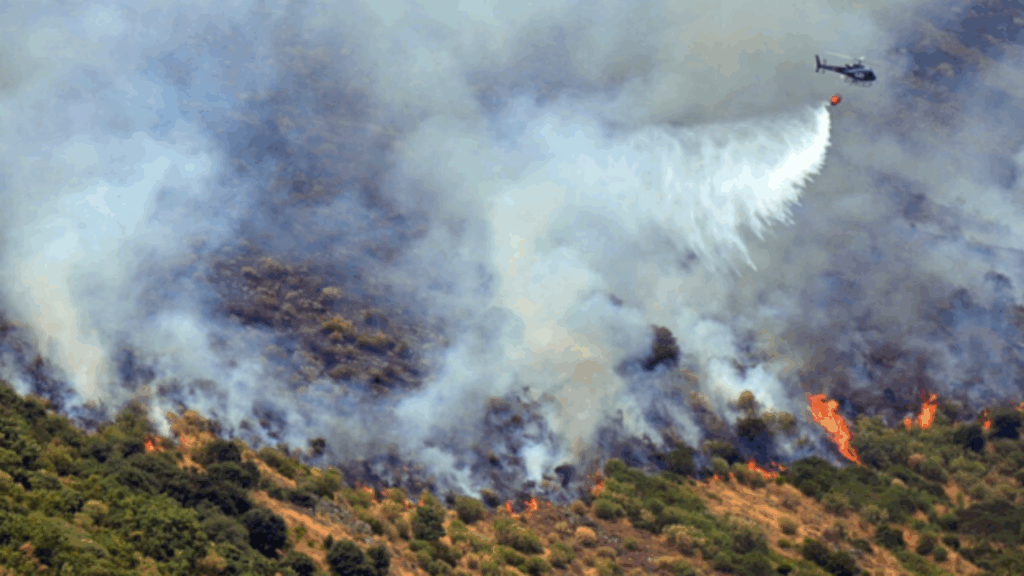
Spanish civil protection chief Virginia Barcones explained on national television that 23 fires are now classified at “operational level two,” meaning they directly threaten nearby communities. Most of the blazes are concentrated in the western regions of Castile and Leon, Galicia, and Extremadura, where thousands have been forced to leave their homes.
Some residents expressed anger over what they saw as inadequate preparation and a lack of resources. In Galicia’s Ourense province, 42-year-old Patricia Vila lamented, “No one’s shown up here, nobody. Not a single damn helicopter, not one plane, has come to drop water and cool things down a bit.”
Signs of devastation were visible across villages and countryside, with charred forests, scorched soil, and destroyed homes. Thick smoke forced many people to wear masks, while locals in shorts and T-shirts tried to fight advancing flames with buckets of water and garden hoses alongside professional firefighters.
According to the European Forest Fire Information System (EFFIS), more than 343,000 hectares—nearly half a million football fields—have already been burned in Spain this year, breaking the previous record of 306,000 hectares set in the same period three years ago. The scale of destruction has drawn in international assistance, with firefighting aircraft from France, Italy, Slovakia, and the Netherlands sent to help Spain. Portugal has also received support from Sweden and Morocco.
However, authorities warn that firefighting efforts remain extremely challenging. Spanish Defence Minister Margarita Robles said the massive fires and the density of smoke, visible even from space, make “airborne action” difficult. “It’s a very difficult, very complicated situation,” she noted.
In Portugal, nearly 2,000 firefighters were deployed across the north and center of the country on Monday, with half concentrated around the hard-hit town of Arganil. The country has lost 216,000 hectares of land to fires since the beginning of the year. Prime Minister Luis Montenegro described the conditions as “unprecedented,” citing 24 days of intense heat combined with strong winds. “We are at war, and we must triumph in this fight,” he declared.
Despite the grim situation, officials in both countries expressed cautious optimism that shifting weather patterns may ease the crisis. Spain’s meteorological agency said the heatwave, which saw temperatures climb as high as 45°C, is coming to an end.
Tragedy continues to shadow the firefighting operations. In Spain, a firefighter died after his water truck overturned on a steep forest road in Castile and Leon, only days after two volunteer firefighters had lost their lives in the same region. A Romanian stable worker also perished while attempting to protect horses from the flames. Meanwhile, Portugal mourned the loss of a firefighter killed in a traffic accident that left two colleagues seriously injured, as well as a former mayor in Guarda who died while battling a blaze.
The fires highlight the growing vulnerability of southern Europe to extreme weather conditions and underscore the difficulty governments face in preventing and controlling climate-driven natural disasters.
What you should know
The wildfires sweeping across Spain and Portugal are among the worst in recent history, fueled by record heat and drought linked to climate change.
With more than half a million hectares destroyed across both countries this year, the crisis has forced thousands from their homes and drawn international assistance.
While cooler weather may bring some relief, the scale of destruction underscores how vulnerable southern Europe has become to increasingly severe wildfires.