Biography and Early Life
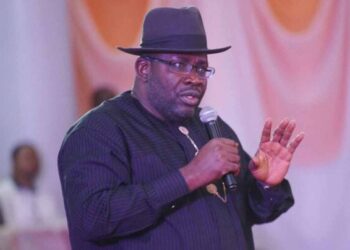
Siminalayi Joseph Fubara was born on November 8, 1969, in Opobo Town, Opobo/Nkoro Local Government Area of Rivers State, Nigeria. He hails from the Opobo Kingdom, a historic coastal community with a rich heritage in trade and maritime activities. Growing up in Rivers State, Fubara was exposed to the dynamics of the Niger Delta region, including its economic potential and socio-political challenges.
His upbringing in a region central to Nigeria’s oil economy would later inform his understanding of public finance, resource management, and governance when he assumed leadership positions.
Educational Background
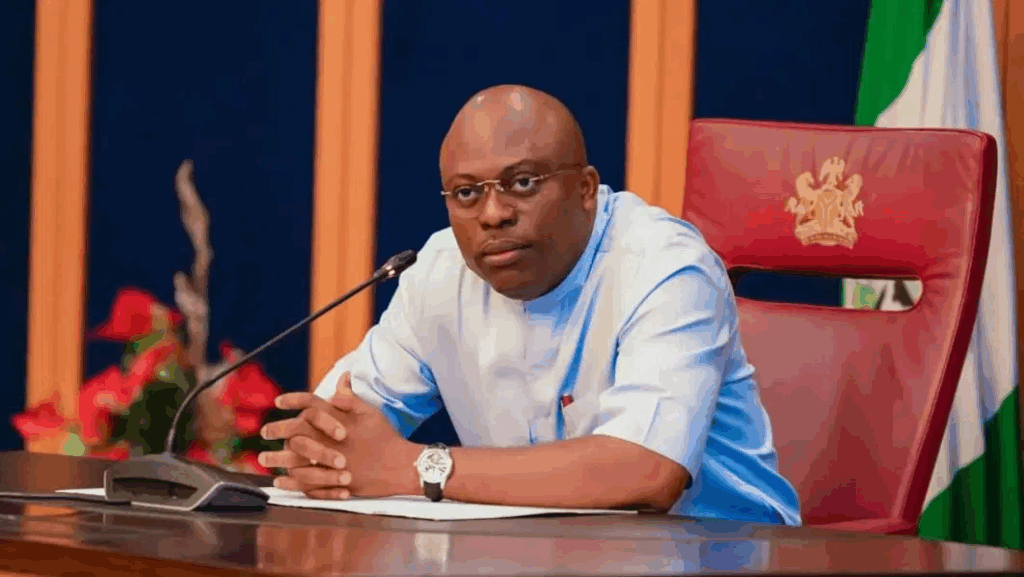
Fubara’s educational journey reflects a strong focus on accounting and financial management. He attended the Rivers State University of Science and Technology (now Rivers State University), Port Harcourt, where he earned a Bachelor of Science degree in Accounting.
Committed to professional excellence, Fubara pursued various professional certifications that enhanced his expertise in financial management and public sector accounting. He is a Fellow of the Institute of Chartered Accountants of Nigeria (FCA), a prestigious designation that underscores his mastery of accounting principles and practices.
His educational background in accounting positioned him well for a career in public finance and fiscal management, the skills that would prove crucial in his administrative roles.
Professional Career
Before entering full-time politics, Siminalayi Fubara built an impressive career in public service, particularly in financial management and accounting within Rivers State.
Accountant General of Rivers State
Fubara’s most significant pre-gubernatorial role was serving as the Accountant General of Rivers State, a position he held from 2015 to 2021 under Governor Nyesom Wike’s administration. This six-year tenure was marked by:
Financial Management: He oversaw the state’s finances, ensuring proper accounting procedures and fiscal discipline in revenue collection and expenditure.
Budget Implementation: Fubara played a crucial role in implementing the state’s annual budgets, managing allocations for various projects and programs across Rivers State.
Treasury Operations: As Accountant General, he managed the state treasury, coordinated financial reporting, and maintained accountability in government spending.
Institutional Reforms: He implemented various reforms in the state’s financial management systems, improving transparency and efficiency in public finance administration.
His tenure as Accountant General earned him recognition for competence and loyalty, qualities that would eventually position him for higher political office.
Political Career
Path to Governorship
Fubara’s transition from civil servant to politician came in 2023 when he emerged as the gubernatorial candidate of the People’s Democratic Party (PDP) in Rivers State. His candidacy was significantly backed by the then-incumbent Governor Nyesom Wike, who played a decisive role in his emergence as the party’s flagbearer.
The 2023 gubernatorial campaign positioned Fubara as a technocrat who would continue the developmental trajectory of the Wike administration while bringing his financial management expertise to bear on governance.
Governor of Rivers State (2023 – Present)
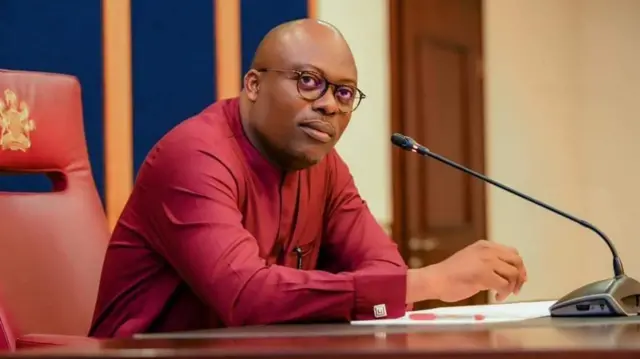
On May 29, 2023, Siminalayi Fubara was sworn in as the Governor of Rivers State, succeeding Nyesom Wike. However, his tenure has been dominated by a highly publicized political crisis with his predecessor.
The Fubara-Wike Political Crisis
Almost immediately after assuming office, Governor Fubara’s relationship with his predecessor and political godfather, Nyesom Wike (who became Minister of the Federal Capital Territory), deteriorated dramatically. This conflict has become one of the most significant political stories in contemporary Nigerian politics.
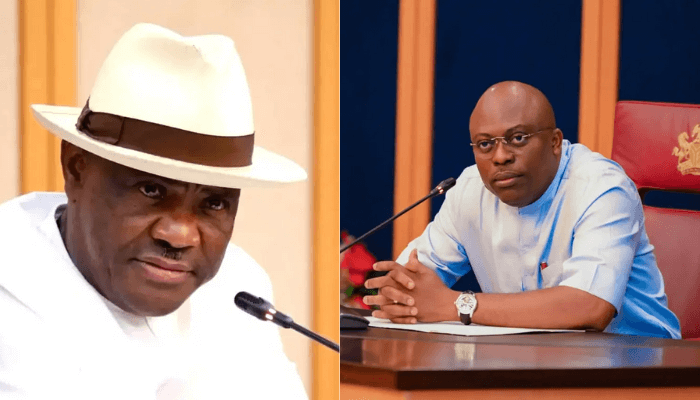
Key Issues in the Crisis:
Control of State Structures: The conflict centers largely on control of Rivers State’s political machinery, including the State House of Assembly and local government councils.
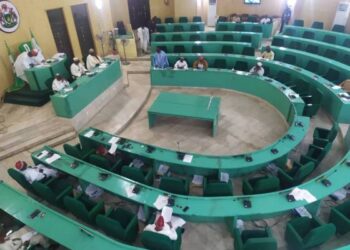
Legislative Battles: A faction of the Rivers State House of Assembly, loyal to Wike, initiated impeachment proceedings against Fubara in October 2023, citing gross misconduct. This led to the defection of 27 lawmakers from the PDP to the All Progressives Congress (APC), creating a constitutional crisis.
Court Interventions: The crisis has spawned numerous court cases regarding the legitimacy of the defected lawmakers, control of state funds, and governance structures.
Federal Government Mediation: President Bola Tinubu intervened in October 2023, brokering a peace agreement that temporarily eased tensions. However, the crisis has persisted with periodic flare-ups.
Local Government Elections: Disputes over local government elections and the appointment of council chairmen have continued to fuel the conflict.
Demolition Controversies: In 2024, Fubara’s government demolished the State House of Assembly complex, claiming structural defects, a move widely interpreted as part of the political battle.
Governance and Administration
Despite the political turbulence, Governor Fubara has attempted to pursue his administrative agenda:
Infrastructure Development: Continuing road construction and urban development projects across Rivers State.
Education Initiatives: Investing in educational infrastructure and teachers’ welfare.
Civil Service Reforms: Implementing changes in the state civil service structure and operations.
Security: Addressing security challenges in the state, particularly in riverine areas.
Economic Development: Promoting investment and economic activities in Rivers State.
However, the ongoing political crisis has significantly impacted his administration’s effectiveness and public perception.
Political Style and Philosophy
Fubara initially presented himself as a quiet technocrat, contrasting with Wike’s flamboyant and confrontational style. However, the political crisis has revealed a more assertive and defiant side, as he has consistently resisted attempts to undermine his authority.
His public statements emphasize:
- Respect for democratic institutions
- Focus on governance over politics
- Commitment to Rivers State’s development
- Independence in decision-making
- Reconciliation and peace
Public Perception and Controversies
Governor Fubara’s tenure has evoked mixed reactions:
Supporters view him as:
- A victim of political godfather syndrome
- Courageous for standing up to political domination
- Focused on governance despite distractions
- A symbol of resistance against political puppetry
Critics argue that:
- He has mismanaged the relationship with key political stakeholders
- The political crisis demonstrates poor political judgment
- His administration lacks clear direction amid the turmoil
- Some of his actions, like the Assembly complex demolition, appear vindictive
Personal Life
Siminalayi Fubara is married to Justice Valerie Fubara, a Judge of the Rivers State High Court. The couple has children together. He is known to be relatively private about his personal life, preferring to keep family matters away from the public spotlight.
His religious faith is important to him, and he has often referenced divine guidance in navigating the political challenges facing his administration.
Legacy and Ongoing Impact
Though still early in his gubernatorial tenure, Fubara’s time in office has already become a significant case study in Nigerian politics, particularly regarding:
Godfather Politics: The crisis exemplifies the challenges governors face when trying to assert independence from political godfathers who facilitated their rise to power.
Democratic Institutions: The standoff has tested Rivers State’s democratic institutions, particularly the legislature and judiciary.
Political Loyalty vs. Governance: Fubara’s situation highlights the tension between political loyalty and the autonomy needed for effective governance.
Succession Politics: His experience has reignited debates about succession planning and the dangers of anointing political heirs.
The ultimate assessment of Fubara’s governorship will depend significantly on whether he can navigate the political crisis successfully while delivering meaningful development to Rivers State. His tenure serves as a reminder of the complex power dynamics that shape Nigerian politics, where electoral victory is often just the beginning of a more challenging political journey.
Siminalayi Fubara’s story is still unfolding. From accountant to Accountant General to Governor, his trajectory appeared straightforward until the political realities of godfather politics intervened. Whether he emerges as a symbol of gubernatorial independence or a cautionary tale about political naivety remains to be seen. What is certain is that his tenure has already left an indelible mark on Rivers State politics and contributed to ongoing conversations about democratic governance in Nigeria.