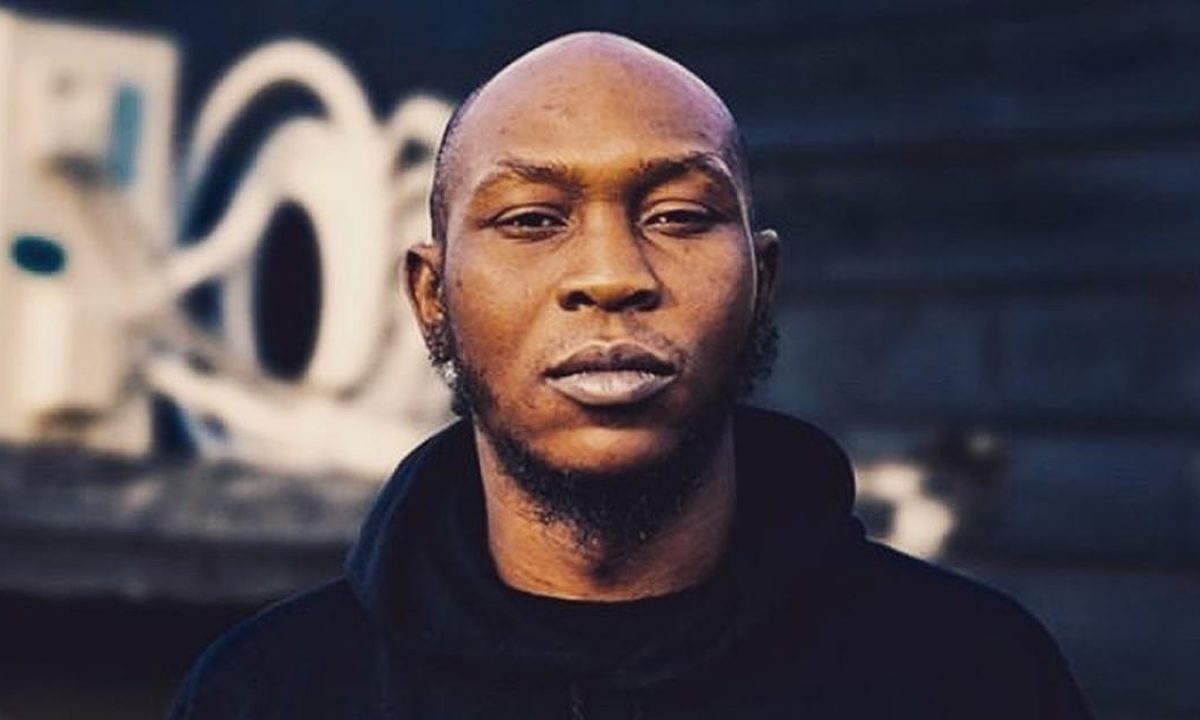
In a characteristically unfiltered social media address that has ignited widespread discussion across Nigerian online communities, Seun Kuti, son of Afrobeat legend Fela Anikulapo-Kuti and a prominent activist in his own right, has made the striking declaration that he has never engaged in prayer throughout his entire life.
The 41-year-old musician and bandleader, known for continuing his father’s legacy of politically charged music with his band Egypt 80, used his Instagram platform to deliver what amounts to a philosophical manifesto challenging the fundamental premises of organized worship as practiced across Nigeria’s deeply religious society.
Kuti’s position represents a particularly bold stance in Nigeria, where an estimated 95% of the population identifies as either Christian or Muslim, and public displays of faith are woven into the fabric of daily life. His comments arrive at a time when prosperity gospel churches and elaborate religious ceremonies have become increasingly prominent features of Nigerian society.
“I have never prayed before in my life. I don’t know how to pray. I don’t believe it works,” Kuti stated plainly in the video, before elaborating on what he considers a more authentic form of spiritual expression: “Your life is your prayer. What you do with your life is your prayer. That is the only prayer. Your action is prayer.”
The artist didn’t simply stop at personal testimony. He mounted a direct critique of what he termed “eye service”—public or audible prayer that he characterized as performative rather than substantive. This element of his argument appears aimed at the highly visible prayer culture prevalent in Nigerian public spaces, from roadside vigils to corporate prayer meetings.
His dismissal of such practices as “childishness” is certain to rankle religious leaders and devout practitioners who view communal worship as central to their faith traditions.
Perhaps most provocatively, Kuti presented what amounts to a theological argument against the efficacy of prayer itself, pointing to what he sees as an inherent contradiction in monotheistic doctrine. He questioned the logic of petitioning a deity who has supposedly predetermined all outcomes.
“This God you talked about, you claimed he has already written down what is going to happen from the beginning to the end; his will must be done,” he argued, before posing the central question: “So, except your prayer aligns with his will… If your prayer does not align with the will of your God, then your prayer will not be answered.”
This line of reasoning touches on centuries-old philosophical debates about divine omniscience, free will, and the purpose of prayer—questions that theologians have grappled with across religious traditions.
In what may prove the most incendiary aspect of his remarks, Kuti suggested that religious leaders deliberately obscure this theological contradiction for financial gain. “But clerics won’t tell you this because they want to exploit you,” he asserted, tapping into longstanding concerns about prosperity gospel preachers and religious commercialization that have periodically surfaced in Nigerian public discourse.
Kuti concluded with an emphatically practical worldview: “I solve my problems. I don’t pray over my problems. If prayer solved problems, prisons and hospitals would be empty.”
This utilitarian argument—that prayer’s failure to eliminate suffering suggests its ineffectiveness—echoes atheistic and humanistic critiques of religious practice, though delivered with Kuti’s characteristic bluntness.
The remarks are consistent with the iconoclastic tradition established by Seun’s father, Fela Kuti, who famously rejected organized religion and created his own spiritual philosophy. Fela’s music frequently criticized what he viewed as the colonization of African minds through imported religions, particularly Christianity and Islam.
Seun Kuti has built his career on similarly confrontational activism, frequently addressing issues of corruption, neocolonialism, and social justice. His Grammy-nominated work with Egypt 80 continues the politically conscious Afrobeat tradition.
The statement is likely to generate significant pushback from Nigeria’s religious establishment and devout citizens who may view his comments as blasphemous or disrespectful. However, it may also resonate with a growing demographic of young Africans who increasingly question traditional religious orthodoxies while maintaining spiritual identities.
As of press time, religious leaders had not issued formal responses to Kuti’s remarks, though social media commentary suggested a polarized reception, with some praising his courage to speak unconventionally and others condemning what they perceive as arrogance or spiritual blindness.
The musician’s declaration adds another chapter to Nigeria’s ongoing conversation about the role of faith in public and private life, forcing adherents to confront challenging questions about the relationship between belief, action, and authentic spirituality.
WHAT YOU SHOULD KNOW
Seun Kuti has publicly declared he’s never prayed and doesn’t believe prayer works, arguing instead that a person’s actions and choices constitute their true “prayer.” The Afrobeat musician criticized public worship as performative, questioned the logical consistency of petitioning an all-knowing God whose will is predetermined, and accused religious leaders of exploiting believers.
His core message: “I solve my problems. I don’t pray over my problems”—a pragmatic, action-oriented philosophy that directly challenges Nigeria’s deeply religious culture.
The statement continues the iconoclastic Kuti family legacy of questioning organized religion and represents a bold stance in one of Africa’s most devout nations, where such views remain highly controversial.