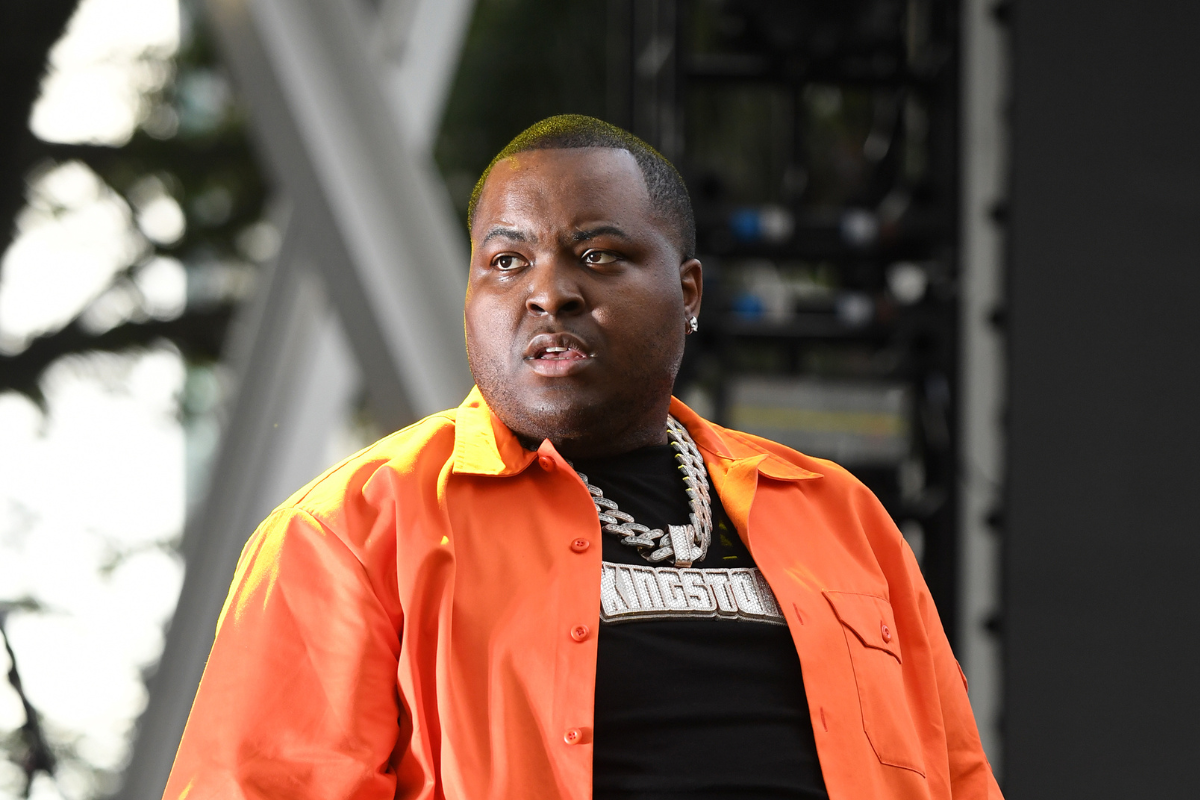
Jamaican-American singer Sean Kingston was sentenced to 42 months in federal prison on Friday for orchestrating a sophisticated wire fraud operation that bilked luxury vendors out of more than $1 million in high-end cars, jewelry, and other extravagant items.
The ruling, delivered by U.S. District Judge David S. Leibowitz in Florida federal court, also mandates three years of supervised probation upon Kingston’s release, marking a significant fall from grace for the artist once celebrated for his chart-topping hits.
Kingston, 35, whose legal name is Kisean Paul Anderson, had been convicted in March alongside his mother, Janice Turner, following a swift jury deliberation that lasted under four hours. The pair faced charges stemming from a conspiracy that exploited Kingston’s fading but still potent fame to dupe vendors.
Prosecutors painted a picture of a calculated scam in which Kingston and Turner name-dropped A-list celebrities as potential clients or promised glowing social media endorsements to secure goods, including a Cadillac Escalade, custom jewelry, and a colossal LED television—without any intention of paying up. When pressed for payment, the duo allegedly sent fabricated wire transfer receipts via text, creating the illusion of funds in transit.
“This wasn’t just a case of bad debts; it was a deliberate web of lies leveraging fame for fraud,” a source familiar with the prosecution told reporters outside the courthouse, echoing sentiments from the trial. Federal guidelines had recommended a stiffer penalty exceeding five years. Still, Judge Leibowitz opted for a slightly reduced term, citing unspecified mitigating factors while rejecting Kingston’s emotional plea for house arrest.
In a pre-sentencing letter and courtroom statement, the singer highlighted his philanthropic efforts—such as community outreach in South Florida and Jamaica—and his lack of prior convictions, arguing that incarceration would derail his ability to contribute positively. “I’ve made mistakes, but I’ve also given back,” Kingston reportedly told the judge, according to courtroom observers.
Turner, who played a pivotal role in the scheme, was sentenced last month to a harsher five-year term, reflecting her deeper involvement in the operational details. Both mother and son now face restitution hearings in October, where victims could seek compensation for their losses, estimated at over $1 million.
Appeals are expected in the coming months, with Kingston’s legal team signaling plans to challenge the conviction on grounds of evidentiary issues and jury instructions.
The case has roots in Kingston’s heyday as a teen sensation in the late 2000s. Bursting onto the scene in 2007 with the infectious reggae-infused track “Beautiful Girls,” which sampled Ben E. King’s “Stand by Me” and soared to No. 1 on the Billboard Hot 100, Kingston quickly became a pop-R&B staple.
Born in Miami to Jamaican parents and raised partly in Kingston, Jamaica—hence his stage name—he signed with Epic Records at age 17. Follow-up successes included albums like “Tomorrow” (2009) and “Back 2 Life” (2013), featuring collaborations with stars such as Justin Bieber on the 2010 duet “Eenie Meenie,” T.I., and Nicki Minaj.
At his peak, Kingston’s net worth was estimated in the millions, bolstered by tours, endorsements, and a flashy lifestyle that often showcased the very types of luxury items central to his fraud conviction.
However, Kingston’s career trajectory has been turbulent, marred by financial woes, legal skirmishes, and health scares. In 2011, he survived a near-fatal jet ski accident that required heart surgery, and he has faced multiple lawsuits over unpaid bills and alleged assaults. This wire fraud conviction represents the most severe blow yet, potentially derailing any comeback attempts in an industry increasingly wary of scandal-plagued artists.
Legal experts view the sentencing as a cautionary tale about the intersection of celebrity and crime. “Vendors are often starstruck and willing to extend credit based on promises alone,” said Miami-based fraud attorney Elena Vasquez in an interview. “But this case shows that federal prosecutors are cracking down on wire fraud, especially when it involves interstate commerce and digital deception.”
The scheme’s reliance on text messages and fake receipts highlights evolving tactics in white-collar crime, where technology enables quick cons but also leaves a digital trail for investigators.
As Kingston begins his prison term, questions linger about the impact on his family and fanbase. Turner, already incarcerated, leaves behind a fractured household, while Kingston’s younger siblings and extended relatives in Jamaica may face ongoing scrutiny.
Fans on social media have expressed a mix of disappointment and sympathy, with some calling for redemption arcs in the vein of other troubled stars like Martha Stewart or Lil Wayne, who bounced back post-incarceration.
Restitution proceedings in October could reveal more about the victims—primarily high-end dealerships and jewelers—and the full extent of the financial damage. For now, the once-vibrant voice behind “Beautiful Girls” faces a stark new reality behind bars, a far cry from the glamorous life he once projected. This story is developing, with appeals likely to prolong the legal saga.
WHAT YOU SHOULD KNOW
Sean Kingston’s 42-month prison sentence for a $1 million wire fraud scheme, alongside his mother’s five-year term, serves as a stark warning that exploiting celebrity status for deceit carries severe consequences, with federal courts prioritizing accountability over fame.