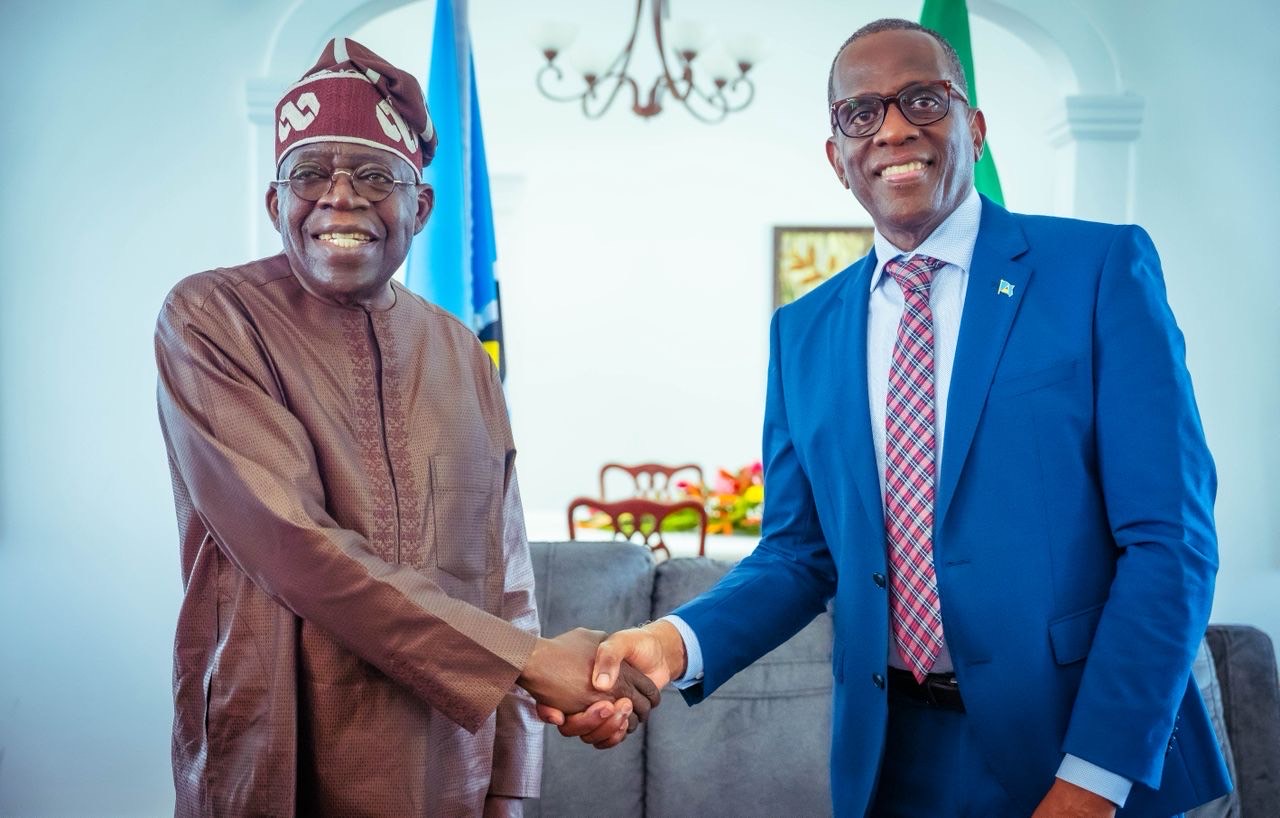
Saint Lucia’s Prime Minister, Philip Pierre, has publicly criticized the negative reactions that followed Nigerian President Bola Tinubu’s recent visit to the Caribbean nation.
During his speech on August 1, 2025, to mark Emancipation Day, Pierre addressed the controversy surrounding the June 29 visit, describing the backlash as an unfortunate manifestation of colonial legacies that still taint perceptions of African leaders.
In a pointed statement, Pierre decried the attacks on Tinubu, asserting that they were orchestrated by politically driven individuals, with backing from opposition forces.
According to him, such behavior stems from a deep-seated psychological aftermath of slavery, which fuels tendencies toward self-loathing and the internalization of inferiority among people of African descent. “The vilification and denigration of the President of Nigeria, Bola Tinubu, by a politically-motivated group tacitly supported by the opposition group was another demonstration of the harmful effects of the legacy of slavery—self-hate and readiness to accept African people and their descendants as inferior,” Pierre stated.
The criticism of Tinubu’s visit had intensified among Nigerian opposition figures following a tragic flooding incident in Minna, Niger State, which occurred just around the same time as his visit to Saint Lucia. Many questioned the appropriateness of Tinubu’s international engagement while his country was dealing with a domestic crisis that claimed several lives.
Meanwhile, in Saint Lucia, some citizens and political observers raised concerns about the financial implications of the visit, including the temporary closure of airports and doubts regarding the tangible outcomes of any diplomatic agreements.
Despite these concerns, Prime Minister Pierre dismissed the criticisms as unfounded and disrespectful. He emphasized that had it been a leader from a Western nation or another non-African state, the reception would likely have been cordial and devoid of hostility. “That behaviour was nothing short of shameful and disgraceful. Had the visit been by a head of state from another country, the reception from that group would have been at least respectful,” Pierre asserted.
He reiterated the honour that Saint Lucia felt in hosting the Nigerian president and underscored his administration’s dedication to deepening ties with Nigeria. “To the government and the people of Nigeria, the government and the people of Saint Lucia have been honoured by your president’s visit,” he said.
Emancipation Day in Saint Lucia serves as a significant reminder of the abolition of slavery in the British Caribbean. The holiday provides an opportunity to reflect on the historical injustices endured by African descendants and to promote unity, racial equality, and Pan-African solidarity.
What you should know
Philip Pierre’s emphatic defense of President Tinubu’s visit reflects a deeper call for Africans and the diaspora to shed lingering colonial mindsets that undermine black leadership.
His Emancipation Day address wasn’t merely about a diplomatic event; it was a rallying cry against self-inflicted marginalization and for the restoration of dignity in how African leaders are perceived.
While opposition voices in both countries pointed to economic or crisis-related concerns, Pierre’s response emphasized the symbolic importance of African unity and mutual respect. For Saint Lucia, Tinubu’s visit is seen not just as diplomacy, but as an act of Pan-African affirmation.