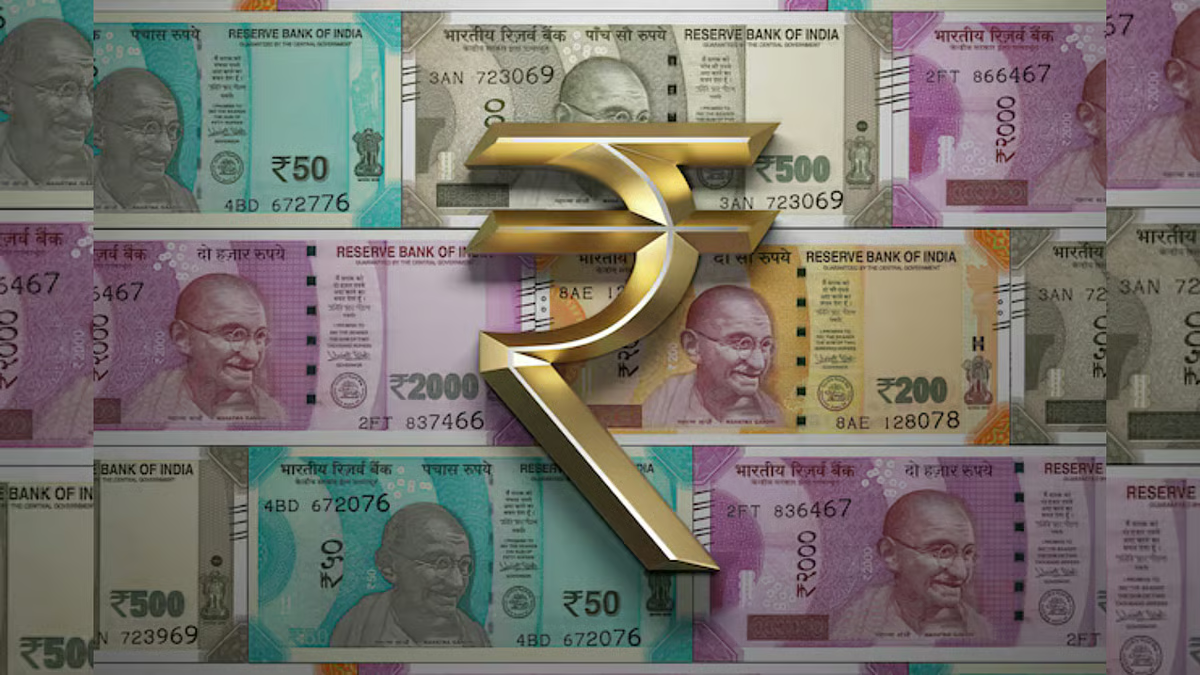
The Indian rupee continued its downward trajectory against the U.S. dollar on Friday, settling at 87.8000 per dollar by mid-morning, marking a notable decline from Thursday’s close of 87.6250.
The currency’s weakness reflects broader vulnerabilities in Asian markets and mounting concerns over potential U.S. trade policies that could significantly impact India’s export-dependent sectors.
The rupee has now approached concerning territory, with currency data showing it recently hit 88.1950 against the dollar on August 29, underscoring the sustained pressure on India’s currency. Market participants are watching key technical levels closely, with traders anticipating central bank intervention if the rupee breaches critical thresholds.
RBI’s Defensive Strategy Takes Center Stage
Currency traders in Mumbai’s financial district report that the Reserve Bank of India stands ready to deploy its substantial foreign exchange reserves to prevent further deterioration. The central bank has already been active in currency markets this month, selling U.S. dollars across both onshore and offshore markets to support the rupee as it approached record lows.
“The first line of defense is at 87.80, which matches Tuesday’s high,” explained a senior currency trader at a Mumbai-based bank, speaking on condition of anonymity. “Beyond that level, all eyes will be on the psychological barrier of 87.95—the all-time low that markets are reluctant to test.”
This intervention strategy reflects the RBI’s longstanding approach to currency management, where officials have historically stepped in during periods of excessive volatility to maintain orderly market conditions.
Multiple Headwinds Compound Rupee’s Challenges
The currency’s decline stems from a confluence of domestic and international factors that have created a perfect storm for emerging market currencies. Foreign institutional investors have accelerated their exit from Indian equity markets, pulling more than $1 billion from local stocks over the past two trading sessions alone. This capital flight has intensified pressure on the rupee, as portfolio outflows typically require currency conversion.
Domestic corporations seeking to hedge their foreign exchange exposure have also contributed to dollar demand, while speculative trading flows have amplified the currency’s volatility. These technical factors underscore the broader challenges facing India’s economy as it navigates global uncertainties.
Regional Currency Weakness Spreads Across Asia
The rupee’s struggles mirror broader weakness across Asian currency markets, where regional peers declined between 0.2% and 0.7% on Friday. This synchronized weakness reflects investor caution ahead of crucial U.S. economic data that could influence Federal Reserve policy decisions.
Market participants are particularly focused on the release of U.S. personal consumption expenditures data, specifically the core PCE index—the Federal Reserve’s preferred inflation gauge. This indicator will provide critical insights into the trajectory of U.S. monetary policy, with current market pricing suggesting an 86% probability of a September interest rate cut.
Trade Policy Uncertainties Cloud Outlook
Adding to the rupee’s woes are persistent concerns about potential U.S. trade policies that could target Indian exports. These worries have created an additional layer of uncertainty for currency markets, as any significant trade restrictions could materially impact India’s current account dynamics and export competitiveness.
The combination of these factors—from immediate technical pressures to longer-term policy uncertainties—illustrates the complex challenges facing emerging market currencies in the current global environment.
As markets await clarity on both U.S. monetary policy and trade relations, the rupee’s performance will likely remain closely watched as a barometer of broader emerging market sentiment.
WHAT YOU SHOULD KNOW
The Indian rupee has weakened to 87.80 per dollar—dangerously close to its all-time low of 87.95—due to a triple threat: over $1 billion in foreign investor withdrawals from Indian stocks, broader weakness across Asian currencies, and lingering concerns about potential U.S. trade restrictions.
The Reserve Bank of India is expected to intervene aggressively to prevent further decline, but the currency’s fate now hinges largely on upcoming U.S. inflation data that will determine Federal Reserve policy and global dollar strength.