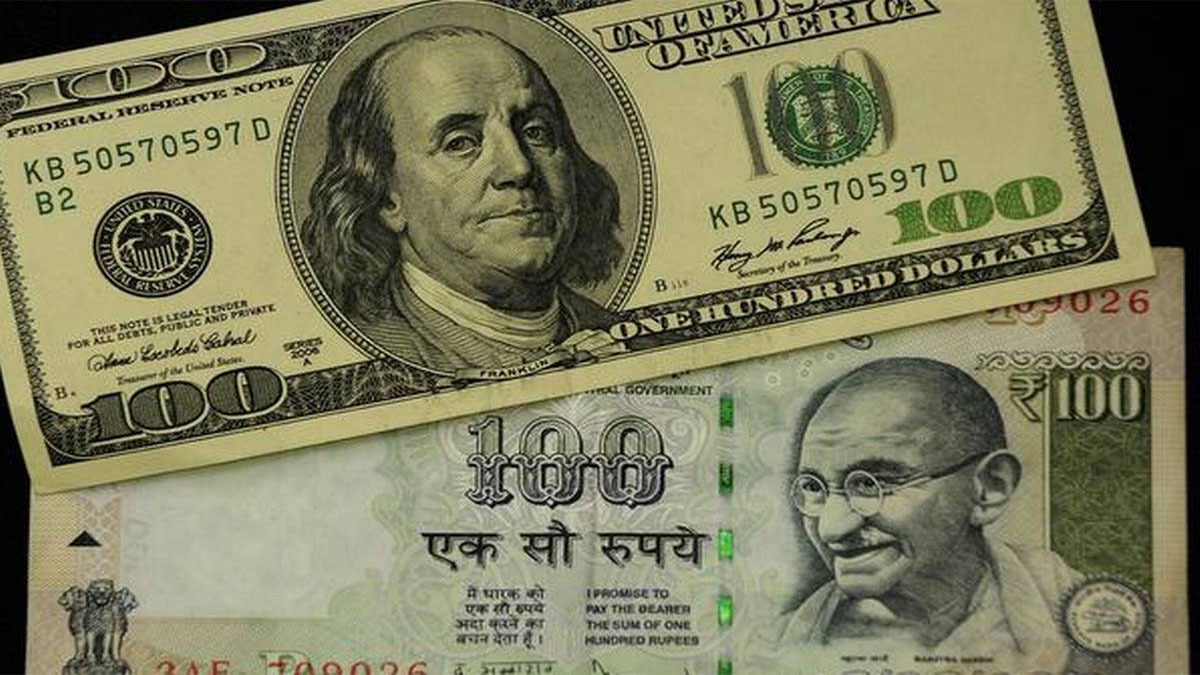
The Indian rupee clawed back most of its early gains to close modestly higher on Monday, in a trading session marked by what market participants describe as calculated intervention by the Reserve Bank of India to defend the currency at a psychologically crucial threshold.
The local unit opened the week at 87.9350 against the US dollar, a marginal improvement from Friday’s close of 87.9750, before rallying to an intraday peak of 87.7475 in early trade. However, the rupee surrendered much of those gains as the session progressed, ultimately settling at 87.9275—still in positive territory but well off its daily highs.
Central Bank Steps In
Market veterans pointed to telltale signs of RBI involvement, with state-run banks—widely believed to be acting on behalf of the monetary authority—conducting dollar sales that initially propelled the rupee higher. This marks a continuation of the central bank’s aggressive defensive posture witnessed last week, when officials conducted pre-market interventions on at least two separate occasions to arrest the currency’s descent toward record lows.
“Once there was clarity that the central bank had become less active, importers took over, which led to a 20-paisa move,” explained a senior trader at a state-run bank, speaking on condition of anonymity. The pattern suggests the RBI’s strategy of creating initial momentum through intervention, then allowing market forces to take over once speculative pressure eases.
The central bank’s dollar sales last week proved particularly effective in triggering a pullback in the USD/INR pair, flushing out speculative long positions—bets that the dollar would continue strengthening—and improving the near-term technical outlook for the rupee.
Foreign Inflows Provide Tailwind
Beyond official intervention, the rupee has found support from a resurgence in foreign portfolio investment. Overseas investors have poured more than $1 billion into Indian equities over the past week, providing a natural source of dollar supply and bolstering sentiment around risk assets.
“The rupee commenced the week on a front footing, buoyed by the resilience of risk assets augmented by foreign fund inflows,” noted Dilip Parmar, a foreign exchange research analyst at HDFC Securities. “The gain was further accelerated by the backdrop of a holiday-truncated week. The discernible, yet susceptible, intervention by the central bank also helped.”
Parmar’s reference to a “holiday-truncated week” suggests thinner trading volumes may have amplified price movements, while his characterization of RBI action as “susceptible” acknowledges the temporary nature of intervention-driven gains without addressing underlying pressures.
Market Shrugs Off Trump Tariff Threats
Notably, Monday’s trading showed a muted reaction to fresh comments from US President Donald Trump, who reiterated threats of “massive” tariffs against India if the country fails to meet unspecified compliance demands. The lack of market response suggests traders may be treating such rhetoric as par for the course or awaiting concrete policy measures before adjusting positions.
The Road Ahead
The rupee’s trajectory remains precarious, with the RBI walking a tightrope between defending the currency and preserving foreign exchange reserves. While the central bank’s interventions have successfully established a de facto floor near the 88-per-dollar level, analysts caution that sustained defense will depend on continued foreign inflows and a stabilization in global risk sentiment.
The coming sessions will test whether the improved sentiment can be sustained without constant central bank support or whether renewed dollar demand from importers and ongoing geopolitical uncertainties will push the rupee back toward recent lows.
WHAT YOU SHOULD KNOW
The Indian rupee’s modest recovery on Monday was primarily driven by strategic Reserve Bank of India intervention through state-run banks, which successfully defended the critical 88-per-dollar level. While the currency initially surged to 87.7475, it surrendered most gains as RBI activity subsided and importers resumed dollar purchases, ultimately closing at 87.9275.
The recovery was bolstered by strong foreign portfolio inflows exceeding $1 billion over the past week, providing natural dollar supply. Notably, markets largely ignored President Trump’s renewed tariff threats against India.