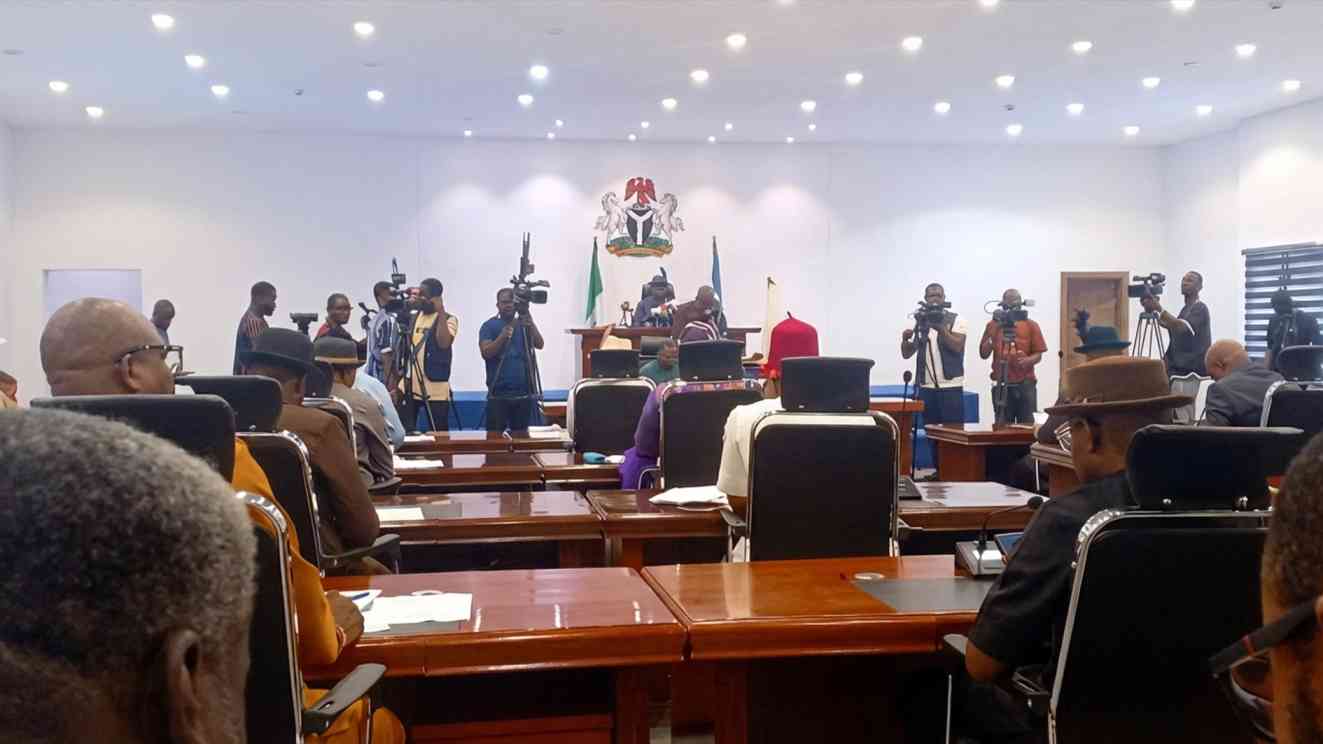
The Rivers State House of Assembly on Monday screened nine commissioner nominees submitted by Siminalayi Fubara, confirming five and rejecting four after several hours of questioning and debate in Port Harcourt.
The nominees appeared before lawmakers one after another to defend their credentials and respond to various questions from members of the Assembly.
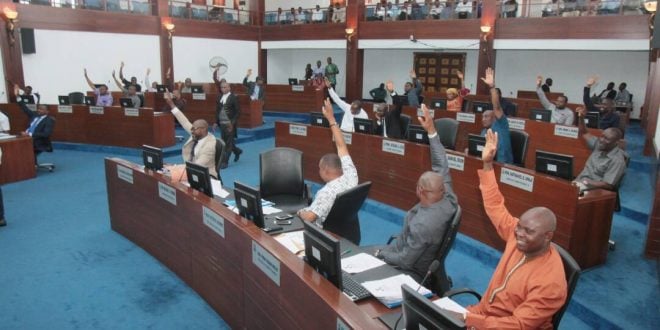
Among the first to be screened was Datonye Alasia, a medical doctor and professor of medicine. Lawmakers raised concerns about discrepancies on his birth certificate and the absence of a tax clearance certificate.
“The mutilation on the birth certificate may have come from the doctor who signed it at the time,” Alasia explained. On the missing tax clearance certificate, he apologised, saying, “I sincerely apologise for not attaching the tax clearance certificate before handing over the documents to the Sergeant-at-Arms.”
Lawmakers also questioned his contributions to the state despite his international engagements. Alasia responded, “As a nephrologist, I have trained many consultants and doctors in the university. That is part of my contribution to Rivers State.”
However, Peter Abbey, representing Degema Constituency, argued that the nominee’s performance during the screening was not convincing. “Based on his responses here today, I move that Professor Datonye Alasia should not be confirmed,” he said. The motion was seconded, and the House voted against confirming him.
Another nominee, Tonye Bellgam, who holds a master’s degree in Project Management and has experience in the oil and gas sector, was confirmed after lawmakers reviewed his professional background.
Temple Nwofor, a professor of civil engineering from Igwuruta in Ikwerre Local Government Area, was questioned on governance and fiscal discipline. When asked whether he would implement projects not captured in the state budget, he replied, “I don’t think I will involve myself in any project that is not contained in the budget.” His response earned him confirmation.
Peters Nwagor, a mathematician and Associate Dean at Ignatius Ajuru University of Education, was also confirmed after presenting his academic and administrative credentials.
The screening became more tense during the appearance of Charity Deemua. Lawmakers questioned inconsistencies in her birth records and the absence of tax clearance documents. When asked about her work experience, she replied, “I’m a politician, I don’t have work,” prompting the Speaker to ask, “So politicians don’t pay tax?” She was eventually rejected.
Tamuno Williams, a lawyer from Okrika and former local government chairman, was also questioned over alleged past criticisms of the Assembly. Williams defended himself, saying, “First of all, I can never talk down on this House. My comments were based on legal jurisprudence.” Nevertheless, lawmakers voted against confirming him.
Chartered accountant Lekue Kenneth, who serves as a senior project accountant on the Lagos-Calabar Coastal Highway, was confirmed after presenting his financial management experience.

Senior lawyer and lecturer Otonye Amachree faced scrutiny over petitions and his previous involvement in a Kalabari regency legal dispute. Despite addressing the concerns, the Assembly rejected his nomination.
The final nominee, Amairigha Edward Hart, was confirmed.
At the end of the screening exercise, the Assembly confirmed five nominees—Tonye Bellgam, Professor Temple Nwofor, Dr Peters Nwagor, Lekue Kenneth, and Amairigha Edward Hart—while rejecting Professor Datonye Alasia, Charity Deemua, Tamuno Williams, and Otonye Amachree.
The Speaker announced that the Assembly would formally notify Governor Fubara of its decision. “We will write to His Excellency to swear in the five confirmed nominees as soon as possible,” he said.
What you should know
Commissioner nominees in Nigerian states must be screened and confirmed by the state House of Assembly before they can assume office.
The process allows lawmakers to evaluate the nominees’ qualifications, integrity, and readiness to serve in government. In Rivers State, the confirmation exercise reflects ongoing political scrutiny within the state’s governance structure.
The approval of five nominees means Governor Siminalayi Fubara can proceed to swear them in as commissioners, while the rejection of four highlights the Assembly’s authority to decline appointments it considers unsatisfactory after legislative review.