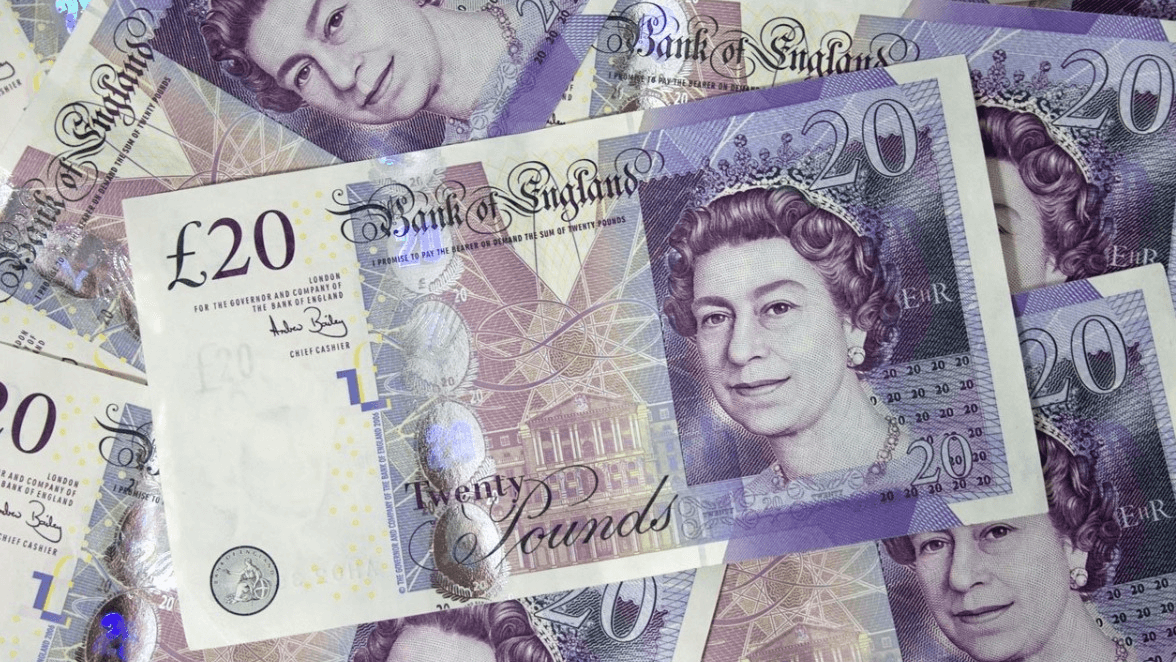
The British pound staged a modest recovery on Thursday after surprisingly strong UK economic data failed to shift market expectations for further Bank of England interest rate cuts, underscoring persistent concerns about the broader health of Britain’s economy.
Sterling pared some of its earlier losses against the dollar following November’s economic growth figures, which exceeded forecasts. However, the currency remained under pressure, trading down 0.05% at $1.3443 by midday—a notable improvement from the 0.10% decline registered before the data release, but hardly the reversal bulls might have hoped for.
The Office for National Statistics reported that UK gross domestic product expanded at its fastest pace since June, driven largely by a rebound in automotive manufacturing. Jaguar Land Rover’s return to full production capacity after recovering from a crippling cyberattack provided the primary boost, as the luxury carmaker and its supplier network resumed normal operations.
Yet analysts were quick to temper any optimism. “Despite the upside surprise, it is important to note that the data are by no means strong,” cautioned Kallum Pickering, chief economist at Peel Hunt. “Economic activity in the UK is, at best, lukewarm and lumpy and remains constrained mostly by a lack of confidence in the policy decisions of the Labour government.”
That sentiment appears firmly entrenched in financial markets. Traders are currently pricing in approximately 40 basis points of rate cuts from the Bank of England by September, expectations that remained essentially unchanged despite Thursday’s better-than-anticipated growth figures.
The tepid currency response reflects growing consensus that Britain’s economic engine is sputtering. Andrew Wishart, an economist at Berenberg, painted a sobering picture of the road ahead. “The big picture remains that the UK economy has lost momentum since the summer,” he said. “We suspect that this soft patch will persist into 2026 amid ongoing job losses and fiscal consolidation.”
Wishart suggested this challenging backdrop could push inflation lower and potentially force the Bank of England into more aggressive rate cuts than markets currently anticipate—a scenario that would likely weigh further on the pound.
The currency’s struggle comes as the initial boost from easing fiscal and political uncertainties has dissipated. Sterling had rallied following Finance Minister Rachel Reeves’ November budget presentation, which helped calm investor nerves about the new Labour government’s economic stewardship. But that momentum has clearly faded, with traders now pivoting back to hard economic data.
The next significant test arrives January 21, when the latest Consumer Price Index inflation figures are scheduled for release—data that could prove pivotal for the Bank of England’s rate trajectory.
Against the euro, sterling fared somewhat better, with the single currency rising a modest 0.15% to 86.54 pence.
The pound’s weakness was amplified by renewed dollar strength Thursday, as currency markets moved past recent concerns about Federal Reserve independence to refocus on economic fundamentals. The greenback’s broad-based gains added pressure across major currency pairs.
Meanwhile, a fresh challenge emerged from an unexpected quarter. Wednesday’s release of China’s full-year 2025 trade data highlighted what analysts describe as a potentially sensitive issue for the UK economy: the risk of Chinese goods originally destined for the United States being redirected to British and European markets.
The figures revealed that Chinese exports to the UK surged 7.8% year-on-year in 2025, with shipments to the European Union climbing 8.4%. The increases have raised concerns about potential “dumping” of Chinese products as Beijing’s exporters seek alternative markets amid ongoing trade tensions with Washington.
This development adds another layer of complexity to the UK’s economic outlook, potentially complicating domestic manufacturing competitiveness and trade policy decisions as the government navigates its post-Brexit economic strategy.
For now, currency markets appear unconvinced that one month of stronger growth signals a meaningful turnaround for Britain’s economy—leaving sterling vulnerable as recession fears persist and rate cut expectations solidify.
WHAT YOU SHOULD KNOW
Despite the UK economy posting its strongest growth since June in November, the pound remains under pressure because markets believe the underlying economy is still weak. Traders are betting on significant Bank of England rate cuts by September, unconvinced that one month of better data—driven largely by a single carmaker’s recovery—signals a genuine turnaround.
The ongoing job losses, lack of business confidence in Labour’s policies, and fiscal tightening suggest the UK’s economic weakness will persist well into 2026, potentially forcing deeper rate cuts than currently expected and keeping sterling vulnerable.