A fierce pricing battle has erupted in Nigeria’s petroleum sector, with fuel importers aggressively cutting prices below those offered by the Dangote Petroleum Refinery in what appears to be a desperate attempt to maintain market share.
The development comes as Africa’s richest man, Aliko Dangote, intensifies his campaign for government intervention to protect local refining operations.
The Numbers Tell the Story
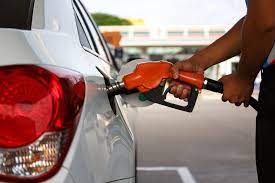
Market observations reveal the extent of this price war. While Dangote’s retail partners, including MRS and Heyden, maintain prices around N865-N875 per liter in Lagos and Ogun States, independent importers have moved decisively to undercut these rates. The SGR filling station in Ogun State has pushed prices as low as N847 per liter, representing a significant discount that directly challenges the locally refined product.
At the wholesale level, the competition is even more pronounced. Dangote refinery’s ex-depot price stands at N820 per liter, but major importers, including Aiteo and Menj, have positioned their products at N815 per liter. The Nigerian National Petroleum Company Limited (NNPCL) remains the outlier, maintaining its price at N825 per liter without joining the downward spiral.
Market Forces at Play
The pricing strategy reflects the harsh reality facing petroleum importers since Dangote’s 650,000-barrel-per-day refinery began operations earlier this year. Industry sources indicate that many importers have been recording substantial losses as the local refinery’s consistent price cuts have eroded their competitive advantage.
Chinedu Ukadike, National Publicity Secretary of the Independent Petroleum Marketers Association of Nigeria (IPMAN), frames this development within the broader context of market liberalization. “This is the beauty of the liberalization of the market,” Ukadike stated, defending the competitive pricing as a natural outcome of an open market system.
The Dangote Counterargument
However, this market dynamic is precisely what Dangote argues threatens the sustainability of local refining in Nigeria. The billionaire industrialist has characterized the importers’ pricing strategy as “unfair competition” and “dumping,” alleging that some imported products are of substandard quality that would be rejected in European or North American markets.
Dangote’s concerns extend beyond simple price competition. He has specifically highlighted the impact of Russian petroleum products, which he claims benefit from price caps and discounted crude oil, creating what he describes as an “uneven playing field.” According to Dangote, these subsidized imports force local refiners to sell below production costs, undermining the viability of domestic operations.
“In Nigeria, due to this unfair competition, this price is just about 60 cents, even cheaper than Saudi Arabia, which produces and refines its oil,” Dangote observed, pointing to what he sees as an unsustainable market distortion.
Policy Implications
The pricing war has implications for Nigeria’s energy policy direction. Dangote’s call for import restrictions directly challenges President Bola Tinubu’s market liberalization approach, creating a tension between free market principles and industrial protectionism.
Dangote has specifically invoked Tinubu’s “Nigeria First” policy, arguing it should extend to petroleum products. He points to protectionist measures in the United States, Canada, and the European Union as precedents for shielding domestic producers from what he characterizes as unfair foreign competition.
The IPMAN leadership, however, strongly opposes any import restrictions. Ukadike argues that competition from multiple sources ensures fair pricing for consumers and prevents monopolistic practices. “Nobody should be stopped from bringing in petroleum products,” he emphasized, warning that restrictions could lead to price manipulation.
Quality Concerns and Regulatory Response
Adding complexity to the debate are allegations about fuel quality. Dangote has repeatedly claimed that imported products include “toxic petroleum products” blended to substandard levels. However, Ukadike maintains that the Nigerian Midstream and Downstream Petroleum Regulatory Authority (NMDPRA) has adequate mechanisms to prevent substandard fuel from entering the market.
Looking Ahead
This pricing battle represents a critical juncture for Nigeria’s petroleum sector. The outcome will likely determine whether the country pursues a path of protected domestic refining or maintains an open, competitive market. For consumers, the immediate benefit is lower fuel prices, but the long-term implications for energy security and industrial development remain uncertain.
As importers continue to slash prices in their fight for survival against Dangote’s refinery, the government faces a complex decision that will shape Nigeria’s energy landscape for years to come. The resolution of this conflict will test the Tinubu administration’s commitment to both market liberalization and domestic industrial development.
The petroleum pricing war underscores broader questions about Nigeria’s economic strategy: whether to prioritize short-term consumer benefits through competitive pricing or long-term industrial development through protective policies. With billions of dollars in refinery investments at stake, the stakes could not be higher for all parties involved.
WHAT YOU SHOULD KNOW
Nigeria’s fuel market is experiencing an intense price war between local and imported petroleum products. Fuel importers are selling petrol below N860 per litre—undercutting Dangote Refinery’s prices—in a desperate bid to stay competitive since the local refinery began operations.
While consumers benefit from lower fuel prices in the short term, this battle raises critical questions about Nigeria’s energy future. Dangote argues that cheap, potentially substandard imported fuel is killing local refining investments and wants the government to ban fuel imports. However, petroleum marketers insist that open competition ensures fair pricing and prevents monopolies.