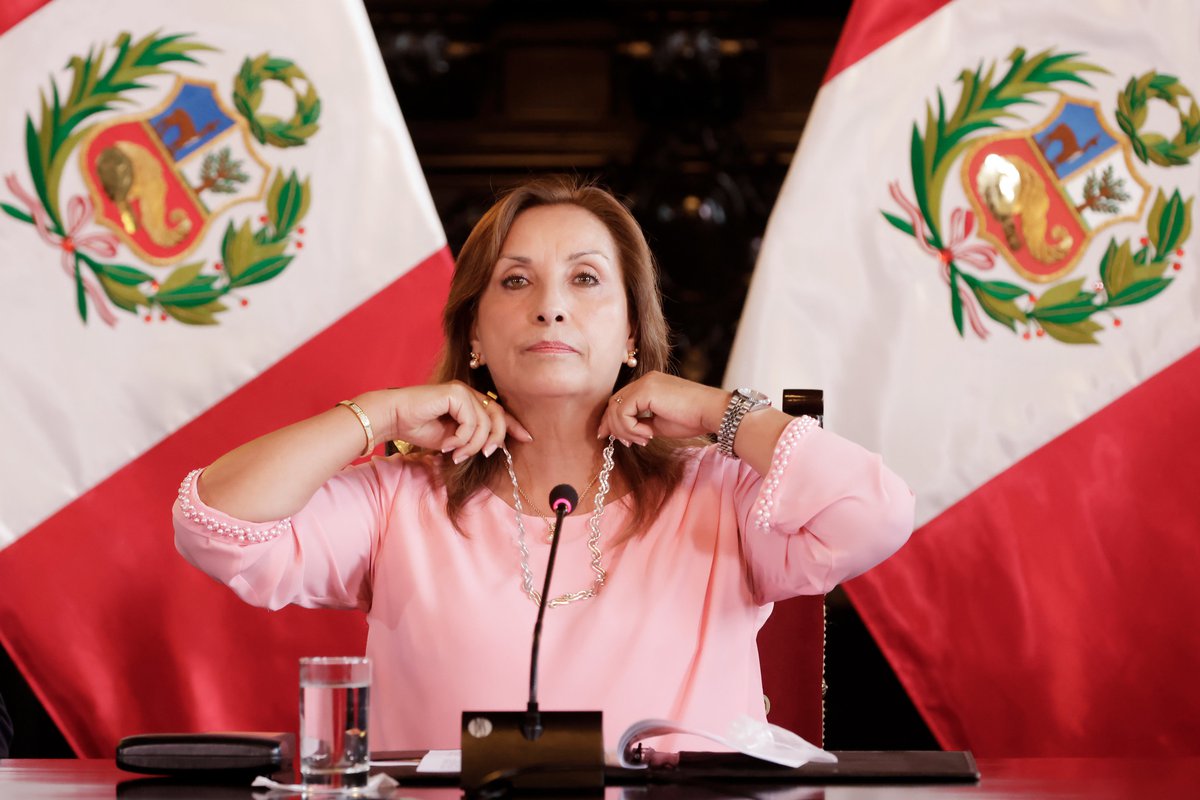
With a year left in office and national discontent reaching new highs, Peru’s embattled President Dina Boluarte has approved a decree doubling her monthly salary to approximately $10,000, a decision that has ignited fresh waves of criticism and public anger.
The controversial announcement was made by the government on Wednesday, confirming widespread speculation after months of denial by the presidency.
At 63, Boluarte remains one of the most unpopular leaders in the region, having faced unrelenting protests since assuming power in December 2022. Her administration has been rocked by persistent allegations of corruption, surging gang violence, and allegations of mismanagement, with her approval rating sitting at an abysmal two percent as of May.
In a statement defending the pay increase, Economy Minister Raul Perez-Reyes explained that the adjustment was based on a comparative analysis of presidential salaries across twelve Latin American countries. Prior to this change, Boluarte was the second-lowest paid head of state in the region, ahead of only Bolivia’s president.
According to Perez-Reyes, the raise brings Peru more in line with regional norms. However, critics argue that the timing and justification are tone-deaf, given the severe socio-economic challenges the country is currently facing.
Economist Jorge Gonzáles Izquierdo didn’t mince words when he appeared on N television, calling the announcement “the worst time” to make such a move, especially when the president’s approval ratings are so low they “are close to zero.” Former Economy Minister Luis Miguel Castilla also criticized the decision, stating that it only reinforces a growing public perception of “frivolity” surrounding Boluarte’s leadership.
The backlash is compounded by the fact that in May, the presidency had flatly denied reports of an impending raise, suggesting a lack of transparency and further eroding public trust. Now, with the government confirming the salary hike, accusations of hypocrisy and self-interest have intensified.
Since taking office following the ouster of former president Pedro Castillo, Boluarte has struggled to consolidate power and win over a skeptical public. Her tenure has been mired in scandals, one of the most damaging being the ongoing “Rolexgate” probe, in which she stands accused of failing to declare a collection of luxury watches and jewelry. She currently faces no fewer than twelve official investigations tied to corruption and ethical misconduct.
Adding to the political turbulence is the rapidly deteriorating security situation in the country. Organized crime and gang violence have surged during her presidency, prompting widespread protests and fears of a deepening national crisis.
Yet despite these pressing issues, the administration’s decision to increase the president’s salary is being interpreted by many as an affront to the suffering and frustrations of ordinary Peruvians.
The move has sparked renewed calls for political accountability and institutional reform, with critics arguing that leaders should prioritize national stability and economic recovery over personal enrichment. As Boluarte enters the final year of her term, it remains uncertain whether her government can weather the storm of public discontent and mounting political pressure.
What you should know:
President Dina Boluarte of Peru, whose approval rating hovers around 2 percent, has authorized a doubling of her monthly salary to $10,000. The move has triggered widespread criticism, especially as the country grapples with corruption allegations, gang violence, and deepening public distrust. Boluarte faces twelve investigations, including one linked to undeclared luxury items in the so-called “Rolexgate” scandal.