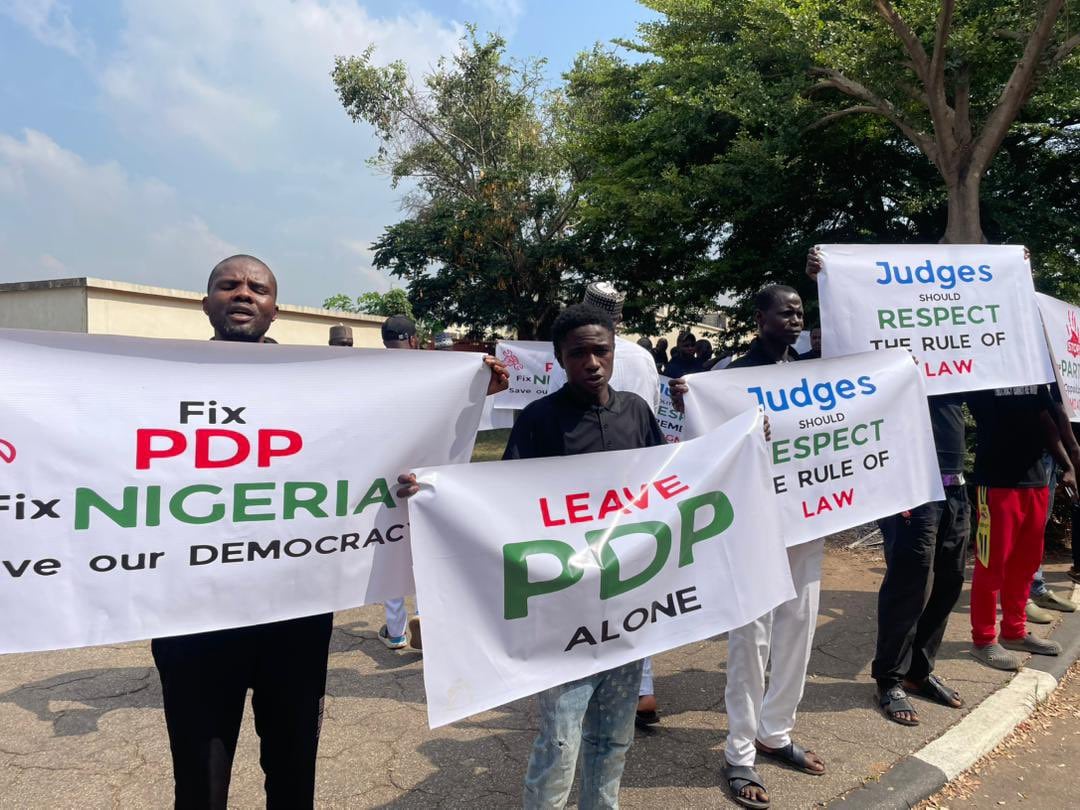
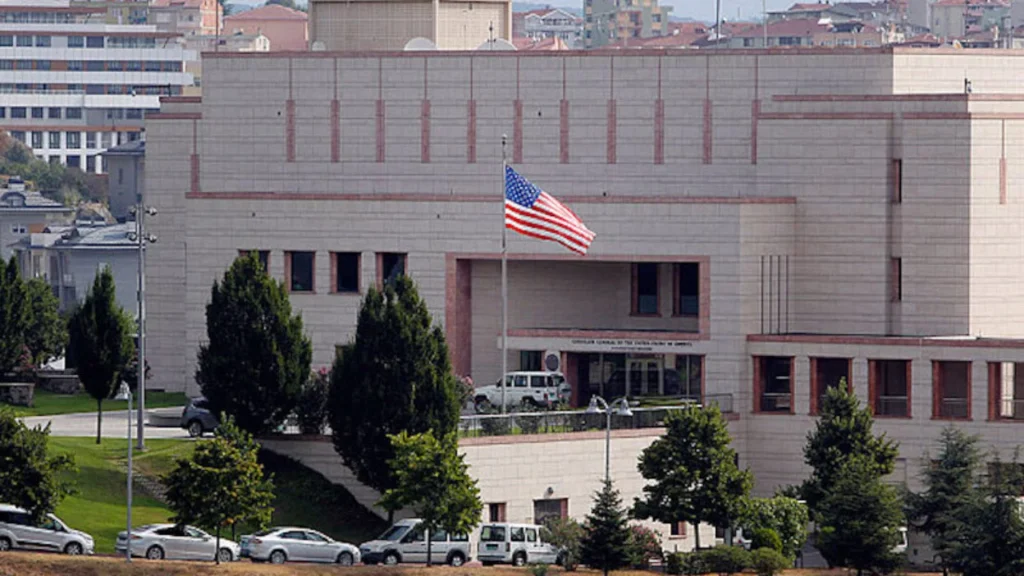
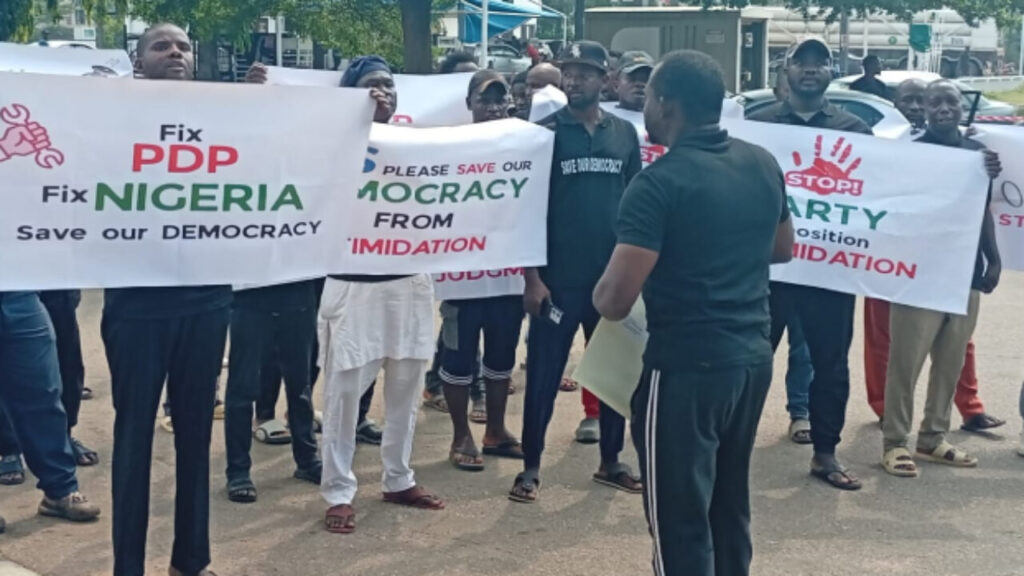
Some members of the People’s Democratic Party (PDP) on Tuesday staged a peaceful protest at the United States Embassy in Abuja, calling for international intervention to protect Nigeria’s democracy and prevent what they described as a drift toward a one-party state.
The protesters, waving placards with inscriptions urging the US government, the European Union, and the Nigerian Ministry of Justice to “save Nigeria’s democracy,” submitted protest letters at the US Embassy, the EU complex, and the Ministry of Justice.
According to the demonstrators, the ruling party has continued to intimidate opposition figures, undermining democratic institutions and creating an atmosphere that threatens multi-party governance. They called on the international community to closely monitor Nigeria’s political environment and use diplomatic channels to safeguard the country’s democratic values.
The protest comes amid a deepening internal crisis within the PDP that has plagued the party for over two years. The latest escalation saw the national chairman, Umar Damagum, and members of the National Working Committee (NWC) announce the suspension of National Secretary Samuel Anyanwu, National Organising Secretary Umar Bature, and other key officials over alleged misconduct.
However, in a swift response, the Anyanwu-led faction of the NWC countered by suspending Damagum, National Publicity Secretary Debo Ologunagba, and four other top members, intensifying the leadership struggle within the party.
By Monday, Abdulrahman Mohammed, who was appointed as acting national chairman by the Anyanwu faction, resumed at the PDP national headquarters, while Damagum and his loyalists were noticeably absent, a clear sign of the deep divide threatening the party’s unity.
Party members fear that the internal discord and alleged government pressure could weaken the PDP’s role as the main opposition voice in Nigeria, potentially paving the way for a single-party system that would erode democratic checks and balances.
What You Should Know
The People’s Democratic Party (PDP), once Nigeria’s dominant political force, has faced prolonged internal strife following its loss of power in 2015.
The recent protests reflect growing fears among members about political intimidation and the weakening of opposition influence.
With the leadership crisis deepening between Umar Damagum and Samuel Anyanwu factions, observers warn that unresolved tensions could further destabilize the PDP and limit its ability to challenge the ruling party effectively ahead of future elections.