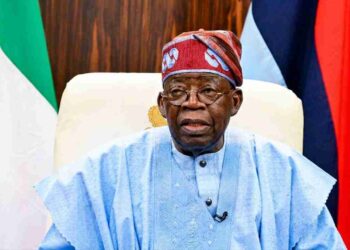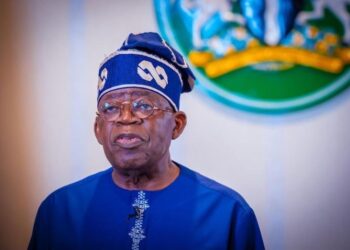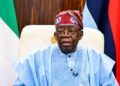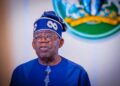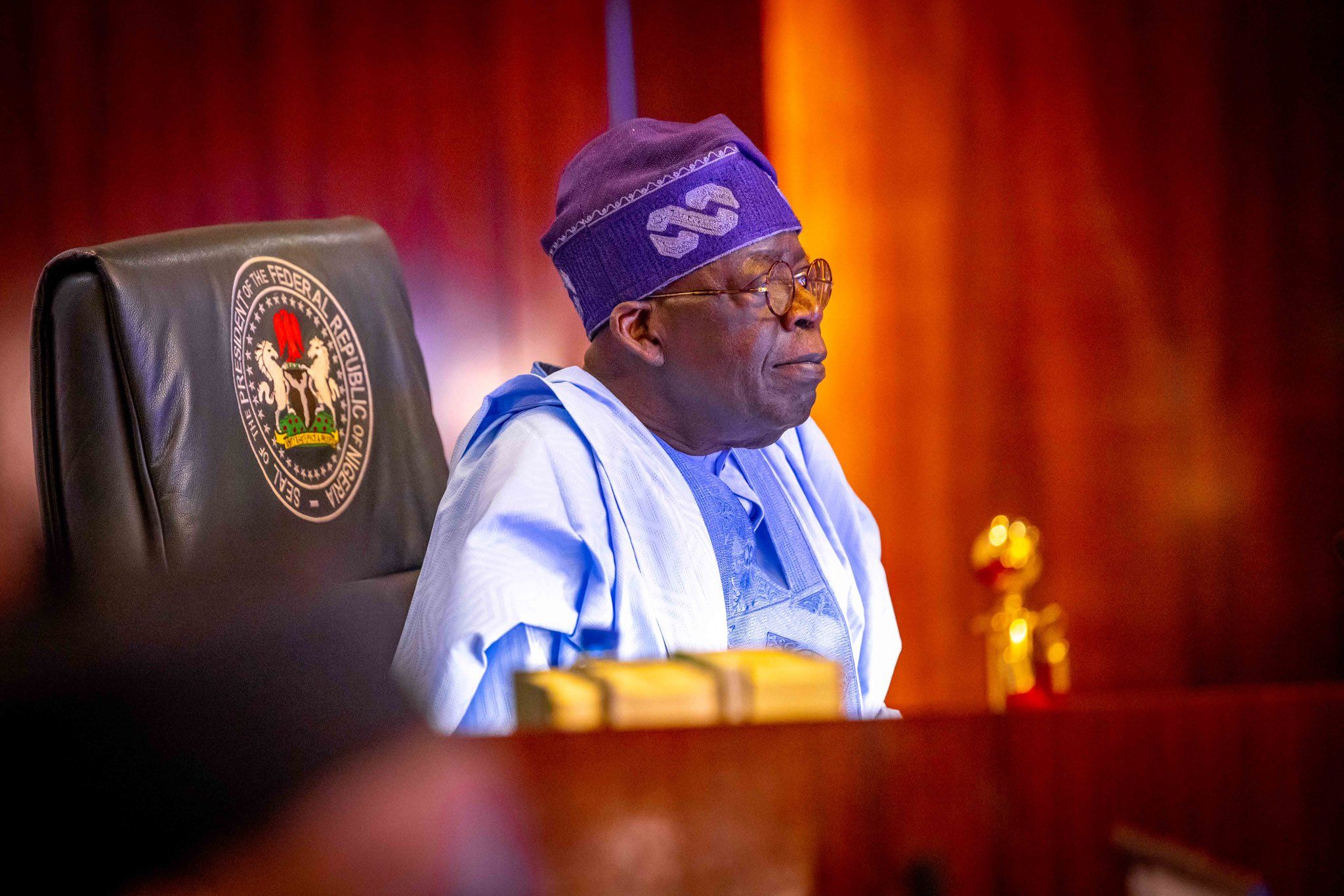
President Bola Ahmed Tinubu has hailed the significant progress made under his administration in empowering citizens and fostering enterprise, highlighting the success of the national consumer credit scheme, improved infrastructure, and landmark economic reforms.
He made these remarks on Friday in Abuja at the 32nd Annual Meetings of the African Export-Import Bank (Afreximbank), where he honoured outgoing bank president Prof. Benedict Oramah with the national title of Grand Commander of the Order of the Niger (GCON).
According to Tinubu, over 100,000 Nigerians have already accessed the national consumer credit scheme, with an additional 400,000 individuals lined up for the next phase. He also pointed to the launch of a student loan programme ensuring financial hardship doesn’t bar access to higher education.
The president noted that ₦45.9 billion has been spent to upgrade 8,800 primary healthcare centres, while thousands of fibre-optic cables are being laid to bridge the digital divide. In infrastructure, 279 roads have been completed, 65 are under construction, and 260 rural road projects have been executed, with mega projects like the Lagos–Calabar Coastal Highway and Sokoto-Badagry Superhighway underway.
Paying tribute to Prof. Oramah, Tinubu praised his leadership for growing Afreximbank’s assets from $5 billion to over $37 billion, describing his decade-long tenure as a “legacy of generational impact.” Oramah was recognised for championing pandemic responses, driving industrialisation, and supporting initiatives like the African Continental Free Trade Area (AfCFTA) and creative industries.
Nigeria, Tinubu said, has received more than $52 billion in support from Afreximbank, with funds channelled into energy, agriculture, manufacturing, healthcare, and the creative sector. Notable projects include the Dangote and BUA Refineries, the African Medical Centre of Excellence, and the Africa Quality Assurance Centre.
The president also highlighted Nigeria’s formal approval of the Pan-African Payment and Settlement System (PAPSS), which enables cross-border trade in local currencies. This, he said, is a crucial step toward financial independence for the continent.
He announced that Nigeria and Afreximbank are launching the Africa Energy Bank in Abuja, with a $5 billion initial capital to finance Africa’s energy transition. Additionally, the country is scaling fertiliser production to 7.5 million tonnes annually with support from Afreximbank to ensure food security.
Reviewing his administration’s economic policies since May 2023, Tinubu said painful but necessary reforms — including fuel subsidy removal and exchange rate unification — have yielded promising results. GDP growth stands at 3.4%, oil production has rebounded, inflation is easing, and the debt servicing ratio has dropped from 96% to under 65%. Tax reforms are also underway, with four new bills recently signed into law.
The president called on African leaders to strengthen public-private integration, adopt PAPSS fully, and empower youth, women, and entrepreneurs to help define Africa’s future in a rapidly changing global landscape.
Prof. Oramah, in his valedictory report, expressed gratitude for the opportunity to serve, noting that $120 billion was invested across Africa during his tenure. He projected that the bank’s assets would reach $250 billion within the next decade.
The event was attended by high-profile dignitaries, including former Nigerian Presidents Olusegun Obasanjo and Yemi Osinbajo, and former leaders of Ghana, Senegal, and Niger.
What you should know
President Tinubu has credited Nigeria’s collaboration with Afreximbank for driving multi-sectoral development and economic stability.
By honouring Prof. Oramah and pushing for deeper regional financial integration, the administration is signalling its commitment to long-term reforms, infrastructure investment, and youth empowerment as pillars of a stronger African economy.