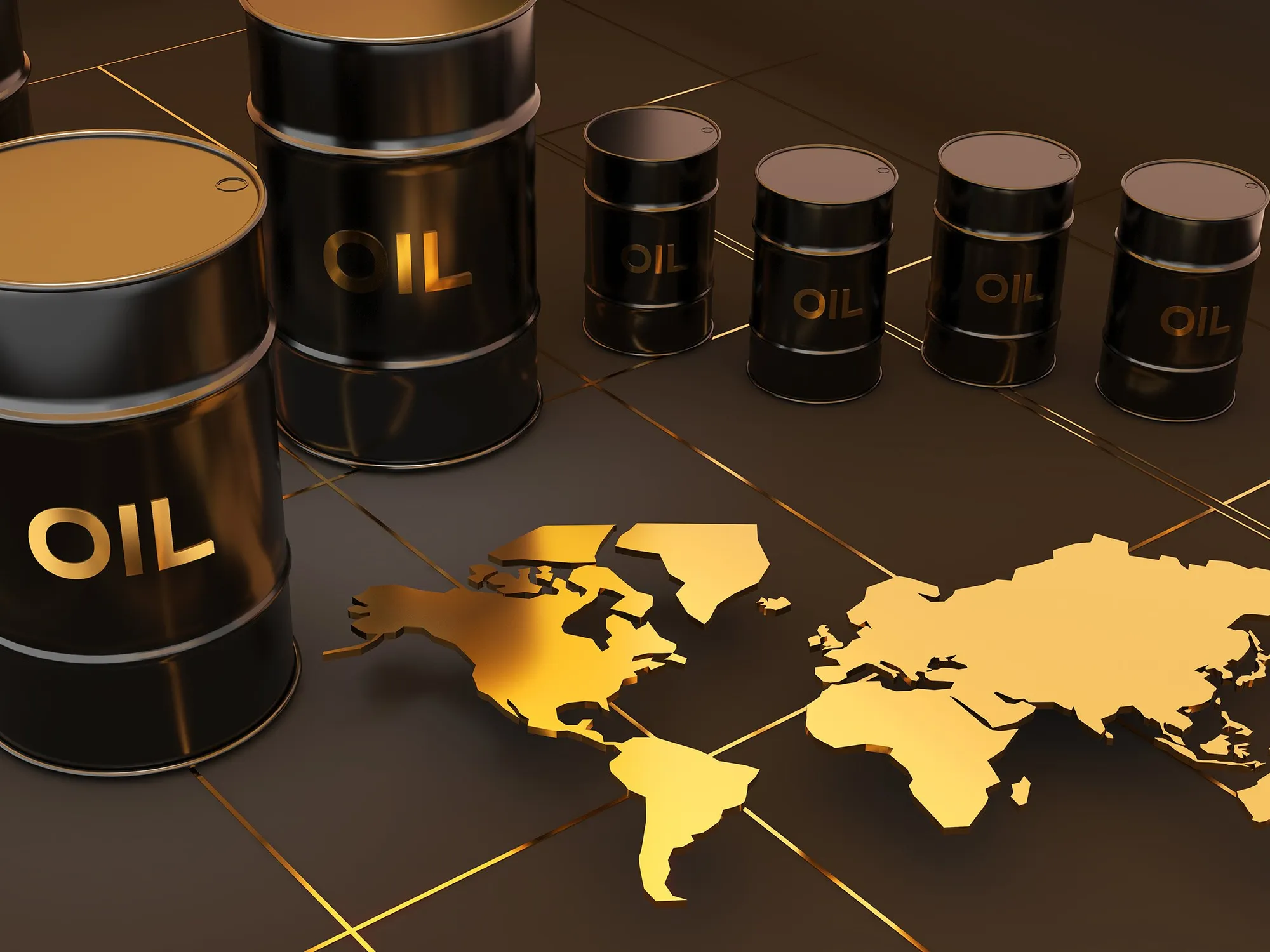
Oil prices staged a modest recovery Monday following their steepest weekly decline since spring, with market sentiment buoyed by mounting expectations that direct talks between President Donald Trump and Chinese President Xi Jinping could defuse a trade dispute threatening to cripple global economic growth and energy demand.
Brent crude, the international benchmark, climbed $0.92, or 1.47%, to $63.65 per barrel by mid-morning London trading, clawing back a portion of Friday’s punishing 3.82% selloff that pushed prices to their lowest levels since early May. U.S. West Texas Intermediate crude followed suit, rising $0.89, or 1.51%, to $59.79 a barrel, though trading volumes remained thin due to a U.S. public holiday that delayed the contract’s settlement until Tuesday.
The sharp reversal in fortune comes after a tumultuous week that saw oil markets whipsawed by a toxic combination of geopolitical and trade-related anxieties. According to DBS energy analyst Suvro Sarkar, the previous session’s “price meltdown” reflected two major developments: the announcement of a ceasefire agreement in Gaza, which reduced Middle Eastern supply disruption risks, and renewed U.S.-China trade volatility as a critical November 10 trade truce deadline approaches.
Trade War Brinkmanship
The past week witnessed a dramatic escalation in the ongoing commercial standoff between the world’s two largest economies and oil consumers. China fired the latest salvo by expanding export controls on rare earth minerals—critical components in everything from smartphones to military hardware—prompting swift retaliation from Washington.
On Friday, President Trump announced plans to impose sweeping 100% tariffs on all Chinese goods bound for U.S. shores, alongside new export restrictions on “any critical software” effective November 1. The announcement sent shockwaves through commodity markets already on edge over slowing global growth.
However, the president struck a markedly different tone just 48 hours later. “Don’t worry about China; it will all be fine!” Trump wrote on his Truth Social platform Sunday evening, in comments that analysts interpreted as a deliberate attempt to calm jittery markets ahead of potential high-level negotiations.
High-Stakes Diplomacy
The apparent softening follows confirmation from U.S. Trade Representative Jamison Greer that a face-to-face meeting between Trump and Xi could occur on the sidelines of the Asia-Pacific Economic Cooperation forum in South Korea later this month. Such a meeting would mark the first direct engagement between the leaders since trade tensions reignited earlier this year.
Goldman Sachs analysts offered a cautiously optimistic assessment in a research note to clients. “The most likely scenario seems to be that both sides pull back on the most aggressive policies and that talks lead to a further—and possibly indefinite—extension of the tariff escalation pause reached in May,” the investment bank’s commodities team wrote.
Nevertheless, Goldman cautioned that significant downside risks remain. “There is still the risk of trade tensions escalating that may lead to higher tariffs or more serious export restrictions, at least temporarily,” the analysts added, noting that oil prices tumbled sharply during the height of U.S.-China trade friction in March and April.
China’s Continued Appetite
Despite the trade uncertainty, Chinese crude imports demonstrated remarkable resilience in September, rising 3.9% year-over-year to 11.5 million barrels per day, according to customs data released Monday. The figures reflect both elevated refinery utilization rates—the highest so far this year—and ongoing strategic stockpiling efforts by the world’s largest crude importer.
The data underscores the critical importance of Chinese demand to global oil markets and helps explain why trade tensions between Washington and Beijing reverberate so powerfully through energy futures trading.
Middle East Developments
Meanwhile, geopolitical tensions in the Middle East showed signs of easing as Palestinian militant group Hamas released the first seven surviving Israeli hostages on Monday under the initial phase of a ceasefire agreement. The deal, which Trump helped broker, aims to end the devastating conflict in Gaza that has raged for months.
The ceasefire implementation contributed to Friday’s sharp selloff by reducing perceived supply risks from the strategically vital region. Historically, Middle Eastern conflicts have triggered oil price spikes due to fears of production or shipping disruptions through critical chokepoints like the Strait of Hormuz.
Outlook Remains Uncertain
As traders returned to their desks Monday, the overriding question remained whether diplomatic engagement can prevent a full-scale trade war that economists warn could tip the global economy into recession. With both the U.S. and China accounting for roughly 30% of worldwide oil consumption combined, any significant slowdown in either economy would have profound implications for energy markets.
Analyst Sarkar of DBS emphasized that the “near-term outlook hinged on the eventual outcome of the trade talks,” suggesting volatility is likely to persist until greater clarity emerges from any Trump-Xi meeting.
For now, oil markets appear to be pricing in a return to negotiations rather than continued escalation—but with the November deadlines looming and political pressures mounting on both sides, traders remain poised for sudden swings in either direction.
WHAT YOU SHOULD KNOW
Oil prices rebounded 1.5% on Monday after hitting five-month lows, driven primarily by hopes that upcoming talks between Presidents Trump and Xi Jinping could defuse escalating U.S.-China trade tensions.
The recovery remains fragile and hinges entirely on whether the world’s two largest oil consumers can reach a deal before the November 10 deadline—any failure to negotiate could trigger further price collapses and threaten global economic stability.
With both nations accounting for 30% of worldwide oil demand, the outcome of these trade talks will be the decisive factor determining oil market direction in the coming weeks.