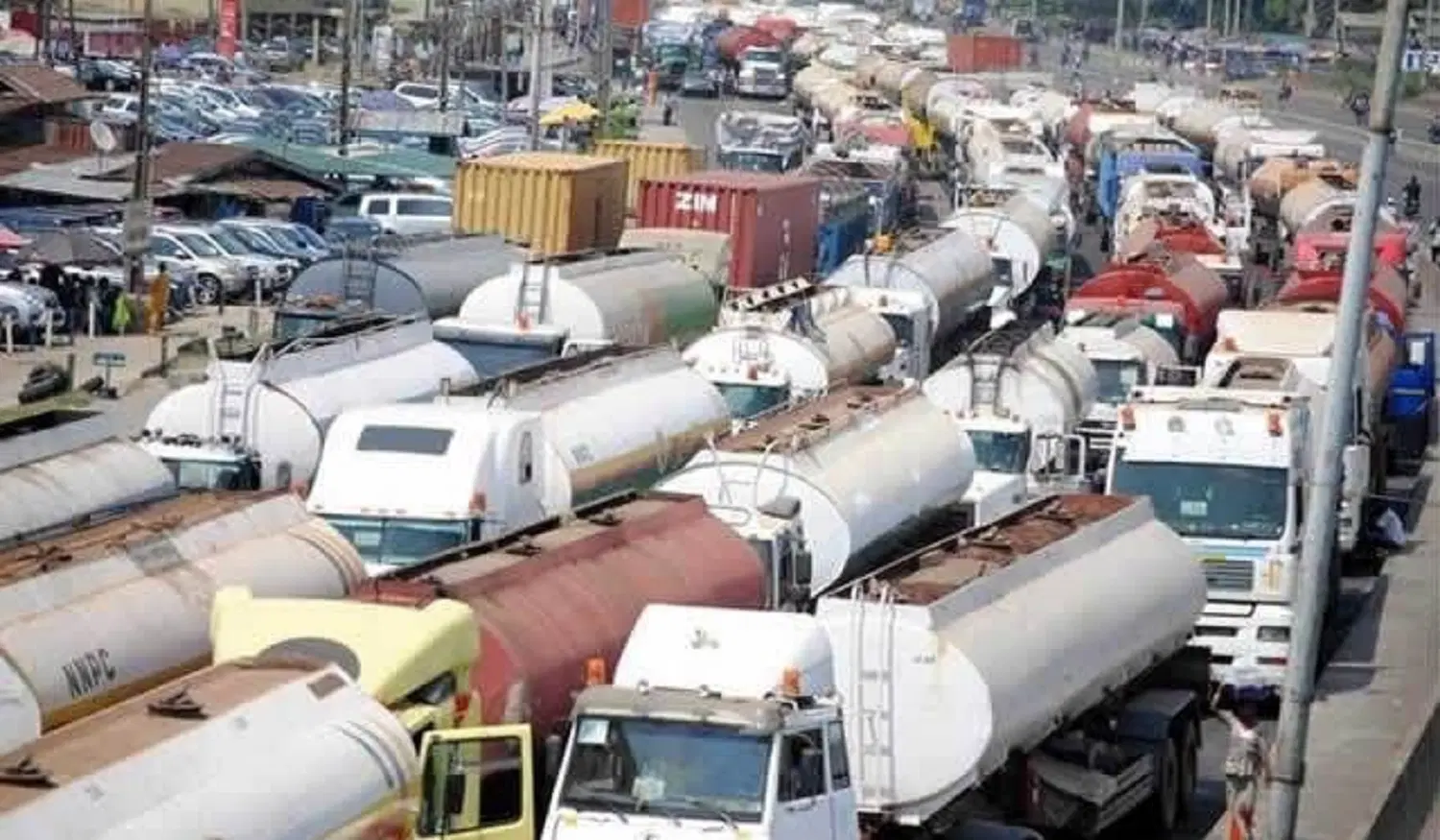
The Nigerian downstream petroleum sector is currently navigating a “perfect storm” of geopolitical volatility and credit-market strain, leaving independent marketers struggling to keep their forecourts open.
As conflict in the Middle East pushes global crude benchmarks above $104 per barrel, the ripple effects are being felt acutely on Nigerian soil. What was once a stable, if challenging, business model for local oil marketers has morphed into a high-stakes gamble defined by astronomical overheads and vanishing margins.
The financial barrier to entry has shifted dramatically. Chinedu Ukadike, National Publicity Secretary of the Independent Petroleum Marketers Association of Nigeria (IPMAN), revealed in an exclusive sit-down that the capital required to stock a single tanker has surged by nearly 40%.
“This is a product we were getting for around N50 million; now we are getting it for more than N60 million or N70 million per truck,” Ukadike stated.
The crisis is compounded by a tightening credit squeeze. Most marketers rely on commercial bank loans to finance these shipments. However, with interest rates climbing alongside the pump price—now exceeding N1,230 per liter—the returns on investment are often insufficient to cover the cost of the debt itself.
For many operators, the dilemma isn’t just about what they sold yesterday but what they must buy tomorrow. Industry veteran Anwalu Ahmed explained the concept of “replacement cost” as the primary driver of current pricing strategies.
“If the next cargo you bring in costs significantly more due to exchange rate shifts or international prices, you must adjust today,” Ahmed warned. To sell at “old” prices is to risk a capital shortfall so severe it could trigger localized fuel scarcities across the federation.
The most visible sign of the crisis is the staggering drop in consumer demand. Marketers report a structural shift in buying habits:
The 90% Drop: Bulk buyers who previously ordered 20,000 liters are now scaling back to as little as 2,000 liters.
Retail Squeeze: Everyday commuters are no longer “filling ‘er up,” opting instead for subsistence-level purchases.
Beyond the ledger, the physical risk of the business has intensified. A single fuel tanker currently on the road represents over N65 million in vulnerable capital. With Nigeria’s arterial highways in disrepair, these “rolling investments” often sit idle for five days in transit, exposed to the twin threats of accidents and insecurity.
The Federation’s economic watchdog, the Centre for the Promotion of Private Enterprise (CPPE), has issued a stern warning. Dr. Muda Yusuf, CEO of CPPE, noted that the energy spike is no longer just a “transportation issue”—it is an existential threat to Small and Medium-Scale Enterprises (SMEs).
“Many businesses are already struggling with difficult macroeconomic conditions,” Yusuf noted, suggesting that firms may need to pivot to “smaller product sizes” and aggressive cost-cutting just to survive the quarter.
As the downstream sector teeters, the Petroleum Products Retail Outlets Owners Association of Nigeria (PETROAN) is calling for immediate federal intervention. Their proposal? Targeted palliatives for transportation costs to decouple the price of global crude from the price of a local bus fare.
Without a strategic cushion, the “high-value, low-dividend” reality of the current market may soon see many independent stations shuttered for good.
WHAT YOU SHOULD KNOW
Nigeria’s downstream sector is trapped in a liquidity crunch: skyrocketing global crude prices and high interest rates have made stocking fuel nearly 40% more expensive, while thinning profit margins and a 90% drop in consumer demand leave marketers unable to bridge the gap.
This is no longer just a price hike—it is a struggle for business survival where the massive financial risk of putting a single truck on the road is increasingly outweighing the dwindling returns at the pump.