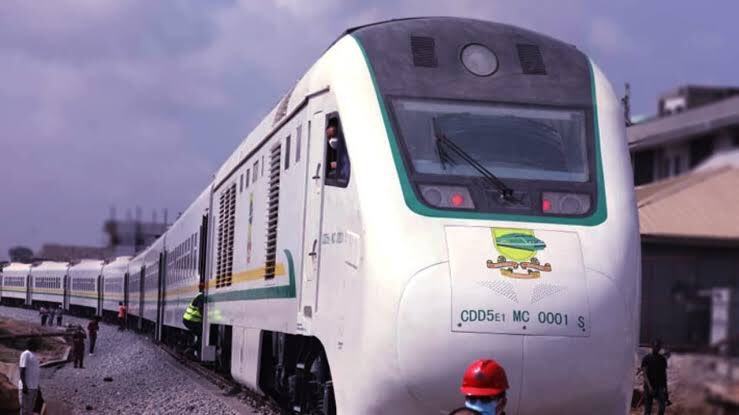
The Nigerian Railway Corporation (NRC) announced on Friday that train services on the strategically important Warri-Itakpe corridor will resume operations in the coming days, marking the end of a four-month suspension that has disrupted passenger travel and economic activity across the region.
The announcement comes after extensive repair work that began in April when NRC engineers detected a persistent track fault that posed safety concerns. Despite initial remedial efforts, the defect continued to present risks, prompting railway authorities to make the difficult decision to suspend all operations on the route pending comprehensive repairs.
“We are pleased to inform the public that work on the affected sections is nearing completion,” said Callistus Unyimadu, Chief Public Relations Officer of the NRC, in Friday’s statement. “A formal announcement will soon be made to communicate the specific date for resumption of services.”
The Warri-Itakpe railway line represents one of Nigeria’s most significant rail investments in recent decades, connecting the oil-rich Niger Delta region with the country’s interior. The 326-kilometer standard-gauge railway, which became fully operational in recent years, serves as a crucial transportation artery linking Delta, Edo, Kogi, and surrounding states.
The suspension has had far-reaching implications beyond passenger inconvenience. The corridor serves as a vital economic lifeline, facilitating the movement of goods and people across a region that contributes significantly to Nigeria’s oil revenue. Local businesses, particularly in the hospitality and transport sectors along the route, have felt the impact of reduced passenger traffic.
Railway officials emphasized that the decision to halt operations, while disruptive, was necessary to ensure passenger safety and long-term operational reliability. The NRC’s approach reflects growing awareness within Nigeria’s transportation sector of the critical importance of proactive maintenance, particularly as the country works to modernize its aging rail infrastructure.
“The corporation’s commitment to safety and efficiency is evident in its decision to halt train operations to carry out urgent maintenance,” industry observers noted, highlighting the balance between operational continuity and safety imperatives that railway operators must navigate.
The imminent resumption comes at a crucial time for Nigeria’s rail sector, which has been positioning itself as an alternative to the country’s often-congested road network. The Warri-Itakpe line, along with other modern rail projects, forms part of Nigeria’s broader strategy to diversify its transportation options and reduce the economic burden of road-based freight and passenger movement.
Passengers who have endured the four-month disruption are expected to welcome the news, particularly as alternative transportation options have become increasingly expensive amid Nigeria’s current economic challenges. The railway typically offers a more affordable and comfortable alternative to long-distance road travel in a region where such options are often limited.
The NRC expressed appreciation for passengers’ patience during the extended maintenance period and reiterated its commitment to providing safe, reliable, and comfortable rail services across Nigeria’s expanding railway network.
As the corporation prepares to announce the specific resumption date, stakeholders across the affected states are anticipating the return of regular service on what has become an increasingly important transportation corridor in Nigeria’s economic landscape.
The successful completion of these repairs will likely serve as a test case for the NRC’s maintenance capabilities and its ability to minimize service disruptions in the future as Nigeria continues to expand its railway infrastructure nationwide.
WHAT YOU SHOULD KNOW
The Nigerian Railway Corporation will soon resume train services on the vital Warri-Itakpe corridor after a four-month suspension caused by critical track repairs. The 326-kilometer railway line, which connects Nigeria’s oil-rich Niger Delta to interior states, was shut down in April due to persistent safety concerns that engineers were unable to resolve initially.
While the extended closure disrupted passenger travel and regional economic activity, the NRC’s decision to prioritize safety over operations demonstrates responsible infrastructure management.
The imminent resumption of services will restore a crucial transportation link that serves as an affordable alternative to road travel across Delta, Edo, Kogi, and surrounding states, supporting both economic activity and passenger mobility in a region vital to Nigeria’s economy.