The Nigeria Labour Congress (NLC) has issued a strong warning to the National Assembly against any attempt to remove labour matters, including the national minimum wage, from the exclusive legislative list and transfer them to the concurrent list.
This would allow individual states to set their own wage structures, a move the NLC says it will resist through every legitimate means available, including mass mobilisation.
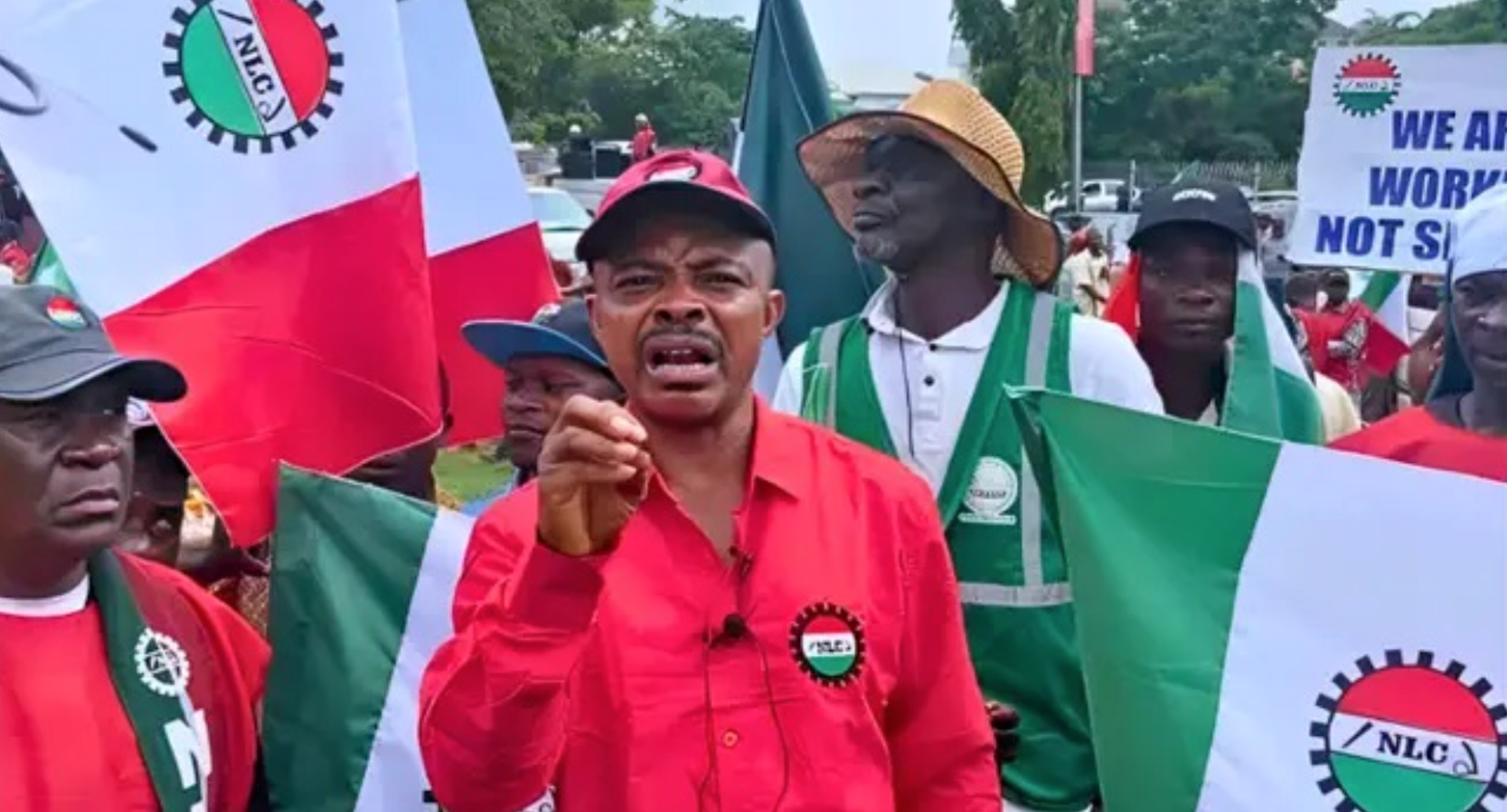
Speaking at the National Administrative Council (NAC) meeting of the Central Working Committee in Abeokuta, Ogun State, NLC President Comrade Joe Ajaero described the move as both unconstitutional and inconsistent with global labour standards.
He asserted that the proposal not only seeks to erode the gains of organised labour but is also in direct violation of International Labour Organisation (ILO) conventions, which view labour matters as matters for national governments rather than sub-national entities.
Ajaero accused members of the National Assembly of attempting to “bastardise” the national minimum wage structure by shifting labour responsibilities to state governments. He specifically criticised the proposal to create state-level industrial courts to independently handle wage disputes, saying such actions undermine established international norms and Nigeria’s obligations under the ILO framework.
“The National Assembly should not go into this exercise in futility unless members will also allow their respective states to determine their wages,” Ajaero warned. “If they attempt to smuggle labour matters into the concurrent list, we will mobilise workers to protest against it, even up to election day.”
In a separate briefing with journalists, the NLC President reaffirmed the union’s readiness to defend workers’ rights across the country, cautioning lawmakers to avoid any actions that would endanger the welfare of Nigerian workers. He maintained that the minimum wage is a protective tool enshrined in Nigerian law and should remain uniform across all states to ensure equity and justice for workers nationwide.
“All over the world, there is a minimum wage for the protection of workers,” he said. “In Nigeria, there is legislation for a minimum wage of ₦70,000. The law permits states to pay more than that, and in fact, many states currently pay above the minimum wage.”
According to Ajaero, allowing states to determine minimum wages would not only create disparity but could also lead to the marginalisation of workers in weaker or less affluent states. He also clarified that the NLC is not currently aware of any state refusing to pay the newly approved national minimum wage.
Commenting on the issue of local government autonomy, Ajaero said the NLC is ready to approach the Supreme Court for a clearer interpretation and enforcement of its earlier ruling, in order to ensure that constitutional guarantees on the autonomy of local government administration are upheld.
For the NLC, the preservation of a centralised minimum wage structure is not only a constitutional necessity but a moral obligation to protect the most vulnerable workers across the country.
What you should know
NLC President Joe Ajaero has warned lawmakers against removing labour matters from federal control, insisting that the minimum wage must remain uniform across Nigeria. He described the National Assembly’s move as unconstitutional and threatened nationwide protests if the change is implemented.