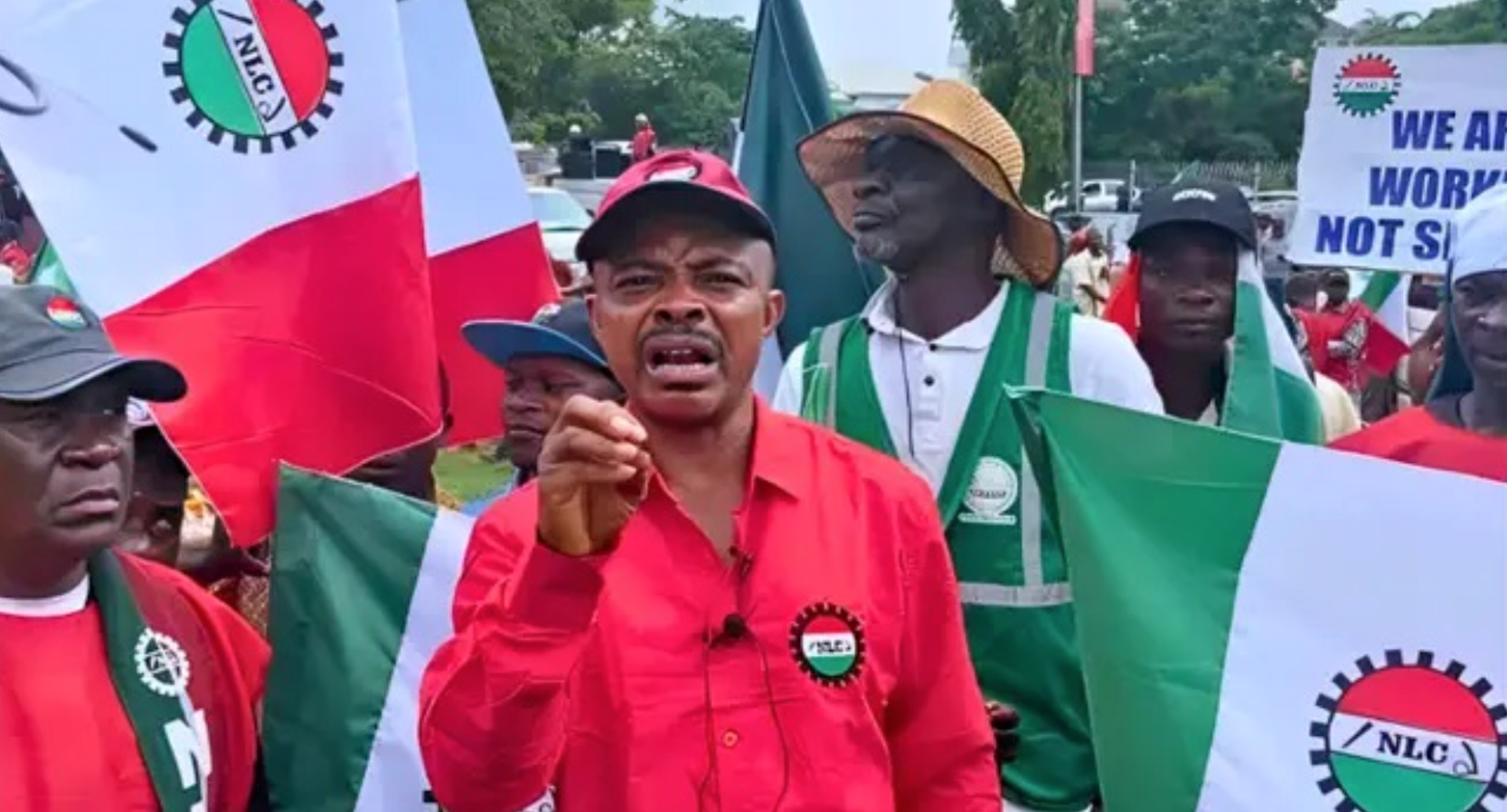
The leadership of the Nigeria Labour Congress has issued a strong message of solidarity to workers of the Federal Capital Territory Administration currently on strike, following an order of the National Industrial Court directing them to suspend their industrial action.
The labour body described the ruling as both surprising and distasteful, insisting that it does not address the root issues that led to the protest.
In a statement released by the Acting General Secretary of the NLC, Benson Upah, the congress encouraged the affected workers not to feel discouraged, stressing that a court ruling cannot extinguish the resolve of workers who feel deeply wronged.
According to the statement, the grievances raised by the workers remain valid and unresolved, regardless of the legal directive to halt the strike.
The NLC criticised the court for allegedly failing to interrogate the substance of the workers’ claims, particularly accusations relating to the non-remittance of National Housing Fund contributions and pension deductions. The congress argued that these allegations deserved thorough judicial scrutiny, as they touch on workers’ welfare and long-term financial security.

The statement further placed organisations and individuals who are in breach of the Pension Fund Act and the National Housing Fund Act on notice, warning that continued violations would attract serious engagement from the NLC. It also urged workers nationwide and all NLC structures to stay alert in response to what it described as an unsettling development.
On Tuesday, Justice Emmanuel Subilim of the National Industrial Court ordered FCTA workers to suspend their ongoing strike pending the hearing and determination of the originating summons before the court. The decision followed an application filed by the Minister of the Federal Capital Territory, Nyesom Wike, who sought an order compelling the striking workers to return to their duties.
In the suit, the FCT Minister listed the President and the Secretary of the Joint Union Action Congress as respondents. In delivering his ruling, Justice Subilim held that once a trade dispute is referred to the National Industrial Court, all forms of industrial action, including strikes, must cease.

Relying on Section 18(1)E of the Trade Dispute Act, the judge explained that such suspension is necessary to allow the dispute to be properly resolved through legal processes. He added that the filing of an originating summons amounts to a formal referral of the dispute, which automatically requires ongoing strikes to stop.
Justice Subilim warned that failure to comply with Section 18 of the Act could result in sanctions, noting that the need to preserve industrial peace and protect public interest outweighs any inconvenience that may arise from suspending the strike. The matter was subsequently adjourned to March 25, 2026, for hearing.
Reacting to the ruling, the Minister of the Federal Capital Territory, Nyesom Wike, announced that any FCTA worker who fails to resume work from Wednesday, January 28, would be subjected to disciplinary measures. He stated that his administration has held meetings with the unions and that all their grievances have been presented and discussed.

Wike maintained that security agencies and the FCT management had made several attempts to engage the unions through dialogue, but without success.
He further suggested that the situation goes beyond the issues raised by the workers, insisting that the government remains committed to maintaining order and ensuring the smooth functioning of the FCT.
What you should know
The dispute between the FCTA workers and the federal authorities highlights ongoing tensions over labour rights, compliance with pension and housing fund laws, and the limits of industrial action under Nigerian law.
While the court has ordered a suspension of the strike to allow legal processes to take their course, labour unions argue that unresolved welfare concerns remain at the heart of the conflict.
The case underscores the delicate balance between maintaining industrial peace and addressing workers’ grievances, especially within critical public institutions like the FCTA.