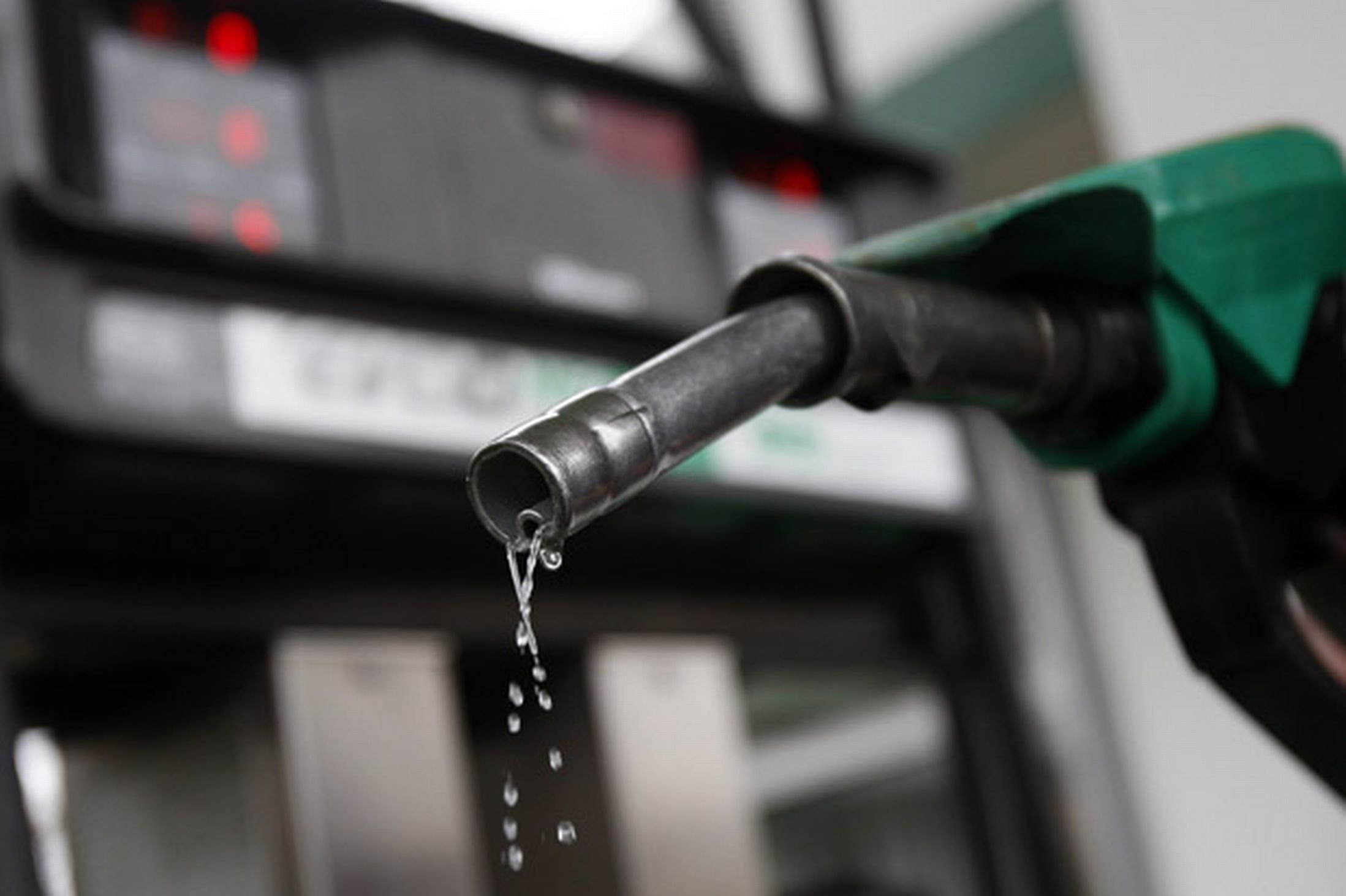
Nigeria’s appetite for petrol has dramatically outstripped official projections, with daily consumption hitting 63.7 million liters in December 2025—nearly 28% above the government’s benchmark—as the country’s energy landscape undergoes a significant transformation driven by increased domestic refining capacity.
The surge in consumption, revealed in data released by the Nigerian Midstream and Downstream Petroleum Regulatory Authority (NMDPRA), underscores the mounting pressure on Africa’s largest economy to meet growing fuel demand even as it transitions away from decades of import dependency.
The December figures represent a sharp 20% jump from November’s average of 52.9 million liters per day, painting a picture of an economy with fuel needs far exceeding what regulators had anticipated when they set the 2025 daily benchmark at 50 million liters.
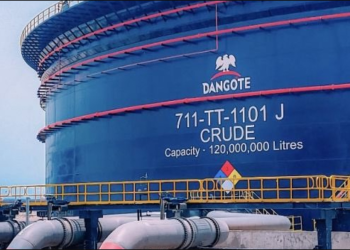
At the heart of Nigeria’s evolving petroleum sector is the Dangote Petroleum Refinery, which has emerged as the country’s primary domestic fuel supplier. The $20 billion facility, owned by billionaire industrialist Aliko Dangote, significantly increased its petrol output in December, supplying an average of 32.01 million liters daily—a 64% increase from November’s 19.47 million liters.
“PMS supply in December 2025 increased due to a significant improvement in supply from DPRP,” the regulator confirmed, using the acronym for Dangote Petroleum Refinery Project.
The private refinery achieved 71% capacity utilization during the month, a strong operational performance that nonetheless fell short of its initial supply target of 50 million liters per day. The facility now accounts for roughly half of Nigeria’s daily petrol consumption, marking a watershed moment for a nation that has historically relied on imported refined products despite being Africa’s largest crude oil producer.
The Dangote refinery’s performance stands in stark contrast to Nigeria’s trio of state-owned refineries, which collectively contributed nothing to the nation’s fuel supply in December.
The Port Harcourt, Warri, and Kaduna refineries—once symbols of Nigeria’s oil wealth but long plagued by mismanagement, corruption, and neglect—recorded zero petrol production during the month. All three facilities remained either shut down or under rehabilitation.
At the Port Harcourt refinery, the only activity involved evacuating diesel produced before the facility shut down in May 2025, with an average of just 0.247 million liters per day being moved out. The continued dysfunction of these state assets, despite billions of dollars spent on turnaround maintenance over the years, highlights the persistent challenges facing Nigeria’s public sector petroleum infrastructure.
While petrol consumption surged, the diesel market presented a more complex picture. Domestic diesel supply actually declined to 17.9 million liters daily in December from 20.4 million liters in November. However, consumption increased to 16.4 million liters per day, up from 15.4 million liters, suggesting tightening supply conditions in that segment.
In a positive development for environmental and public health advocates, liquefied petroleum gas (LPG) supply grew modestly to 5.2 metric tonnes per day from 5.0 metric tonnes in November. The increase signals gradual progress in Nigeria’s efforts to transition households away from traditional cooking methods, such as firewood and kerosene, which pose health and deforestation risks.
Daily cooking gas consumption reached 4,380 metric tons, exceeding the official benchmark of 3,900 metric tons and reflecting growing adoption of cleaner cooking fuel across the country.
Nigeria’s emerging modular refinery sector demonstrated respectable performance, with average capacity utilization of 63.24%. The Edo Refinery led the pack with 85.43% utilization, supplying approximately 0.052 million liters of diesel daily. In comparison, the ARADEL Refinery operated at 53.89% capacity with an average diesel output of 0.289 million liters per day.
Combined, the three operating modular refineries supplied an average of 0.392 million liters of diesel daily, alongside the production of naphtha, heavy hydrocarbon kerosene, fuel oil, and marine diesel oil. While still modest compared to large-scale refineries, these facilities represent an important diversification of Nigeria’s refining capacity.
Perhaps the most significant revelation in the NMDPRA data is the widening disconnect between official fuel consumption benchmarks and actual demand across all petroleum products.
The government had set 2025 daily benchmarks at 50 million liters for petrol, 14 million liters for diesel, 3 million liters for aviation fuel, and 3,900 metric tons for cooking gas. December’s actual consumption exceeded these projections across the board—by 27% for petrol, 17% for diesel, and 12% for cooking gas. Only aviation fuel, at 2.7 million litres daily, came in below its benchmark.
The discrepancy raises important questions about demand forecasting, infrastructure planning, and the potential for fuel shortages if domestic supply cannot keep pace with actual consumption patterns. It also suggests that Nigeria’s economy and population may be consuming fuel at rates that outstrip official estimates, with implications for energy policy, subsidy management, and environmental planning.
As Nigeria continues its difficult transition from fuel importer to self-sufficient refiner, the December figures underscore both the progress made—particularly by the Dangote refinery—and the challenges ahead in meeting the fuel needs of Africa’s most populous nation.
WHAT YOU SHOULD KNOW
Nigeria’s fuel consumption crisis has deepened, with December 2025 petrol demand hitting 63.7 million liters daily—nearly 28% above official benchmarks—exposing a critical gap between government projections and actual needs. While the private Dangote Refinery has stepped up to supply half the nation’s petrol, achieving 71% capacity, all three state-owned refineries remain completely non-operational.
This stark divide reveals Nigeria’s dangerous dependence on a single private facility to meet surging demand, even as official forecasts continue to underestimate the country’s true fuel appetite. The widening consumption gap signals potential supply vulnerabilities and raises urgent questions about energy security planning in Africa’s largest economy.