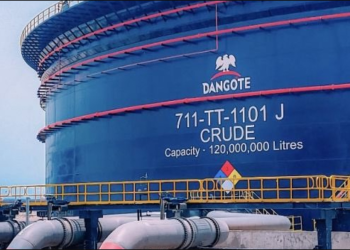
Nigeria’s crude oil sector demonstrated resilient growth in August 2025, with production climbing 5.5% year-on-year to average 1.43 million barrels per day, according to official data released by the Nigerian Upstream Petroleum Regulatory Commission (NUPRC) on Saturday.
The figures mark a significant improvement from the 1.36 million barrels per day recorded in August 2024, bringing Africa’s largest oil producer tantalizingly close to its Organization of the Petroleum Exporting Countries (OPEC) allocation of 1.5 million barrels per day. Nigeria achieved 96% of its OPEC quota, the highest compliance rate in recent memory for a country that has historically struggled to meet production targets.
Upstream Sector Shows Broad Gains
The positive trajectory extends across Nigeria’s broader upstream operations, with combined crude oil and condensate production reaching 1.63 million barrels per day in August 2025, up from 1.58 million barrels per day in the corresponding period last year. This comprehensive measure includes both conventional crude oil and lighter hydrocarbons, painting a picture of sector-wide recovery.
“This performance reflects improved output levels across key oil terminals and signals a stronger recovery in the upstream sector,” NUPRC officials stated in their weekend announcement via the commission’s official social media channels.
Monthly Fluctuations Highlight Operational Challenges
However, the annual gains were tempered by a 4.7% month-on-month decline from July’s robust 1.71 million barrels per day. Industry sources attribute this dip primarily to an unscheduled one-day maintenance shutdown at a major production facility, underscoring the sector’s continued vulnerability to operational disruptions.
The temporary setback illustrates the delicate balance Nigeria must maintain between maximizing output and ensuring infrastructure reliability—a challenge that has plagued the country’s oil industry for decades.
Terminal Performance Reveals Production Hierarchy
The August data reveal a clear hierarchy among Nigeria’s key export terminals. The Forcados Terminal emerged as the undisputed leader, delivering 8.99 million barrels for the month—comprising 8.08 million barrels of crude oil and 915,200 barrels of condensates. This performance reinforces Forcados’ position as the backbone of Nigerian oil exports.
Bonny Terminal secured second place with 6.26 million barrels, followed by Qua Iboe at 4.99 million barrels and Escravos at 4.18 million barrels. The distribution pattern reflects both the geographic spread of Nigeria’s oil infrastructure and the varying capacities of different production zones.
Condensate Production Shows Concerning Decline
While crude oil production surged, condensate output presented a less encouraging picture, falling to 197,229 barrels per day in August 2025 from 220,435 barrels per day in August 2024. This 10.5% year-on-year decline in the lighter hydrocarbon segment may reflect natural reservoir depletion or technical challenges at gas processing facilities.
The condensate shortfall, while concerning for long-term production diversity, did not significantly impact Nigeria’s overall OPEC quota performance, as the organization’s targets primarily focus on conventional crude oil output.
Strategic Implications for OPEC Compliance
Nigeria’s improved quota compliance represents a diplomatic and economic victory for the Bola Tinubu administration, which has prioritized energy sector reforms since taking office. The 96% achievement rate demonstrates the country’s renewed commitment to OPEC discipline while maximizing revenue from higher global oil prices.
NUPRC emphasized that despite minor monthly fluctuations, “crude oil production levels remained sufficiently strong to keep Nigeria broadly aligned with its OPEC commitments and agreed production targets.”
Looking Forward
The August performance data suggests Nigeria’s upstream oil sector may be entering a period of sustained recovery after years of underperformance due to security challenges, aging infrastructure, and regulatory uncertainties. However, the month-on-month decline serves as a reminder of the operational fragility that continues to characterize the industry.
As Nigeria approaches the final quarter of 2025, industry watchers will closely monitor whether the country can maintain this trajectory and potentially achieve full OPEC quota compliance—a milestone that would signal the complete rehabilitation of Africa’s most important oil economy.
The NUPRC has indicated it will continue monthly production reporting to maintain transparency and track progress against national and international benchmarks.
WHAT YOU SHOULD KNOW
Nigeria’s oil sector is showing clear signs of recovery, with crude production up 5.5% year-over-year to 1.43 million barrels per day in August 2025—the closest the country has come to meeting its OPEC quota at 96% compliance.
This marks a significant turnaround for Africa’s largest oil producer, which has historically struggled with production targets due to infrastructure and security challenges.
However, a 4.7% monthly decline from July due to maintenance issues reminds us that Nigeria’s oil industry, while improving, remains vulnerable to operational disruptions.
The strong annual performance suggests the Tinubu administration’s energy sector reforms may be working, positioning Nigeria for potentially full OPEC compliance by year-end.