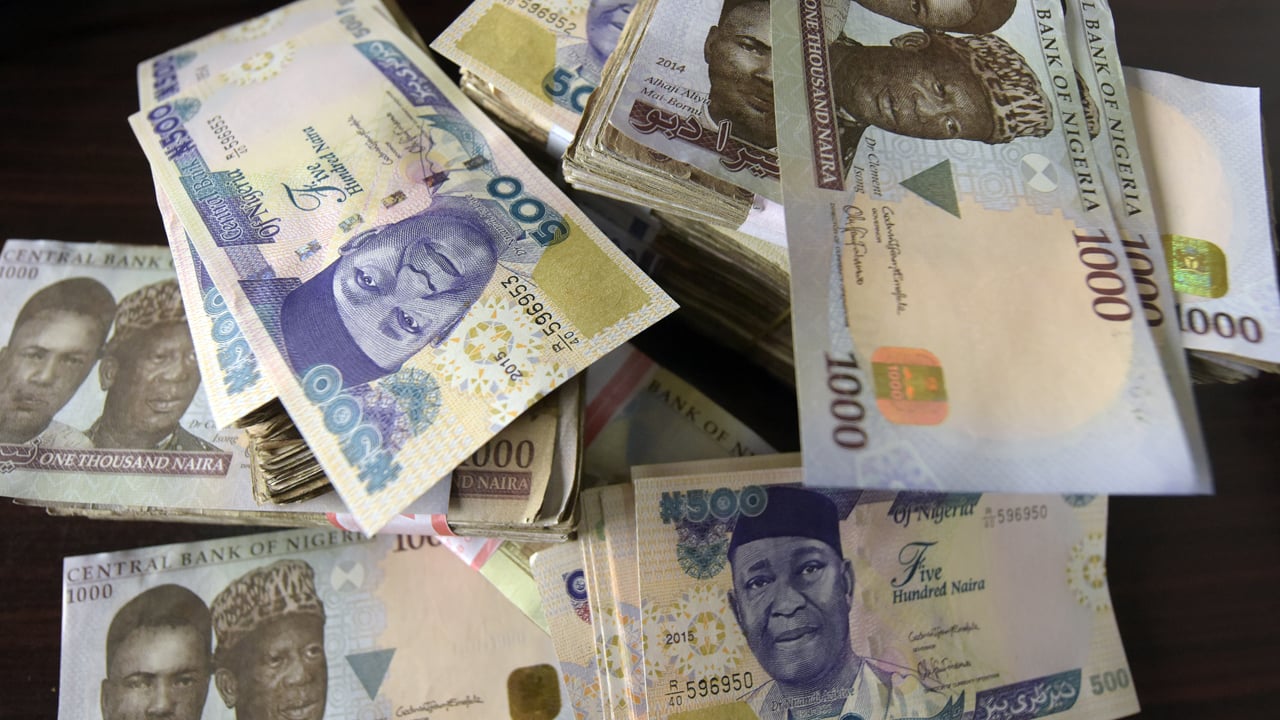
The Nigerian naira has come under renewed pressure in recent days, weakening across both official and parallel markets as a confluence of external monetary policy shifts and seasonal domestic demand converge to test the currency’s recent stability.
Currency Weakens Across Markets
The naira depreciated to N1,454.38 against the dollar on Tuesday in the Nigerian Foreign Exchange Market (NFEM), according to Central Bank of Nigeria (CBN) data, compared to N1,448.43 on Monday. The decline accelerated in the parallel market, where the currency slipped to N1,483 per dollar by Wednesday morning, signaling intensifying pressure on Nigeria’s foreign exchange ecosystem.
This recent deterioration marks a reversal of the relative stability the naira enjoyed through late November, when targeted CBN interventions and steady diaspora remittances helped anchor the currency within a narrower trading band.
Holiday Season Drives Domestic Demand
Market analysts attribute much of the current pressure to predictable seasonal factors. Importers and retailers are aggressively sourcing dollars in preparation for the Christmas and New Year shopping period, traditionally one of the heaviest periods for foreign exchange demand in Nigeria’s import-dependent economy.
Beyond commercial activity, retail-level dollar purchases have surged as Nigerians book international travel and remit tuition payments for overseas education. These end-of-year obligations, concentrated in a compressed timeframe, have created what traders describe as “mild but continuous stress” in the market as businesses front-load their foreign exchange needs ahead of year-end closures.
Federal Reserve Policy Casts Long Shadow
Compounding these domestic pressures is uncertainty surrounding the United States Federal Reserve’s monetary policy trajectory. The Fed concludes its highly anticipated December 9-10 policy meeting today, with markets pricing in an 87.4 percent probability of a 25-basis-point rate cut to a range of 3.75-4.00 percent.
However, the path forward remains contentious within the Federal Open Market Committee. Hawkish officials, citing inflation that continues to run above the Fed’s 2 percent target, are advocating for a pause in rate reductions. Kansas City Fed President Jeffrey Schmid has called inflation “too high” and characterized current policy as only “modestly restrictive,” arguing against further cuts. Dallas Fed President Lorie Logan and Cleveland Fed President Beth Hammack have echoed these concerns, warning that progress on inflation has stalled.
According to recent FOMC minutes, as many as five voting members oppose additional rate cuts, setting up a potential showdown that could produce what analysts are calling a “hawkish cut”—a rate reduction accompanied by cautious forward guidance that signals a possible pause in easing through 2026.
Why the Fed Matters for the Naira
A hawkish Federal Reserve stance typically strengthens the dollar by maintaining higher interest rates for longer than markets anticipate. This makes dollar-denominated assets more attractive to global investors, triggering capital outflows from frontier and emerging markets like Nigeria as investors chase higher yields in the safety of U.S. treasuries.
The U.S. Dollar Index, which measures the greenback against a basket of six major currencies, traded flat at 99.20 on Wednesday after posting strong gains in the previous session. Currency traders have largely stayed on the sidelines ahead of the Fed’s decision, though recent robust U.S. labor market data—including October job openings that jumped to 7.67 million, well above the projected 7.20 million—has reinforced expectations that the Fed may adopt a more cautious stance on future cuts.
Naira Shows Resilience Despite Recent Weakness
Despite the current pressures, it’s worth noting that the naira has demonstrated considerable resilience over the course of 2025. Year-to-date, the currency has appreciated approximately 5.7 percent against the dollar, supported by CBN foreign exchange reforms, strategic interventions, and sustained diaspora remittances. The currency has largely stabilized within the N1,450-N1,470 range since early December.
This performance represents a significant achievement given the challenging global monetary environment and Nigeria’s persistent structural foreign exchange constraints.
Global Context: Rising Yields Signal End of Easing Cycle
The pressure on the naira also reflects broader global financial dynamics. Bond yields worldwide have climbed to levels not seen since 2009, raising questions about whether interest-rate cutting cycles from Washington to Canberra may be approaching their conclusion. The Fed’s two previous rate cuts this year were designed to address deteriorating labor market conditions, including an unemployment rate that climbed toward 4.5 percent.
However, with inflation proving stickier than anticipated—partly due to trade tariffs and ongoing supply chain adjustments—and the labor market showing renewed strength, the case for continued monetary easing has weakened considerably.
Market Outlook
All eyes now turn to Fed Chair Jerome Powell’s press conference following today’s policy announcement. Powell is expected to provide crucial guidance on the central bank’s 2026 outlook, including updated economic forecasts and the latest “dot plot” showing policymakers’ individual interest rate projections.
For Nigerian currency markets, the coming weeks will test whether the CBN’s interventions and the country’s foreign exchange reforms can continue to provide stability against the headwinds of seasonal demand and a potentially stronger dollar. Traders and businesses will be watching closely to see if the naira can hold its recent gains or if further depreciation lies ahead as the year draws to a close.
WHAT YOU SHOULD KNOW
The Nigerian naira is weakening—trading at N1,454.38 officially and N1,483 on the parallel market—due to two main pressures: heavy seasonal dollar demand from Christmas shopping, international travel, and school fees, combined with a potentially hawkish U.S. Federal Reserve that’s keeping interest rates high to fight inflation. This makes the dollar more attractive globally, pulling capital away from Nigeria.
Despite this recent slide, the naira has still gained 5.7% year-to-date thanks to CBN interventions and diaspora remittances. The immediate outlook depends on today’s Fed decision and whether the Central Bank can maintain stability through year-end dollar demand pressures.
Seasonal spending and U.S. monetary policy are testing the naira’s recent stability, but strong CBN support has kept the currency resilient overall in 2025.