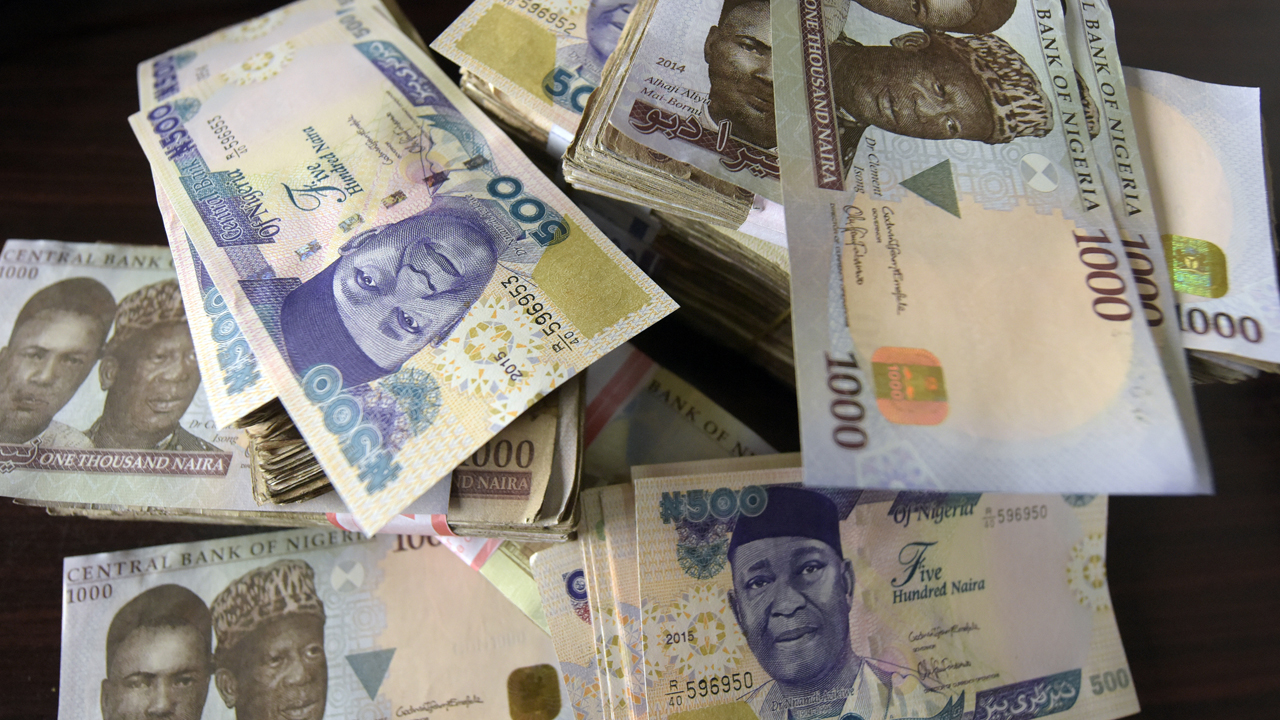
The Nigerian Naira has extended its recent rally, appreciating to N1,445 against the US dollar in the parallel market on Thursday, up from N1,455 per dollar recorded the previous day, signaling continued momentum in the currency’s recovery from earlier year lows.
The local currency’s performance represents a remarkable turnaround from its significant depreciation earlier this year, with market observers pointing to a convergence of favorable economic fundamentals and decisive Central Bank of Nigeria (CBN) policy interventions as key drivers of the strengthening trend.
Market Dynamics and Liquidity
Bureau De Change operators across Nigeria’s commercial nerve centers of Lagos and Abuja reported exchange rates hovering between N1,450–N1,460 for selling and N1,445–N1,455 for buying, indicating relatively stable market conditions despite persistent external pressures.
The stability has been underpinned by enhanced dollar liquidity flowing into the market through both official remittance channels and informal inflows, providing crucial support for the Naira even as global currency markets contend with volatility stemming from international political developments, including recent rhetoric from US political circles.
Impressive Year-to-Date Performance
Data analysis reveals the Naira has appreciated approximately 2 percent over the past month, building on a more substantial 15 percent gain against the greenback over the past twelve months. This sustained upward trajectory has been particularly pronounced since late October, when the currency decisively broke below the psychologically significant N1,500-per-dollar threshold—a level it hadn’t breached in several months.
On the official Nigerian Foreign Exchange Market (NFEM), the Naira closed October trading at N1,427.50 per dollar and has maintained steady footing in early November, oscillating between N1,421 and N1,445. Notably, the gap between parallel market rates and official exchange rates has narrowed considerably, suggesting improved market efficiency and reduced arbitrage opportunities.
CBN’s Strategic Interventions
The currency’s resurgence has been attributed largely to robust policy measures implemented by the Central Bank under Governor Olayemi Cardoso’s leadership. The apex bank has adopted a multi-pronged approach centered on monetary policy tightening and strategic foreign exchange interventions designed to curb speculative activities that previously destabilized the market.
Key to this strategy has been the CBN’s increased forex sales, which have injected much-needed liquidity into the system, alleviating demand pressures while working toward more effective exchange rate unification across different market segments.
The monetary authority’s efforts have yielded tangible results beyond currency stability, with money supply levels falling below the N5 trillion mark for two consecutive months between August and September. This contraction in money circulation has proved instrumental in the ongoing battle against inflation, as reduced liquidity helps temper price pressures across the economy.
Outlook and Implications
The Naira’s sustained appreciation carries significant implications for Africa’s largest economy. A stronger currency reduces import costs, potentially easing inflationary pressures on consumer goods and industrial inputs. It also enhances Nigeria’s external debt servicing capacity and bolsters investor confidence in the nation’s economic management.
However, analysts caution that maintaining this positive trajectory will require continued policy discipline, sustained forex inflows, and careful management of external vulnerabilities in an increasingly uncertain global economic environment.
As Nigeria navigates the remainder of the year, market participants will be watching closely to see whether the CBN can sustain its policy momentum and whether the Naira’s recovery proves durable in the face of ongoing domestic and international economic challenges.
WHAT YOU SHOULD KNOW
The Nigerian Naira has strengthened to N1,445 per dollar, marking a 15% annual gain driven primarily by the Central Bank’s aggressive policy interventions under Governor Cardoso.
Through increased forex sales, tightened monetary policy, and reduced speculation, the CBN has successfully stabilized the currency below the critical N1,500 threshold while simultaneously controlling inflation by reducing money supply.
This represents a significant turnaround from earlier year lows, though sustained recovery depends on maintaining policy discipline and steady dollar inflows.