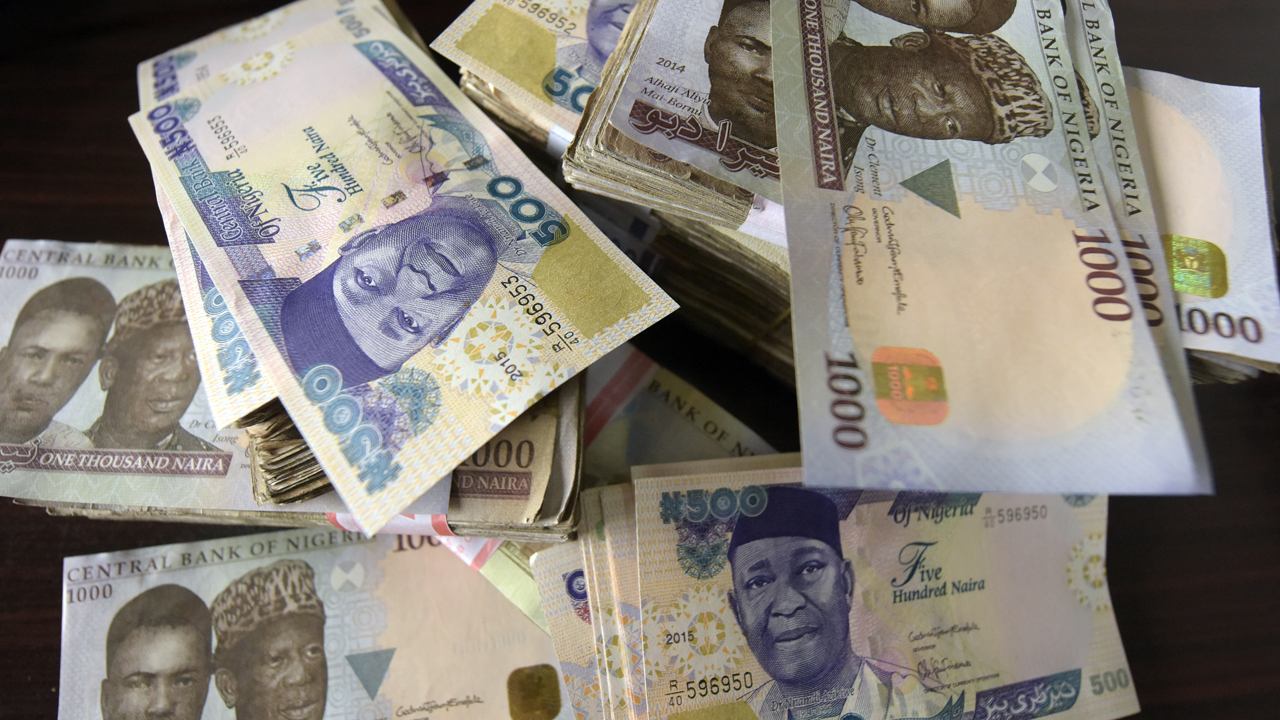
The Nigerian naira demonstrated remarkable strength in the parallel market this week, closing Friday at N1,520 to the dollar—its best performance across all trading sessions and signaling renewed confidence in the local currency amid ongoing economic reforms.
The unofficial market rate now trades N14 stronger than the Central Bank of Nigeria’s official rate of N1,534 per dollar, a notable reversal from historical patterns where the parallel market typically commanded a significant premium over official rates.
Steady Gains Throughout the Week
Market data reveals a consistent appreciation trajectory in the parallel market, with the naira climbing from N1,550 per dollar on Tuesday through incremental gains of N1,530 on Wednesday and N1,535 on Thursday before reaching the week’s peak of N1,520 on Friday.
The official market, while more stable, showed less dramatic movement. The naira gained modestly from N1,537 per dollar on Wednesday to N1,534 on Thursday, representing steady but limited progress compared to the parallel market’s performance.
This development marks a significant shift from the previous week, when the gap between official and parallel rates had narrowed to just N1, with the parallel market trading at N1,535 compared to the official rate of N1,536 per dollar.
Foreign Reserves Provide Crucial Support
Underpinning the naira’s recent strength is a notable increase in Nigeria’s foreign exchange reserves, which climbed to $38.45 billion from $37.78 billion the previous week—representing a 1.77 percent weekly increase that analysts view as crucial for currency stability.
The reserve buildup strengthens the Central Bank’s capacity to defend the naira, facilitate import financing, and meet Nigeria’s external obligations, creating a more favorable environment for currency stability.
Policy Reforms Begin to Show Results
Speaking at Tuesday’s press briefing following the 301st Monetary Policy Committee meeting, CBN Governor Olayemi Cardoso attributed the positive developments to structural reforms and improved market confidence.
“The MPC notes the sustained stability in the foreign exchange market, accentuated by improved capital flows, earnings from increased crude oil production, rising non-oil exports, and significant investments,” Cardoso stated, emphasizing that “Nigerians are having greater confidence in their currency.”
The governor highlighted the removal of fuel subsidies as a particularly significant factor, noting that while these measures were “painful,” they have “resulted in stability in the foreign exchange market” and “restored investor confidence.”
Market Dynamics Signal Broader Recovery
The convergence between official and parallel market rates suggests that Nigeria’s foreign exchange market reforms are gaining traction. Historically, wide spreads between these rates have indicated market distortions and limited access to official foreign exchange.
Cardoso emphasized that “the foreign exchange market is working a lot better and more smoothly,” with improved functionality encouraging increased capital inflows that support the naira’s stability.
The positive trade surplus and enhanced investor confidence cited by the CBN Governor indicate that Nigeria’s economic reforms, despite their initial challenges, are beginning to yield the intended stabilization effects.
Looking Ahead
As Nigeria continues implementing structural economic reforms, the naira’s recent performance in both official and parallel markets suggests that policy measures are taking hold. The combination of increased foreign reserves, improved crude oil production, and growing non-oil exports creates a foundation for sustained currency stability.
However, analysts caution that maintaining this momentum will require continued policy consistency and further structural improvements to ensure long-term economic stability and investor confidence in Africa’s largest economy.
WHAT YOU SHOULD KNOW
The Nigerian naira strengthened significantly this week, closing at N1,520 per dollar in the parallel market—its best performance yet—and trading stronger than the official rate for the first time in recent memory.
This turnaround is driven by three critical factors: Nigeria’s foreign reserves jumped to $38.45 billion (up 1.77% weekly), the removal of costly fuel subsidies is finally paying off, and increased crude oil production plus rising non-oil exports are boosting confidence.