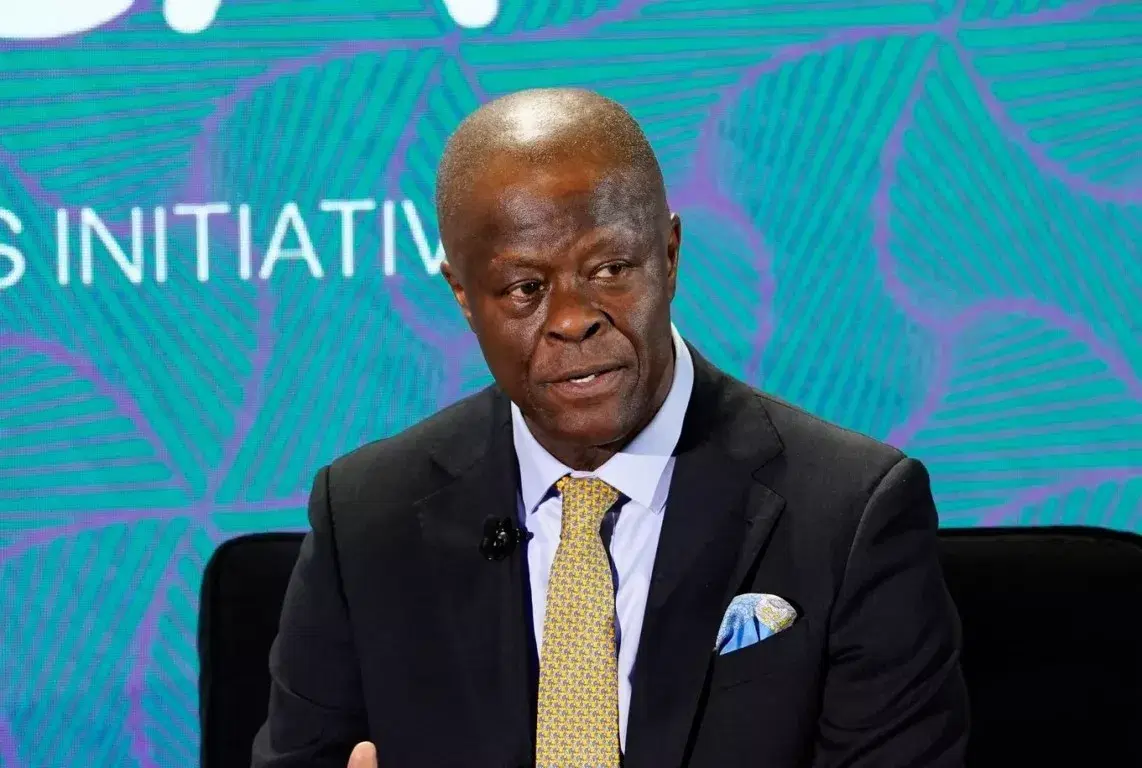
Nigeria’s Finance Minister Wale Edun disclosed on Wednesday that the federal government has achieved approximately 80% execution of the 2024 national budget as of September 2025, during a critical oversight meeting with parliamentary budget watchdogs at the National Assembly in Abuja.
The revelation came as the House of Representatives Committee on Appropriations conducted a closed-door review session with both Edun and Budget Minister Senator Atiku Bagudu to assess the implementation progress of the 2024-2025 Appropriation Act—a legislative exercise that underscores growing public scrutiny over government spending effectiveness.
Parliamentary Oversight Intensifies
Committee Chairman Representative Abubakar Bichi, representing Kano under the All Progressives Congress (APC) banner, emphasized the National Assembly’s constitutional duty to ensure fiscal accountability in response to mounting public concerns about budget performance.
“We engaged the Ministers of Finance and Budget; both acknowledged our concerns and assured us of their commitment,” Bichi told journalists following the session. “They promised that before the year ends, Nigerians will begin to see more visible results. We will continue to monitor closely.”
The timing of this parliamentary intervention is particularly significant, coming as Nigeria grapples with economic challenges and citizens increasingly demand tangible returns on government expenditure.
Extended Timeline Provides Implementation Buffer
Minister Edun explained that the 2024 budget remains active through December following a National Assembly extension, providing additional time for project completion and fund disbursement. This extension mechanism, while not uncommon in Nigerian fiscal practice, often serves as a barometer for budget execution challenges.
“As is customary, we reviewed the budget performance and looked at 2024. Basically, overall it’s around 80 percent,” Edun stated. “The budget for 2024 was extended by the National Assembly till December, so it is still running; it is still a work in progress.”
Grassroots Focus for 2025
Looking ahead, both ministers emphasized that the 2025 budget review prioritized community-level infrastructure projects, including irrigation systems and road networks—sectors traditionally viewed as having direct citizen impact and political significance in Nigeria’s largely agrarian economy.
“We put heads together to ensure that, particularly the projects that touch the grassroots, that provide support, resources, and facilities, like irrigation and other infrastructure projects at the grassroots level, are focused on and are given adequate attention and priority,” Edun elaborated.
No Supplementary Budget Planned
Addressing concerns about potential budget overruns, Edun categorically dismissed speculation about additional appropriations for 2025, suggesting the administration aims to work within existing fiscal parameters—a stance that may reflect both fiscal discipline and political caution in an era of heightened economic scrutiny.
Budget Minister Bagudu highlighted what he characterized as improved executive-legislative relations under the Tinubu administration, noting parliamentary support for ongoing reform initiatives, particularly in taxation.
“The National Assembly has supported all major reform initiatives, including tax reforms, which are already yielding results,” Bagudu stated, pointing to what officials describe as early returns on policy changes.
Broader Implications
The 80% execution rate, while representing substantial progress, falls short of full implementation with just months remaining in the extended timeline. This performance metric will likely serve as a benchmark for evaluating the Tinubu administration’s fiscal management capabilities and could influence public confidence in government spending efficiency.
As Nigeria continues navigating economic reforms and infrastructure development challenges, this parliamentary oversight exercise reflects the ongoing tension between legislative accountability demands and executive implementation capacity—a dynamic that remains central to the country’s democratic fiscal governance.
The ministers’ commitment to visible results before year-end sets a measurable timeline for public assessment of budget effectiveness, making the final quarter of 2025 a critical period for demonstrating tangible policy outcomes.
WHAT YOU SHOULD KNOW
Nigeria’s government has executed 80% of its 2024 budget by September 2025, but lawmakers are demanding greater accountability and visible results for citizens before year-end.
The 2025 budget will prioritize grassroots infrastructure like roads and irrigation, with no additional spending planned. This represents a critical test for the Tinubu administration to prove it can deliver tangible benefits to Nigerians while maintaining fiscal discipline under intensified parliamentary oversight.