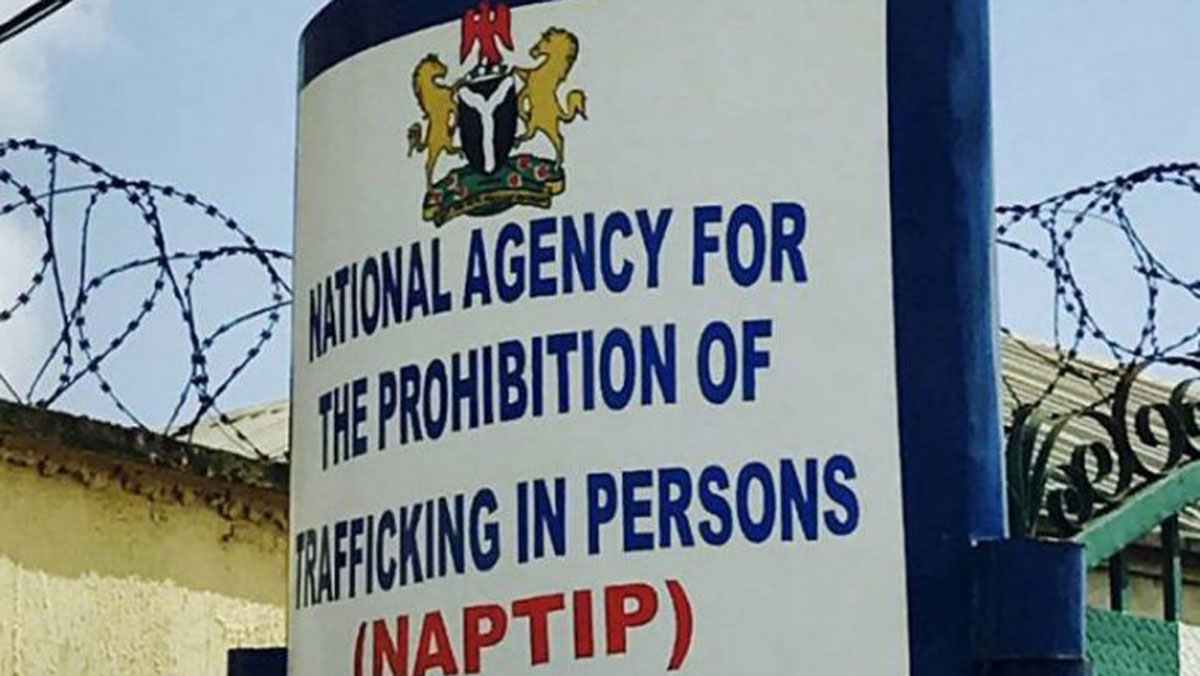
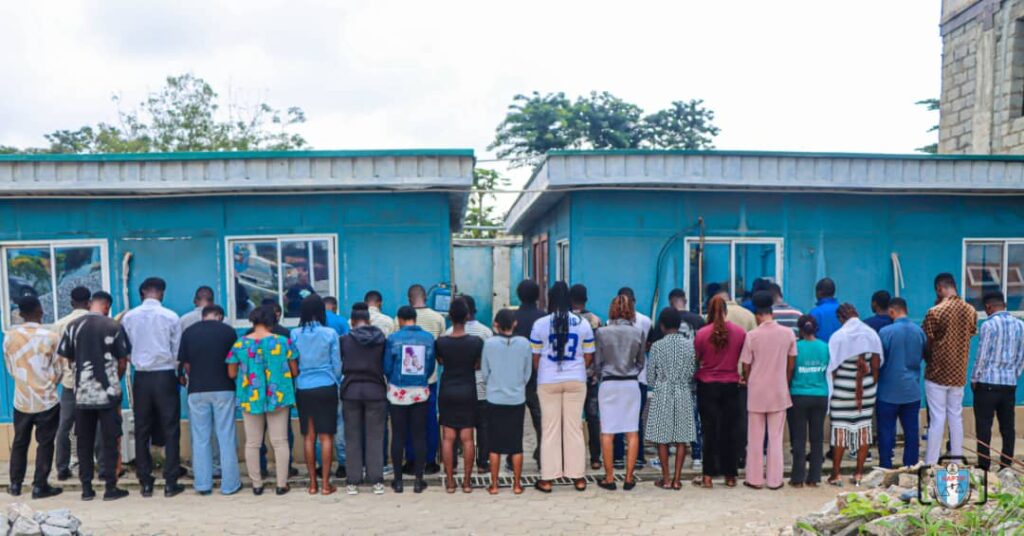
Operatives of the National Agency for the Prohibition of Trafficking in Persons (NAPTIP) have rescued no fewer than 26 trafficked children from an orphanage in Benue State.
The agency made this known in a statement issued in Abuja on Sunday by its Press Officer, Mr. Vincent Adekoye.
According to Adekoye, one of the suspects in custody is a 60-year-old man (name withheld), who also serves as the founder of the “National Council of Child’s Right Advocates of Nigeria (NACRAN),” an internationally recognised civil society organisation based in Benue. The suspect is allegedly involved in a major case of child trafficking, illegal adoption, and sale of minors. A 34-year-old woman believed to be his accomplice was also arrested in connection with the crimes.
Adekoye added that two other orphanage operators in the Federal Capital Territory (FCT) and Nasarawa State, along with some allegedly trafficked children, were also intercepted by NAPTIP operatives.
“The breakthrough operation led by the agency’s team in Makurdi was carried out by the state command,” he said. “In the Makurdi operation, NAPTIP rescued 26 children out of over 300 minors suspected to have been trafficked and sold to various individuals within Benue, Enugu, Lagos, Nasarawa, and Abuja.”
He explained that investigations are currently underway to trace the remaining 274 children and uncover the full scope of the trafficking network’s operations.
Adekoye noted that the development comes just weeks after the Director-General of NAPTIP, Hajia Binta Adamu-Bello, raised alarm over the illegal activities of certain orphanage operators across the country. He added that the latest operation was part of a renewed nationwide crackdown on orphanages and care homes ordered by the NAPTIP Director-General, following several reports of infractions and unlawful practices by operators.
The Press Officer disclosed that the agency’s investigation was triggered by a complaint from a man who reported that his four-year-old son had been given to a non-governmental organisation by his mother-in-law without his consent. The report led to the exposure of a vast child trafficking network spanning several states.
Preliminary findings revealed that the suspects preyed on the vulnerabilities of rural dwellers in Benue through a deceptive initiative known as the “Back to School Project.” Under this guise, they lured children from communities affected by conflict, pretending to offer educational sponsorship.
“The suspects held meetings with villagers and traditional leaders, assuring them that the project would fund the children’s education,” Adekoye said. “Parents were deceived into signing consent forms or verbally agreeing to release their children, with promises that they would see them again after three years. Over 300 children were reportedly handed over to the suspects, and some parents neither signed any documents nor gave permission.”
He further explained that the children, aged between one and thirteen years, were later moved to orphanages in Abuja and Nasarawa, where they were allegedly sold to interested couples under the guise of legal adoption, for fees ranging between ₦1 million and ₦3 million per child. “Some of the orphanages identified served as holding centres where children awaited ‘adoption’ or sale,” Adekoye revealed.
According to him, four orphanages located in Kaigini and Kubwa, Abuja; Masaka Area I, Mararaba (by Abaca Road); and another in Mararaba behind the International Market, have been linked to the syndicate and are currently under investigation.
“One complainant alleged that he paid ₦2.8 million as an adoption fee and ₦100,000 as a consultancy fee to a member of the syndicate,” he said, noting that “the identities of many rescued children have been changed, complicating efforts to reunite them with their families.”
Reacting to the arrests, the Director-General of NAPTIP, Hajia Binta Adamu-Bello, described the situation as both “unbelievable and mind-bugling.”
“Arising from the case at hand, I wish to say that issues of child trafficking and adoption are becoming a national crisis that requires urgent attention from all relevant stakeholders,” she said. “A few weeks ago, based on credible intelligence, I expressed concern and alerted the State Ministries of Women Affairs on the unpatriotic and illegal activities of some Orphanage Operators across the Country.”
“It is painful that some unpatriotic elements with recognised entities and status now use their social class to deceive the already vulnerable people in crisis-prone communities,” she lamented.
“These children are trafficked, most of whom narrowly escape death in the wake of communal or farmer–herder clashes. They are sold to challenged parents in the name of adoption without the valid legal consent of the parents. This is unacceptable, and those already arrested in connection with this wicked act shall be made to face the full wrath of the law.”
She added, “Our children are not commodities to be displayed in Orphanages and sold at will to the highest bidders. This must stop.”
What you should know
The National Agency for the Prohibition of Trafficking in Persons (NAPTIP) is Nigeria’s foremost institution responsible for combating human trafficking, child labour, and other forms of exploitation.
Created in 2003, the agency has consistently worked to dismantle trafficking networks across the country. This latest Benue operation sheds light on a growing crisis involving the misuse of orphanages as fronts for illegal adoption and child sales.
Director-General Hajia Binta Adamu-Bello has vowed to strengthen surveillance, enforce stricter regulations on child care institutions, and ensure offenders face justice to protect vulnerable children nationwide.