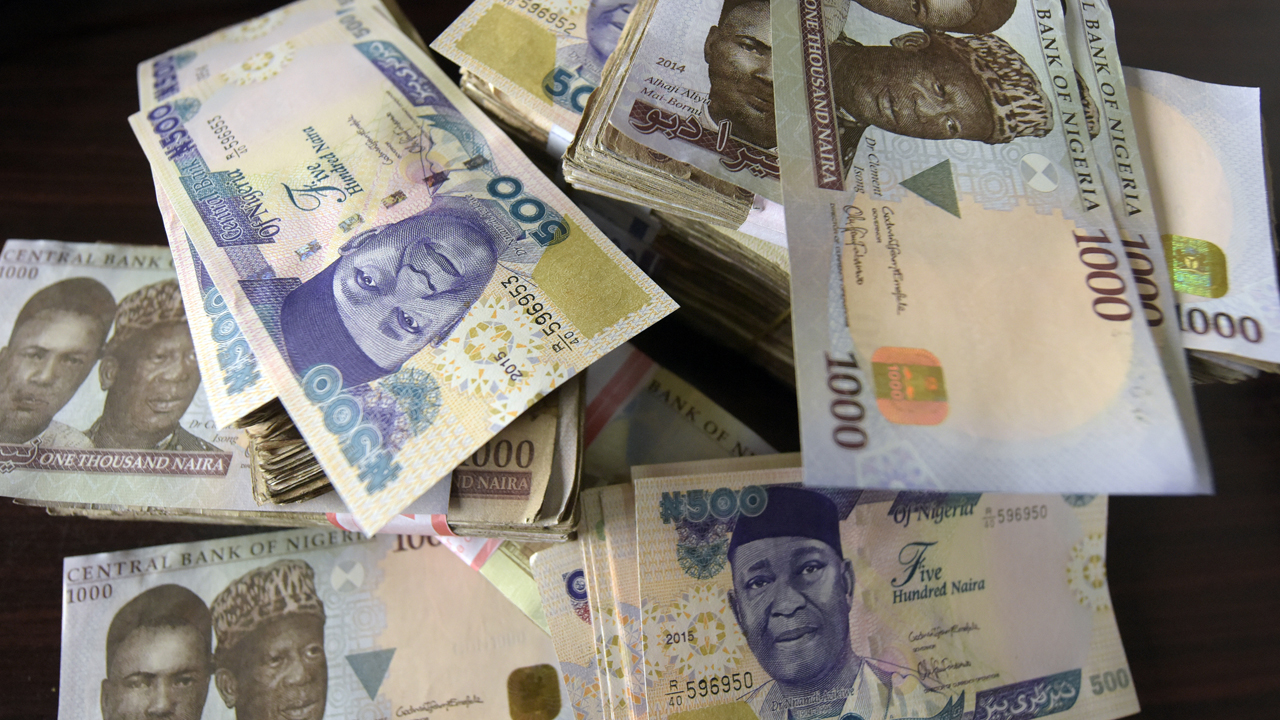
The Nigerian naira exhibited contrasting fortunes across different trading platforms during the final week of trading, reflecting underlying tensions in the country’s foreign exchange market as liquidity constraints and seasonal pressures weigh on currency stability.
At the official National Foreign Exchange Market (NFEM), the naira managed a modest recovery, appreciating 0.01 percent to close at ₦1,533.57 to the dollar, compared to the previous week’s rate of ₦1,533.74. However, this marginal gain was overshadowed by developments in the parallel market, where the currency weakened significantly.
The parallel market, which often serves as a barometer for underlying currency pressures, saw the naira depreciate 0.52 percent week-on-week to an average of ₦1,545 per dollar, according to the latest Cowry weekly report. This decline has been attributed to heightened demand for foreign currency from businesses and individuals operating in an increasingly illiquid market environment.
Liquidity Crisis Drives Market Volatility
Aminu Gwadabe, National President of the Association of Bureau De Change Operators of Nigeria, identified liquidity as the primary challenge confronting the foreign exchange market. Speaking to reporters, Gwadabe explained that seasonal factors, particularly increased travel demand ahead of the holiday period, have exacerbated existing market pressures.
“The bottom line is liquidity,” Gwadabe stated. “We are witnessing a spike in the market, and that volatility has been persistent. Multiple factors are responsible—liquidity constraints, travelers’ demands, and other drivers that are putting pressure on the naira.”
The timing of these pressures coincides with Nigerian banks’ recent decision to restore international transaction capabilities for naira-denominated debit cards. This policy reversal, announced in the lead-up to the holiday season, marks a significant shift from December 2022, when financial institutions had suspended foreign transaction privileges for local currency cards.
Market Spread Widens as Speculation Returns
Perhaps more concerning for monetary authorities is the apparent widening of the spread between official and parallel market rates. Gwadabe noted that this gap, which had narrowed considerably in recent months and helped reduce speculative activities, appears to be expanding once again.
“The spread between the official market and the open market appears to be widening,” he observed, a development that could signal the return of currency arbitrage opportunities that the Central Bank of Nigeria (CBN) has worked to eliminate.
Central Bank Intervention Expected to Provide Support
Despite current headwinds, market analysts remain cautiously optimistic about the naira’s near-term prospects. Experts at Cowry Asset Management Limited project that the currency will maintain its marginal gains in the coming week, bolstered by continued CBN intervention in the foreign exchange market.
“While global trade tensions and volatility in the oil market, particularly the recent downward trend in crude prices, pose potential headwinds, the apex bank’s efforts to inject liquidity and stabilize demand pressures should provide a buffer against sharp depreciation,” the firm’s weekly report stated.
The analysis suggests that barring major shocks in global commodity or financial markets, the naira should hold relatively steady, especially at the official trading window.
Forensic Audit Uncovers Systemic Irregularities
Adding another dimension to the foreign exchange narrative, the CBN this week concluded a comprehensive forensic audit of FX forward contracts that has revealed widespread irregularities in contract execution. The investigation, announced Thursday, uncovered significant discrepancies that had plagued the forward contract system.
Among the irregularities identified were mismatched company names between approved sales results and Form M portal entries, cumulative approved sales values exceeding total form values, unauthorized imports of restricted items, and instances where sales exceeded actual demand. Additional violations included incorrect forex form numbers, blank documentation, and approved sales values that exceeded the actual cost of imported items.
The central bank has indicated that all valid forward contract claims have been settled and that it is considering legal action against violators. Officials declared the case of undelivered forward contracts officially concluded and closed.
Market Outlook Remains Cautiously Stable
AIICO Capital has suggested that the CBN’s announcement regarding the clearance of outstanding FX forward contracts has provided additional support to the naira’s performance at the NFEM. The firm expects the foreign exchange market to remain stable in the near term, supported by the central bank’s ongoing policy refinements.
As Nigeria’s economy continues to navigate global headwinds and domestic challenges, the performance of the naira remains closely watched by investors, businesses, and policymakers alike. The mixed signals from different market segments underscore the complex dynamics at play in Africa’s largest economy, where foreign exchange availability continues to be a critical factor in economic stability and growth prospects.
The coming weeks will likely prove crucial in determining whether current CBN interventions can sustain currency stability amid mounting seasonal pressures and evolving global economic conditions.
WHAT YOU SHOULD KNOW
The Nigerian naira is facing a liquidity crisis that’s creating mixed market performance—while the official rate showed slight improvement, the parallel market weakened due to increased dollar demand from holiday travelers and businesses.