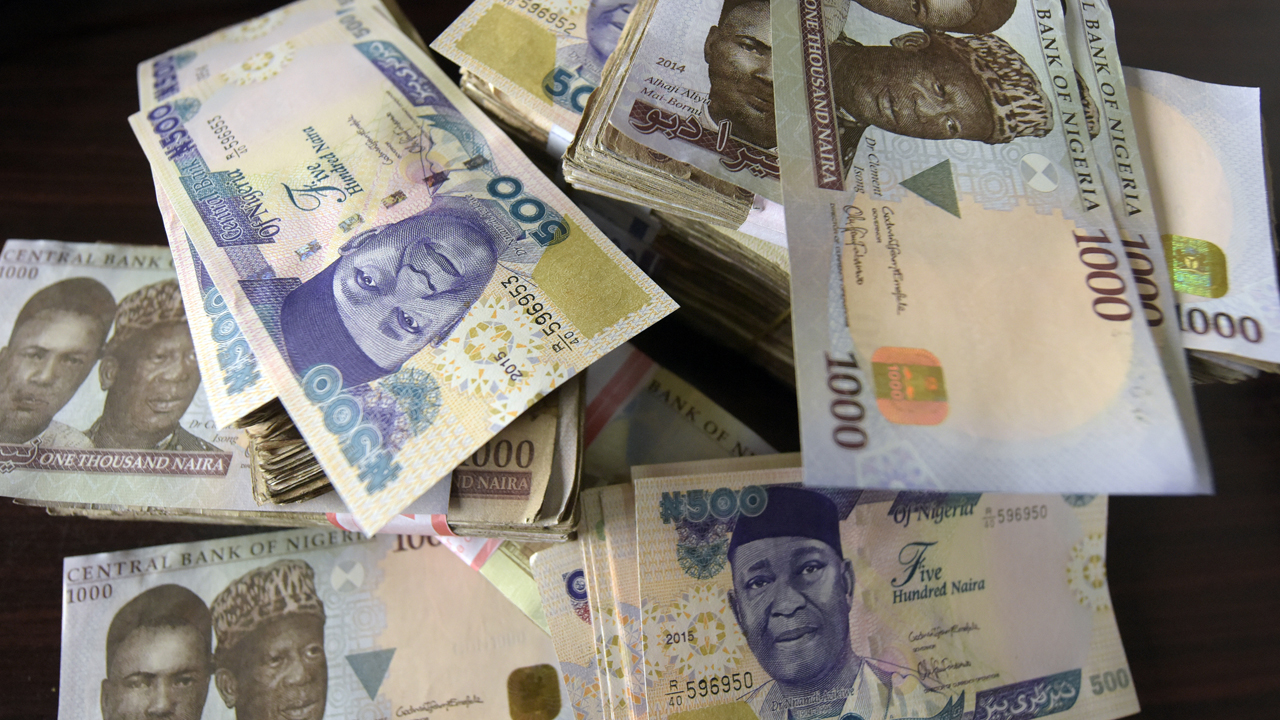
The Nigerian naira came under renewed pressure in the foreign exchange market last week, sliding against the US dollar despite sustained efforts by the Central Bank of Nigeria to shore up the embattled currency through aggressive market interventions and policy reforms.
At the Nigerian Autonomous Foreign Exchange Market (NAFEM)—the country’s official trading platform—the naira closed at N1,475 to the dollar, marking a 1.37 percent depreciation week-on-week. The currency fared marginally better on the parallel market, often considered a more accurate barometer of real-time forex dynamics, where it weakened by 0.61 percent to settle at approximately N1,484 per dollar.
The persistent weakness underscores a fundamental mismatch in the forex market: demand from importers, manufacturers, and individual buyers continues to significantly outstrip available dollar supply, maintaining upward pressure on exchange rates across both official and unofficial channels.
Oil Price Decline Dampens Market Sentiment
Adding to currency pressures, international oil prices declined throughout the week, casting a shadow over investor confidence and raising fresh concerns about revenue sustainability for Africa’s largest oil producer. Nigeria remains heavily dependent on petroleum exports for foreign exchange earnings, making the economy particularly vulnerable to fluctuations in global crude prices.
The timing of the oil price decline is particularly concerning given that recent gains in Nigeria’s foreign reserves have been largely attributed to regular inflows of oil revenue, alongside improved non-oil foreign earnings and a robust trade surplus position.
Central Bank Fortifies Reserves, Intensifies Market Management
In a show of resolve, the Central Bank has bolstered Nigeria’s foreign reserves to over $43 billion, providing crucial ammunition for regular interventions in the forex market. This reserve buildup has been instrumental in supporting the broader macroeconomic framework and serving as a buffer against external shocks, even as market volatility persists.
The apex bank has deployed a multipronged strategy to stabilize the currency, including implementation of unified exchange rate policies designed to narrow the gap between official and parallel market rates. Authorities have also intensified crackdowns on illegal bureau de change operations, which have historically fueled currency speculation and black market trading.
Recent policy measures, including September’s monetary policy rate cut and ongoing forex market management initiatives, have succeeded in reducing some volatility and moderating the parallel market premium, according to central bank officials.
Structural Reforms Begin Yielding Results
Deeper structural reforms implemented since mid-2024 appear to be gaining traction in attracting foreign capital. The elimination of fuel subsidies—a politically contentious but economically necessary move—combined with the introduction of electronic foreign exchange auctions, has reportedly attracted billions of dollars in foreign inflows through the official Investors and Exporters (I&E) window.
These reforms have provided much-needed stability to the I&E window, which serves as a critical channel for legitimate forex transactions and has historically been plagued by inefficiencies and liquidity challenges.
Persistent Premium Reflects Structural Challenges
Despite these interventions, market participants report that the premium between official NAFEM rates and parallel market rates remains stubbornly elevated. High dollar demand continues to sustain activity in the street market, where rates typically exceed official benchmarks by varying margins.
Financial analysts suggest that while improved external sector fundamentals—evidenced by rising reserves and better trade performance—provide important support, the naira’s medium-term trajectory will depend heavily on sustained oil revenue flows, continued success in boosting non-oil exports, and the central bank’s ability to maintain consistent dollar liquidity in the market.
As Nigeria navigates these forex headwinds, all eyes remain on global oil price movements and the CBN’s next policy moves in what has become an ongoing battle to achieve currency stability in Africa’s most populous nation.
WHAT YOU SHOULD KNOW
The Nigerian naira’s depreciation to N1,475/$ officially and N1,484/$ on the parallel market boils down to one critical issue: demand for dollars far exceeds supply. Despite the CBN’s $43 billion reserves and aggressive interventions, falling oil prices threaten the revenue streams needed to bridge this gap.
Until Nigeria can sustainably increase dollar supply—whether through higher oil earnings or boosted non-oil exports—the naira will remain under pressure, no matter how many reforms are implemented.